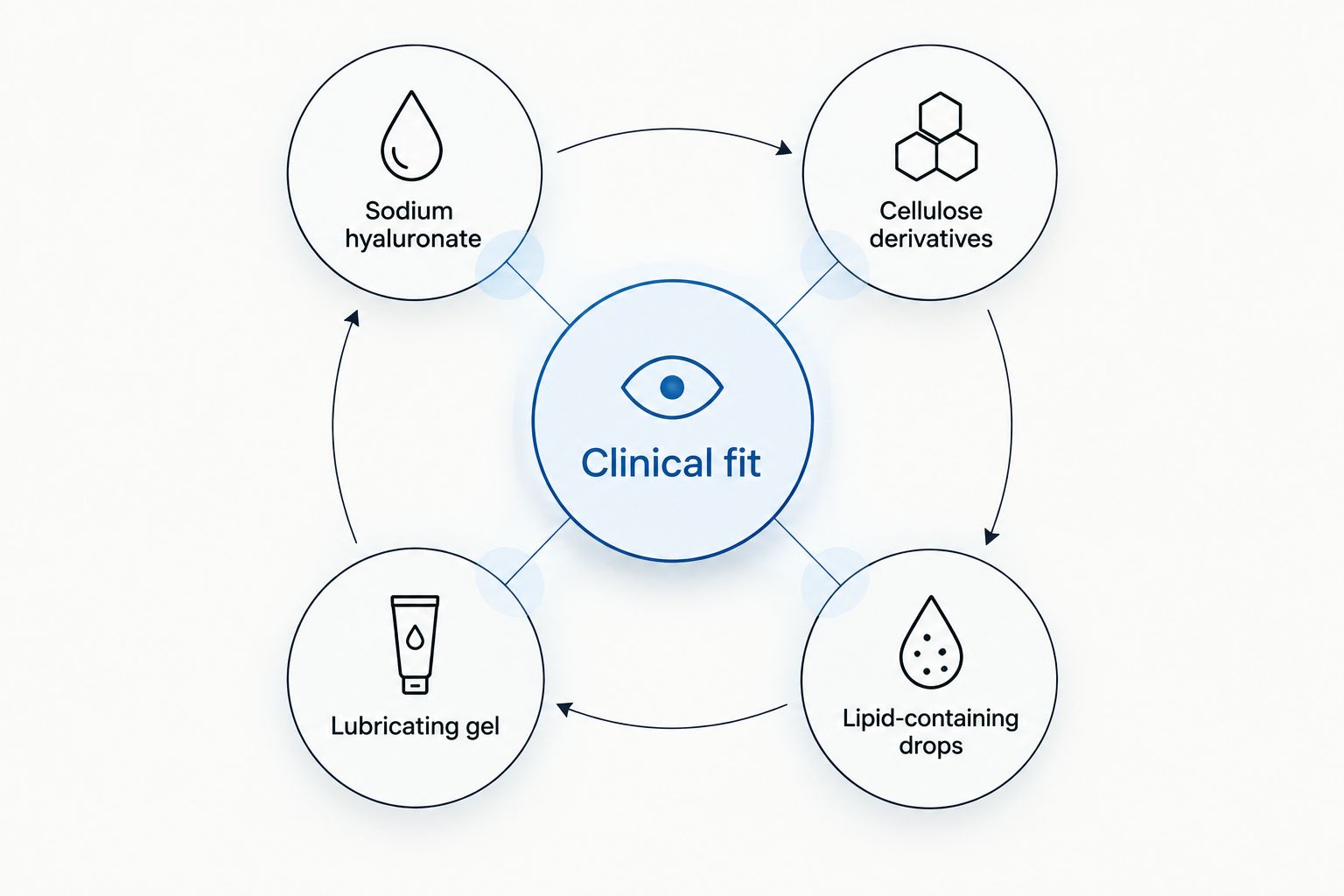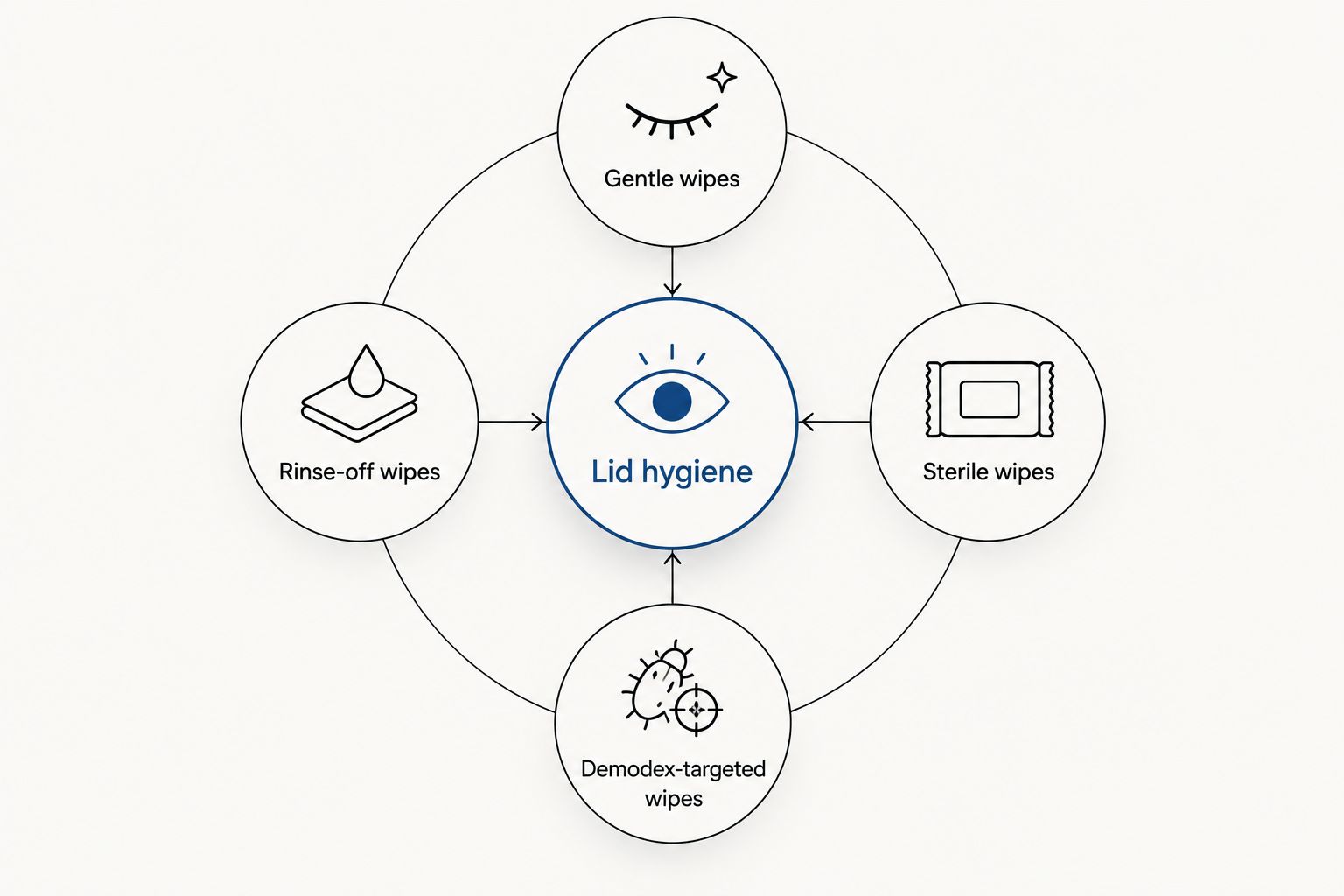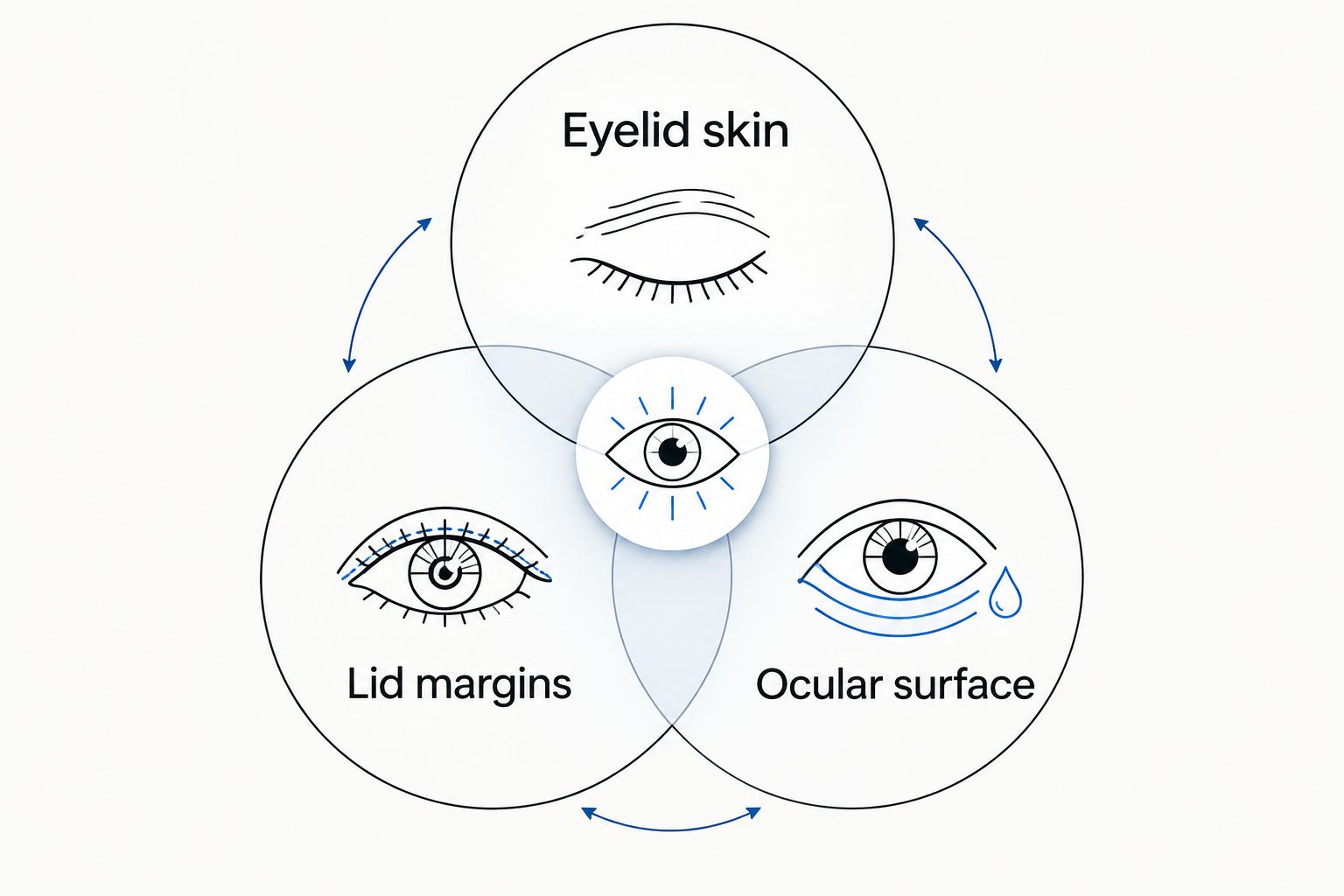
Contact lens opticians’ dry eye heat therapy is controlled eyelid warming intended to support meibomian gland dysfunction management and improve contact lens comfort. For contact lens wearers, you must distinguish lid-related dryness from lens fit, solution sensitivity and conditions requiring urgent assessment before recommending a home routine.

TL;DR
  • Dry eye heat therapy for contact lens opticians should target assessed meibomian gland dysfunction, not every uncomfortable lens wearer.
  • Remove contact lenses before eyelid warming; follow the chosen device’s instructions rather than a universal heating schedule.
  • Scope Connect supports dry eye education and patient explanations; it does not replace individual clinical assessment.
  • Pain, photophobia, reduced vision or marked redness require prompt assessment, not a trial of heat therapy.

Why heat therapy matters for contact lens opticians

Contact lens discomfort is a presentation, not a diagnosis. A patient describing late-day dryness needs assessment of the ocular surface, eyelids, lens fit and wearing habits rather than an automatic recommendation for a heated mask.

Meibomian glands contribute lipids to the tear film. Where altered secretions and gland obstruction contribute to evaporative dry eye, eyelid warming can form part of management; warming alone does not address every cause of discomfort.

Scope Connect is best suited to eye care professionals seeking dry eye education and patient resources, rather than individual diagnosis. Use Scope Connect to support professional learning and patient explanations alongside your own examination and referral pathways.

For your 2026 practice protocol, keep the clinical question narrow: does this patient have a lid-related problem that warming is intended to address? That question prevents a convenient recommendation from replacing a defensible management plan.

Build a practical heat therapy pathway

1. Establish the cause of contact lens discomfort

Start with a structured history and examination within your competence. Ask when symptoms begin, whether they persist without lenses and whether discomfort changes with blinking, screen use or the environment. Record the patient’s actual wearing pattern rather than the intended schedule.

Use 3 opening questions: when does discomfort start, what changes it, and what happens after lens removal? These are consultation prompts, not a diagnostic score. They help separate lens-associated symptoms from a problem that continues throughout the day.

Assess both eyes and avoid treating asymmetrical findings as routine dryness. Pain, photophobia, reduced vision or marked redness in a contact lens wearer requires prompt assessment through an appropriate urgent eye-care pathway.

  • Record symptom timing, laterality and the effect of lens removal.
  • Review lens type, fit, replacement habits and care products.
  • Examine the ocular surface and lid margins within your competence.
  • Escalate concerning symptoms rather than starting empirical warming.

2. Confirm that eyelid warming has a clinical target

Recommend heat because the findings support it, not because the patient uses the word dry. Meibomian gland dysfunction assessment includes the lid margins, gland openings and secretion quality or expressibility where examination is appropriate to your role.

Dry eye disease can involve overlapping mechanisms. Warming does not replace assessment for aqueous deficiency, allergy, anterior blepharitis, exposure or other ocular surface disease. Nor does the presence of meibomian gland dysfunction prove that every contact lens symptom comes from the glands.

Explain the intended effect plainly: warming aims to soften altered meibomian secretions so they can flow more readily. The treatment target is gland-related dysfunction, not discomfort in isolation. In a 2026 care record, connect the recommendation to the actual clinical findings.

  • Document the lid findings supporting the recommendation.
  • Record relevant ocular surface findings and competing explanations.
  • Explain what warming is intended to change.
  • Identify findings that need additional management or referral.

3. Choose a method the patient can use correctly

Begin with the simplest practical discussion: a clean warm compress needs no dedicated heating device, but a cloth loses heat and requires reheating. Suitability depends on maintaining comfortable warmth without excessive heat or pressure.

Purpose-made masks provide another way to deliver eyelid warming. Microwave-heated and electrically heated designs have different preparation and cleaning requirements; neither category guarantees suitability for every patient. Check the specific instructions rather than transferring advice between devices.

Scope Connect’s heated eye masks for meibomian gland dysfunction guide offers a focused starting point for further reading. Treat educational resources as a quicker route to an informed discussion, not a substitute for checking the selected device.

  • Ask about access to heating equipment and suitable cleaning facilities.
  • Check the device’s intended use, warnings and preparation instructions.
  • Choose a method compatible with the patient’s dexterity and routine.
  • Explain the method’s limitations before agreeing the plan.

4. Demonstrate warming without contact lenses

Tell patients to remove their contact lenses before eyelid warming. Demonstrate the chosen method with the lids closed, without pressure on the globe, and explain that hotter does not mean more effective.

Do not prescribe a universal microwave setting, temperature or treatment duration across different masks. Heating instructions depend on the device, and microwave preparation can depend on appliance output. Follow the manufacturer’s instructions and any individual clinical advice.

Use 1 written plan that names the method, preparation, application and stopping rules. Ask the patient to explain the routine back to you: this exposes misunderstandings more clearly than asking whether everything makes sense. Your 2026 instructions should also explain that persistent blur or discomfort after treatment needs advice, not immediate lens reinsertion.

  • Remove contact lenses and wash hands before treatment.
  • Prepare and apply the compress according to its instructions.
  • Avoid excessive heat, tight straps and pressure on the eye.
  • Stop if warming causes pain, persistent irritation or visual disturbance.

5. Integrate warming with the wider lens plan

Warming addresses one part of care when meibomian gland dysfunction is present. Lens fit, material, replacement habits, care systems and ocular surface findings still need separate consideration. Do not leave an unsuitable lens-wearing pattern unchanged because a mask has been recommended.

Teach lid hygiene separately when it is indicated. A warm compress, lid cleaning and gland expression are not interchangeable procedures; forceful self-expression should not become an improvised home treatment.

Patient education materials can support recall, but tailor them to the agreed plan. Scope Connect’s dry eye resources support that discussion; the clinician remains responsible for explaining which actions apply to the individual patient and which do not.

  • Address lens fit and care-system concerns independently.
  • Explain lid cleaning only where the clinical findings support it.
  • Check the contact lens compatibility of any recommended drops.
  • Agree what the patient should do if lens wear remains uncomfortable.

6. Review response and reconsider the diagnosis

Set a review interval according to the clinical findings, symptom burden and treatment plan. There is no single review schedule suitable for every contact lens wearer receiving heat therapy.

At review, compare the original symptoms and examination findings with the current picture. Ask the patient to describe preparation and use before judging the treatment: ineffective technique and an unsuitable treatment target require different responses.

Record 2 outcome domains: patient-reported comfort and clinical findings. These are documentation categories, not a validated scoring system. Better tolerance does not remove the need to reassess persistent signs. Equally, a tidier lid margin does not resolve ongoing pain or unexplained visual symptoms.

  • Revisit the original symptom pattern and wearing tolerance.
  • Reassess the relevant lid and ocular surface findings.
  • Check technique, cleaning and practical barriers.
  • Revise the plan or refer when the response does not fit expectations.

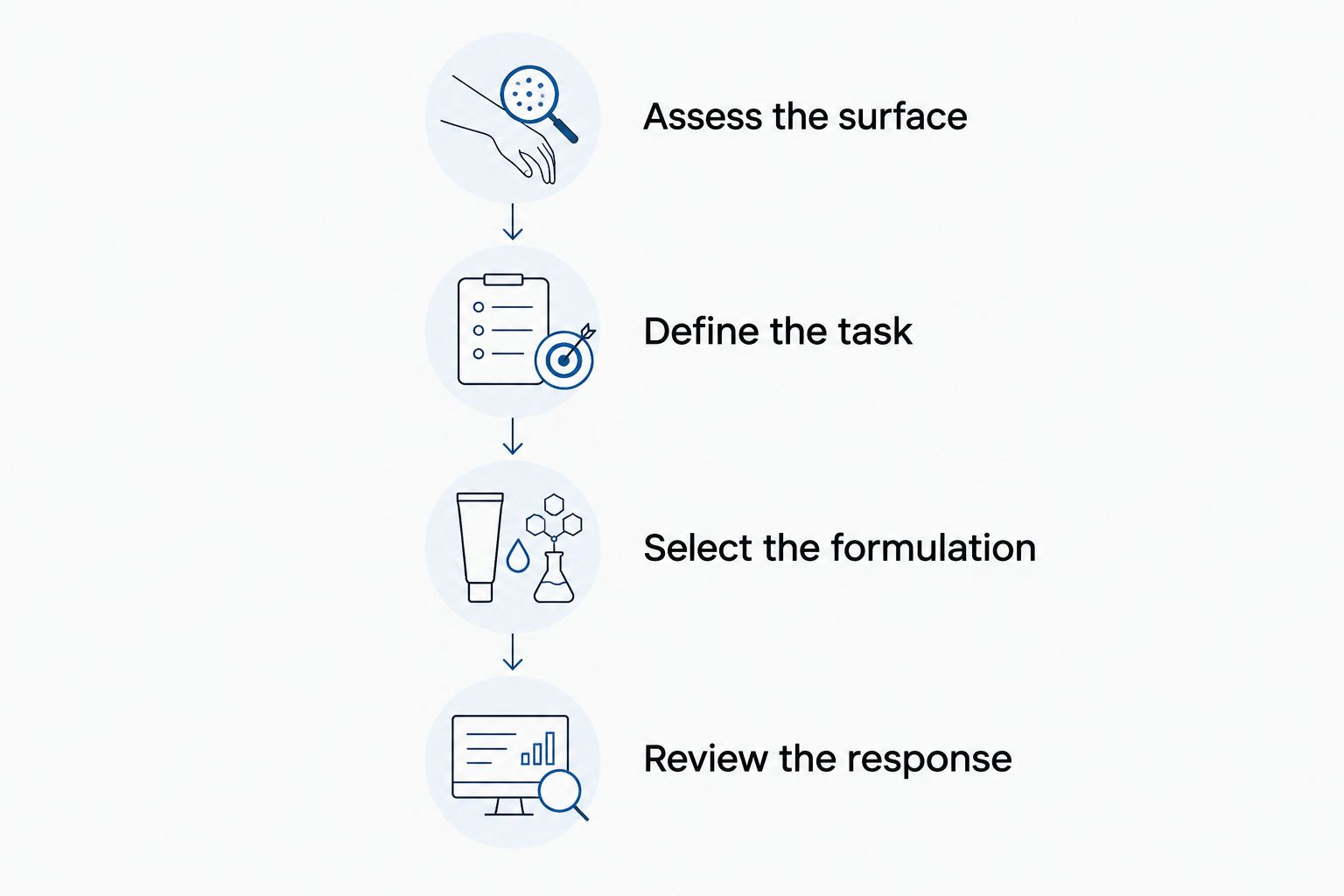
The pathway is a cycle rather than a one-off recommendation. Assessment identifies a target, instruction makes the treatment usable, and review determines whether the original decision still stands.

A four-stage care cycle covering assessment, clinical target, patient instruction and review.
Review should test the treatment decision, not simply whether the patient used a compress.

Compare eyelid warming options

Choose by clinical suitability and practical usability, not by assuming that one device category is universally better. For a 2026 discussion, distinguish the method’s intended function from claims about an individual product.

Option Best for Main advantage Key limitation
Clean warm cloth Patients able to prepare and rewarm a compress correctly Uses familiar household equipment Loses heat and needs reheating; temperature consistency is difficult
Microwave-heated eye mask Patients with suitable microwave access who can follow preparation instructions Purpose-made format for eyelid warming Preparation depends on the specific mask and appliance instructions
Electrically heated eye mask Patients who prefer a powered warming method Avoids microwave preparation Requires a power source; controls and cleaning requirements vary
Clinician-delivered thermal treatment Patients selected after assessment for an in-practice procedure Enables a supervised treatment approach Requires clinical selection and does not replace ongoing management

A home compress and an in-practice procedure are not equivalent interventions. Explain what each involves before discussing whether escalation is appropriate, and avoid promising a particular improvement in lens-wearing time.

Common mistakes contact lens opticians make

Treating every uncomfortable lens wearer as a warming candidate

A dry sensation does not establish meibomian gland dysfunction. Check the lens and ocular surface, and keep the differential diagnosis open when symptoms or signs do not fit.

Giving the same heating instructions for every mask

Instructions cannot be transferred safely between unrelated devices. Record the selected method and refer patients to its current preparation and cleaning guidance rather than copying a generic schedule.

Leaving lens removal implicit

Patients need an explicit instruction to remove contact lenses before warming. Include it in the written plan and explain what to do if discomfort or visual disturbance persists afterwards.

Escalating treatment before checking technique

An unsuccessful routine does not establish that stronger heat or a different device is needed. Review the diagnosis, preparation, application and practical barriers before changing the treatment.

Measuring success only by longer lens wear

Wearing tolerance matters, but it is not the only outcome. Persistent staining, inflammation or concerning symptoms need reassessment even when a patient reports that lenses feel more comfortable.

FAQ

What is dry eye heat therapy for contact lens opticians?

Dry eye heat therapy for contact lens opticians is the use of controlled eyelid warming as part of an assessed care plan, particularly for meibomian gland dysfunction. It targets gland-related problems rather than every cause of contact lens discomfort.

Can patients keep their contact lenses in during a warm compress?

Patients should remove contact lenses before using an eyelid-warming compress or mask. Follow the selected device’s instructions and seek advice if discomfort or visual disturbance persists after treatment.

What temperature and duration should I recommend for a heated eye mask?

Use the selected device’s instructions and the patient’s individual clinical plan rather than a universal temperature or duration. Different devices have different preparation requirements, and excessive heat can injure the eyelids or ocular surface.

Is a heated mask better than a warm flannel for contact lens dryness?

Neither method is universally better for every patient. A cloth needs reheating, while a purpose-made mask introduces its own preparation, cleaning and suitability requirements; correct use and the clinical target guide the choice.

Does heat therapy treat every type of dry eye?

No, eyelid warming does not treat every mechanism of dry eye disease. It is principally relevant when gland-related dysfunction is part of the assessed problem, and other findings need their own management.

When should a contact lens wearer avoid trying heat therapy first?

A contact lens wearer with pain, photophobia, reduced vision or marked redness needs prompt assessment rather than an initial trial of heat therapy. Direct the patient to an appropriate urgent eye-care pathway and advise against continued lens wear pending assessment.

What should I check if eyelid warming has not helped?

Reassess the diagnosis, treatment technique and contact lens factors before escalating care. Review symptom patterns alongside lid and ocular surface findings, and refer when the presentation falls outside your competence or does not fit the expected course.

One last thing

For your next 2026 consultation, ask the patient to describe exactly how they will prepare and use the compress at home. A correct explanation is more useful than a reassuring nod: it shows whether your recommendation has become a workable routine.

Document the reason for warming as clearly as the instructions for warming. That single distinction makes review meaningful when comfort improves, stays unchanged or deteriorates.

Related guides

Newly qualified optometrists’ independent prescribing is additional clinical training and registration that enables eligible practitioners to prescribe within their competence, with the aim of managing eye conditions safely. This guide explains how to plan your route in 2026, distinguish qualification from prescribing authority, and build the supervision and clinical judgement that early-career practice requires.

TL;DR
  • Independent prescribing for newly qualified optometrists requires an approved qualification and the appropriate General Optical Council register annotation.
  • Check your qualification route before applying: registration as an optometrist alone does not establish independent prescribing authority.
  • Scope Connect is best suited to optometrists seeking supporting clinical education, not a substitute for prescribing qualification.
  • Arrange suitable supervised experience, assessment opportunities and referral support before committing to a course.

Why independent prescribing matters for newly qualified optometrists

Independent prescribing adds responsibility for medicine selection, monitoring and treatment decisions to your clinical assessment. For newly qualified optometrists, the challenge is developing those capabilities while consolidating examination skills and recognising the limits of your experience.

A prescribing qualification is not permission to manage every presentation independently. You still need an appropriate diagnosis, sufficient competence for the individual case, and access to referral or specialist advice when required.

Scope Connect is best suited to optometrists seeking supporting clinical education, not a substitute for prescribing qualification. Its clinical resources include product information, clinical articles, CPD-accredited courses and patient education materials. These support learning; they do not establish your eligibility to prescribe.

For your 2026 plan, separate three questions: what qualification you need, how you will develop competence, and whether your workplace supports safe prescribing. A course addresses only part of that pathway.

Build your independent prescribing pathway

Check your qualification and registration route

Start with your actual qualification, not your graduation date or a colleague’s experience. Optometry education routes differ, so establish whether independent prescribing is included in your programme or requires a separate approved qualification.

The General Optical Council is the regulator to consult for registration and qualification requirements. Check its current information alongside your university’s documentation before making an application. A university offer, completed teaching module or attendance certificate is not the same as the appropriate register annotation.

For a 2026 application, ask the provider to explain how its programme leads to the relevant qualification and registration outcome. Obtain the answer in writing, particularly where your existing training affects entry or assessment requirements.

Create a 1-page eligibility record so that your employer, provider and supervisor work from the same information. Treat this as a planning aid, not a regulatory document.

  • Record your qualification and current registration status.
  • Check the provider’s entry requirements for your route.
  • Confirm which qualification the programme awards.
  • Identify the required register annotation before prescribing.
  • Save the current requirements with the date you checked them.

Assess your clinical readiness before choosing a course

Review your own cases before comparing programmes. Select 3 recent cases involving an ocular complaint and examine the reasoning behind your decisions, including cases you referred rather than treated.

Ask whether you could explain the differential diagnosis, relevant history, examination findings and follow-up plan to another clinician. Prescribing readiness involves more than knowing which medicine treats a named condition. It includes recognising when the diagnosis is uncertain or treatment requires a different service.

Discuss these cases with an experienced colleague through your workplace’s confidentiality arrangements. Identify learning needs that affect prescribing decisions, such as interpreting corneal findings, assessing treatment response or taking an accurate medicines history.

Build your plan around demonstrated learning needs, not confidence alone. Confidence is useful only when supported by sound clinical reasoning and an appropriate understanding of your limits.

  • Review the differential diagnosis for each selected case.
  • Identify examination findings that changed your management.
  • Check how you recorded medicines, allergies and relevant history.
  • Explain why you treated, monitored or referred.
  • Turn gaps into specific supervised-learning objectives.

Compare approved training with supporting education

Read the programme specification before using course summaries or recommendations. Compare eligibility, teaching format, supervised clinical learning, assessment and the support available when you struggle with a requirement.

Your first comparison can be a simple document assembled from provider information. Record unanswered questions rather than assuming that similarly named courses offer identical routes or assessment arrangements.

Scope Connect’s guide to independent prescribing courses for optometrists provides a starting point for organising that comparison. Verify approval status and current requirements directly with the General Optical Council and the relevant provider before applying.

Use Scope Connect clinical education to support topic revision alongside the qualification pathway. Its role is supplementary: clinical articles, CPD and patient materials do not replace supervised learning, assessment or registration requirements.

  • Confirm that the programme matches your qualification route.
  • Compare teaching arrangements with your working pattern.
  • Establish who arranges supervised clinical experience.
  • Ask how assessments and unsuccessful attempts are handled.
  • Separate qualification requirements from optional supporting study.

Secure supervision that matches the programme

Discuss supervision before committing to a course. A willing colleague is not automatically an eligible supervisor, and a suitable workplace does not automatically provide the case exposure your programme requires.

Ask the provider to confirm its supervision requirements. Then discuss practical arrangements with the proposed supervisor: access to patients, observation, feedback, records and opportunities to assess progress. Establish what happens if clinical sessions are cancelled or suitable cases are limited.

For your 2026 training plan, make responsibility explicit. You need to know which decisions you can make as a learner, who retains responsibility for patient care, and when you must seek direct input.

Keep the arrangement focused on development rather than attendance. Observing a consultation is valuable, but feedback on your reasoning explains what you need to change before managing a similar case.

  • Confirm the supervisor meets the programme’s requirements.
  • Agree how patient consent and confidentiality will be managed.
  • Map clinical opportunities to the required learning outcomes.
  • Arrange feedback on assessment and management decisions.
  • Document escalation and cover arrangements.

Practise the full prescribing decision

Work through a complete management decision before focusing on a prescription. Establish the clinical problem, consider whether a medicine is indicated, and explain the alternatives, including referral or no medicine when appropriate.

Use current authoritative medicines information, such as the British National Formulary and the relevant summary of product characteristics, for medicine-specific checks. Product familiarity does not replace checking contraindications, interactions, cautions and the patient’s circumstances.

Practise explaining your reasoning in language a patient understands. Include what the treatment is intended to achieve, how it should be used, relevant adverse effects, and what should trigger further help. Keep these discussions specific to the medicine and clinical situation rather than relying on a generic script.

The sequence below is a learning framework, not a substitute for a clinical guideline or a supervisor’s assessment.

  • Assess: establish the presentation and relevant history.
  • Check: review indication, cautions, interactions and allergies.
  • Decide: compare treatment, observation and referral.
  • Explain: discuss use, expected benefit and safety-netting.
  • Review: define follow-up and document the rationale.
Prescribing decision sequence: assess, check, decide, explain and review.
The prescription follows assessment and checks; review remains part of the decision.

Agree how prescribing will work in your practice

Discuss implementation with your employer while training, rather than waiting until qualification. Prescribing authority, access to medicines and participation in a commissioned service are different matters. Confirm the arrangements that apply to your workplace and jurisdiction.

Check that your indemnity covers the work you intend to undertake. Establish how you will obtain relevant clinical information, communicate with other professionals and arrange review. A treatment plan needs an operational route for follow-up, not simply an instruction that the patient should return.

Define what happens when you are absent or a patient deteriorates between appointments. Newly qualified prescribers need clear access to advice, but that support must not depend on an informal promise from one colleague.

Do not expand your clinical scope simply because a medicine is legally prescribable. Match each service to your competence and the practice’s ability to support safe care.

  • Confirm prescribing arrangements with your employer.
  • Check indemnity for your intended clinical work.
  • Establish access to relevant records and medicines information.
  • Agree referral, communication and follow-up processes.
  • Set cover arrangements for absence and urgent concerns.

Review progress through cases, not certificates

Use a learning log to connect education with changes in practice. After a relevant case, record what informed the decision, what remained uncertain and what you would discuss at the next supervision session.

As a practical starting point, reserve 30 minutes per week for reviewing a case or a focused learning need. This is a suggested study routine, not a General Optical Council requirement. Adjust it to the programme and the complexity of the work.

In your 2026 development plan, distinguish completing education from demonstrating competence. A certificate records completion; case discussion and assessment examine how you apply knowledge.

Revisit your initial learning objectives as experience develops. Include referrals and decisions not to prescribe, because recognising the boundary of appropriate treatment is part of prescribing judgement.

  • Link each learning activity to a clinical question.
  • Record feedback and the change it requires.
  • Review treatment outcomes where information is available.
  • Include uncertainty, referral and non-prescribing decisions.
  • Update your development plan with your supervisor.

Compare your learning options

Choose an option by its purpose, not its title. Qualification, workplace learning and CPD contribute different things; none should be presented as interchangeable.

Option Best for Main benefit Key limitation
Approved independent prescribing qualification Eligible optometrists seeking prescribing registration Provides the formal qualification pathway Requires the relevant clinical learning and assessment; completion is not the whole registration process
Programme-approved supervised clinical learning Trainees developing applied prescribing competence Provides feedback on real clinical decisions Depends on suitable supervision and relevant clinical exposure
Scope Connect clinical education Optometrists seeking supporting clinical knowledge Brings together clinical resources, CPD and patient education materials Does not replace an approved qualification or establish prescribing authority
Current medicines references Clinicians checking a medicine-specific decision Supports checks on indications, cautions and medicine use Does not establish the diagnosis or replace clinical judgement

For a 2026 decision, compare the formal pathway first. Add supporting education around the clinical gaps you identify, rather than treating an expanding collection of courses as evidence of readiness.

Common mistakes newly qualified optometrists make

Assuming a degree title establishes prescribing authority

Your qualification documentation and register status determine what you have completed and how you are registered. Do not infer prescribing authority from the year you qualified, the terminology used by peers, or an employer’s expectation. Confirm your individual position before undertaking prescribing work.

Choosing a course before checking supervision

A teaching timetable can fit your diary while the clinical component remains unresolved. Establish who arranges supervision and whether the proposed setting meets the programme’s requirements. An unanswered placement question belongs in the application decision, not on a list to resolve after enrolment.

Treating familiar ocular surface symptoms as a diagnosis

Experience discussing lubricants does not establish competence to prescribe for every red, uncomfortable or watery eye. Take the history and examine the patient before choosing treatment. Recognise concerning features and follow the appropriate urgent assessment or referral pathway rather than allowing a familiar symptom label to narrow your assessment.

Confusing qualification with workplace readiness

Qualification does not arrange clinical records, communication, indemnity or follow-up. Agree these systems before introducing prescribing into your role. If the practice cannot support an appropriate review or escalation plan, address that gap rather than assuming the prescription completes the episode of care.

Counting learning without examining decisions

Course attendance and reading are useful inputs, not proof that your management decisions are sound. Ask for feedback on why you selected a treatment, what alternatives you considered and when you would change course. Include difficult and referred cases rather than collecting only straightforward successes.

FAQ

Can I prescribe independently as soon as I qualify as an optometrist?

Qualification as an optometrist alone does not establish independent prescribing authority. Confirm whether your qualification includes the approved prescribing pathway and check that you hold the appropriate General Optical Council register annotation before prescribing independently.

What is the best first step for a newly qualified optometrist interested in prescribing?

Check your qualification route and current registration status first. Then confirm the entry, clinical learning and assessment requirements with an approved programme provider before planning an application.

Do all newly qualified optometrists follow the same prescribing route?

No, your route depends on the qualification you hold and the programme requirements that apply to you. Use your own university documentation and current General Optical Council information rather than assuming a colleague’s pathway applies.

Can CPD replace an independent prescribing qualification?

No, CPD does not replace the approved qualification and registration requirements for independent prescribing. Supporting education helps you address learning needs alongside formal training and subsequent practice.

How do I choose a supervisor for prescribing training?

Choose a supervisor who meets your programme’s current requirements and can provide the necessary clinical learning opportunities. Confirm eligibility with the provider and agree feedback, responsibility and escalation arrangements before starting.

Can I prescribe for every eye condition once I am qualified?

No, independent prescribers must work within their legal scope and individual competence. The patient’s needs, your experience and the available clinical support determine whether you manage, seek advice or refer.

Where does Scope Connect fit into independent prescribing education?

Scope Connect provides supporting clinical resources, CPD-accredited courses and patient education materials for eye care professionals. Use those resources alongside, not instead of, approved prescribing training, supervision and current medicines references.

One last thing

Practise explaining a decision not to prescribe. Choose a case where referral, further investigation or observation was more appropriate, and ask your supervisor to examine your reasoning.

That discussion tests the boundary between knowing about a medicine and knowing when to use it. Make it part of your 2026 learning plan before concentrating only on cases that end with a prescription.

Related guides

Best overall for routine overnight lubrication: a preservative-free lubricating eye ointment. Best for a clinician-selected osmotic approach after epithelial healing: hypertonic sodium chloride ointment. Best reserved for an acute epithelial defect with an antimicrobial indication: a prescribed antibiotic ointment. This 2026 guide separates recurrence prevention from acute treatment.

TL;DR
  • Choose an eye ointment for recurrent corneal erosion according to epithelial integrity, recurrence pattern and clinical assessment.
  • Preservative-free lubricating ointment is the practical default for overnight lubrication, not a cure for defective epithelial adhesion.
  • Hypertonic sodium chloride ointment is a clinician-selected alternative after epithelial healing; irritation can limit use.
  • Antibiotic ointment belongs in indicated acute care, not routine long-term recurrence prevention.
  • Scope Connect supports clinical education; painful red eyes and reduced vision require assessment, not product comparison.

Why this matters

Recurrent corneal erosion involves repeated breakdown of the corneal epithelium, often associated with previous trauma or an epithelial basement membrane disorder. Pain on waking is characteristic: eyelid movement can disturb epithelium that adheres poorly to the underlying tissue. Watering, photophobia and blurred vision can accompany an episode.

Your first decision is therefore not which tube to recommend. It is whether you are managing a healed but vulnerable surface, an active epithelial defect or another cause of a painful eye. Ointments used in these situations have different purposes and are not interchangeable.

For clinicians reviewing eye ointment for recurrent corneal erosion, Scope Connect provides clinical resources and education. This guide supports product-category selection; it does not replace examination, local prescribing guidance or referral pathways.

In 2026, the useful distinction remains lubrication versus osmotic treatment versus indicated antimicrobial treatment. A thicker formulation alone does not establish which approach fits the patient.

What makes the best ointment for recurrent erosion?

Assess these criteria before comparing formulations:

  • Epithelial status: establish whether the surface is intact or has an active defect. Prevention and acute management require different plans.
  • Treatment purpose: identify whether you need lubrication, an osmotic effect or an antimicrobial for a specific clinical indication.
  • Ocular tolerability: review preservatives, excipients, previous sensitivities and discomfort after application. Persistent irritation needs reassessment.
  • Practical use: consider transient blurred vision, handling, application technique and the patient's ability to follow the agreed regimen.
  • Review arrangements: define what improvement looks like, when to reassess and which symptoms require urgent attention.

Do not select an ointment solely because it feels thicker or remains noticeable for longer. Those characteristics describe the patient experience, not evidence that epithelial attachment has normalised.

For a 2026 prescribing review, prioritise the indication and current product instructions over a familiar formulation name. Check the actual preparation rather than assuming that all products within a category share the same ingredients or directions.

Eye ointments at a glance

These are ranked treatment categories, not interchangeable branded products. The order reflects their place in the decision pathway, rather than a claim that one treatment outperforms every alternative.

Rank and option Best for Standout role Key limitation
1. Preservative-free lubricating ointment Routine overnight lubrication of a healed, vulnerable surface Reduces friction at the lid–ocular surface interface Does not correct the underlying adhesion disorder
2. Hypertonic sodium chloride ointment A clinician-selected osmotic approach after healing Draws water out of superficial corneal tissue Can sting; suitability depends on examination
3. Prescribed antibiotic ointment Acute epithelial defects with an antimicrobial indication Provides antimicrobial treatment when prescribed Is not routine long-term recurrence prevention

1. Lubricating ointment: best for overnight lubrication

A preservative-free lubricating ointment provides an oily lubricating layer over the ocular surface. In recurrent corneal erosion management, its practical role is to reduce overnight friction and support comfort within a clinician-agreed prevention plan.

Best for: a patient with a healed epithelium who needs overnight lubrication, particularly when preservative exposure or sensitivity is a concern.

This is the default category to consider before escalating treatment solely on the basis of recurrent morning discomfort. However, a lubricated surface can still have abnormal epithelial adhesion, and symptom relief does not establish that the underlying problem has resolved.

Preservative-free lubricating ointment pros:

  • Directly addresses lubrication at the eyelid–ocular surface interface.
  • Avoids preservative exposure when the preparation is confirmed preservative-free.
  • Fits a bedtime routine when temporary blur is less disruptive.
  • Can sit alongside a broader plan addressing associated ocular surface disease.

Preservative-free lubricating ointment cons:

  • Commonly causes temporary blurred vision and a greasy sensation.
  • Does not repair an epithelial basement membrane abnormality.
  • Can be insufficient when recurrent episodes require specialist treatment.

Choose the exact preparation by its current instructions and ingredients. Do not assume that a familiar packaging format proves a product is preservative-free, or that all oily formulations have equivalent tolerability.

For the distinction between nocturnal dryness and erosion-related symptoms, see the guide to night-time eye ointments for nocturnal dry eye relief. Dryness and recurrent erosion can coexist, but they are not the same diagnosis.

Verdict: Buy only within an agreed lubrication plan; do not use symptom relief to dismiss continuing erosions.

2. Hypertonic ointment: best for selected post-healing care

Hypertonic sodium chloride ointment has an osmotic action, drawing water out of superficial corneal tissue. Clinicians use it in selected recurrent erosion regimens after epithelial healing, rather than treating it as a universal replacement for lubricating ointment.

Best for: a patient whose examining clinician has selected an osmotic approach and confirmed that the formulation is appropriate for the current corneal findings.

A 5% w/w sodium chloride ointment contains 50 mg/g. The concentration identifies the preparation; it does not demonstrate greater suitability for every patient or justify replacing a recommended lubricant without review.

Hypertonic sodium chloride ointment pros:

  • Offers an osmotic mechanism distinct from lubrication alone.
  • Has an established role in selected conservative recurrent erosion regimens.
  • Provides a formulation category to consider when lubrication alone has not met the clinical objective.

Hypertonic sodium chloride ointment cons:

  • Can cause stinging or irritation.
  • Requires a clear indication and assessment of epithelial status.
  • Does not remove the need to investigate persistent or recurrent symptoms.

Some published ophthalmology regimens continue hypertonic treatment for 6–12 months after epithelial healing. That range describes selected management approaches, not a universal duration: use the treating clinician's instructions and review the response rather than giving every patient the same endpoint.

For a 2026 recommendation, confirm the preparation, directions and follow-up plan before discussing duration. A patient should understand why this ointment was selected and what to do if discomfort increases.

Verdict: Hold until the indication and epithelial status are confirmed; use when specifically selected by the treating clinician.

3. Antibiotic ointment: best for indicated acute treatment

A prescribed antibiotic ointment has a different purpose from a maintenance lubricant. During an acute epithelial defect, a clinician can prescribe antimicrobial treatment according to the examination findings, patient risk factors and local guidance.

Best for: an acute episode in which the examining clinician identifies an antimicrobial indication and selects the appropriate agent.

This category belongs in the comparison because patients can confuse a previously prescribed acute treatment with an ointment suitable for indefinite prevention. Make that distinction explicit when explaining the plan.

Prescribed antibiotic ointment pros:

  • Provides antimicrobial treatment when clinically indicated.
  • Allows the choice of agent to reflect the examination and patient history.
  • Can form part of a defined acute management and review pathway.

Prescribed antibiotic ointment cons:

  • Does not correct the adhesion abnormality responsible for recurrent erosion.
  • Can cause local irritation or hypersensitivity.
  • Unnecessary or prolonged use conflicts with antimicrobial stewardship.

Do not recommend a particular antibiotic solely because its ointment base lubricates. The agent, course and need for review must follow the clinical indication; a patient should not restart an old prescription whenever morning pain returns.

Contact lens wear is particularly important in the assessment of an acute painful eye. It changes the infection-risk assessment and should prompt appropriate examination rather than an automatic repeat of a previous treatment.

Verdict: Skip for routine recurrence prevention; use only as prescribed for an assessed acute indication.

How the options are ranked

This ranking prioritises treatment purpose, epithelial status, tolerability and practical use. It does not claim head-to-head superiority, and it does not treat symptom improvement as proof of epithelial healing.

Preservative-free lubricating ointment comes first because overnight lubrication is the clearest general role within conservative management. Hypertonic ointment occupies a separate, clinician-selected role after healing. Antibiotic ointment comes last because its antimicrobial purpose is distinct from long-term prevention.

Scope Connect is best for eye care professionals seeking clinical education alongside, not instead of, patient-specific assessment. The product-category comparison should help you explain the plan without implying that a resource hub manufactures or prescribes the treatment.

Match the ointment to the clinical findings

Before recommending an eye ointment for recurrent corneal erosion, establish the current problem. A history of erosion does not make every subsequent painful episode another uncomplicated recurrence.

Use these four assessment domains to organise the consultation:

  • History: establish the timing of pain, previous trauma, recurrence pattern, contact lens use and previous treatment response.
  • Examination: assess visual acuity and the ocular surface, including fluorescein examination where appropriate to your clinical role.
  • Treatment purpose: distinguish lubrication after healing from management of an active defect or suspected infection.
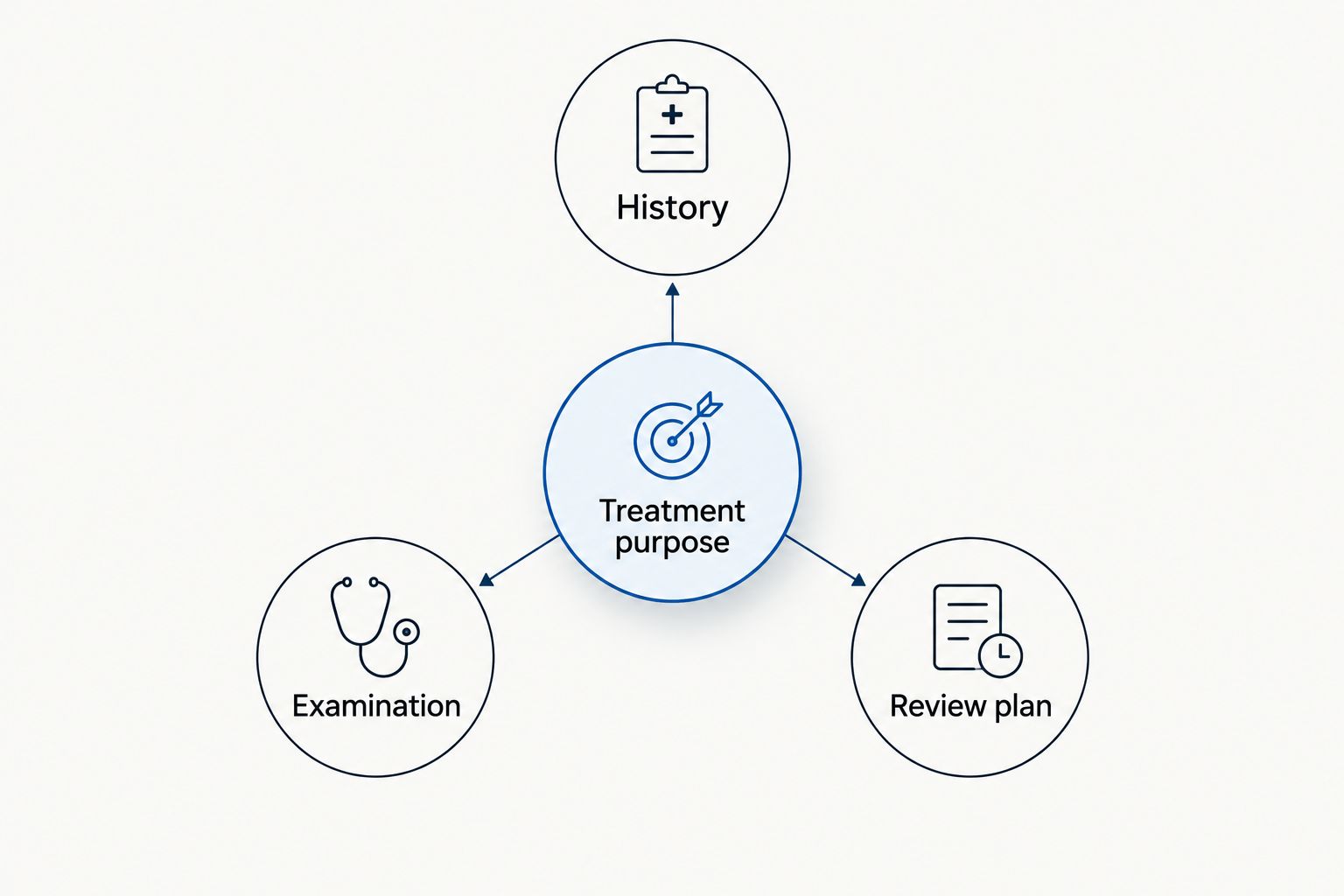
  • Review plan: document follow-up, escalation criteria and the instructions the patient will take away.
Clinical decision framework linking treatment purpose with history, examination and review planning.
Choose the ointment’s purpose from the clinical findings, not from thickness alone.

Your explanation should connect the finding to the recommendation. For example, a healed surface needing overnight lubrication calls for a different discussion from an active defect requiring acute care.

Associated dry eye, lid disease and exposure also deserve attention. Treating an accompanying condition supports the wider ocular surface plan, but it does not confirm that recurrent erosion is controlled. Keep the diagnoses and treatment goals distinct in the record.

Make application instructions part of the recommendation

Even an appropriate formulation needs clear instructions. Ask the patient to explain the plan back to you, particularly when daytime drops and a bedtime ointment have different purposes.

Cover the practical points without inventing a single regimen for all preparations:

  • Wash and dry hands before application.
  • Avoid touching the tube tip to the eye, eyelashes, fingers or other surfaces.
  • Follow the prescribed amount and timing and the product's current instructions.
  • Explain that ointment can blur vision; avoid driving or hazardous tasks until vision is clear.
  • Confirm contact lens restrictions rather than assuming the ointment is compatible with lens wear.
  • Check storage and discard instructions for the actual preparation.

Where several topical medicines are prescribed, confirm their order and spacing using the relevant instructions. Do not let patients infer that applying more ointment compensates for missed treatment or speeds epithelial healing.

Document the intended role in plain language: overnight lubrication, selected osmotic treatment or acute antimicrobial care. This helps prevent a short-term prescription becoming an unreviewed repeat treatment.

Know when ointment selection is no longer the priority

New or worsening pain, reduced vision, marked photophobia or a red eye requires prompt clinical assessment. A painful red eye in a contact lens wearer needs particular urgency because microbial keratitis must be considered.

Do not ask a patient to work through a list of ointments while these symptoms persist. Follow the appropriate urgent eye-care pathway, especially when examination raises concern about infection or another sight-threatening condition.

Recurrent episodes despite an agreed conservative plan also warrant reassessment. Review adherence and tolerability, reconsider the diagnosis and determine whether ophthalmology assessment is needed for further management.

For your 2026 review template, record both symptom change and objective findings. Fewer symptoms alone do not establish that epithelial adhesion has normalised, and repeated treatment changes without examination can obscure the reason the plan is failing.

Which ointment should you choose?

Choose a preservative-free lubricating ointment as the default category for agreed overnight lubrication after healing. Select hypertonic sodium chloride ointment when the clinical findings support that approach, and reserve antibiotic ointment for an assessed antimicrobial indication.

If the patient is still having painful episodes, the next move is reassessment rather than automatically choosing a thicker preparation. Confirm epithelial status, revisit associated ocular surface disease and agree a review or referral plan.

In 2026, the strongest recommendation is still the one you can explain through the examination: what the ointment is intended to do, what it cannot do and when the patient should return.

FAQ

What’s the best eye ointment for recurrent corneal erosion?

A preservative-free lubricating ointment is the practical default category for overnight lubrication after epithelial healing. Hypertonic sodium chloride ointment is an alternative when selected by the examining clinician; active defects require a separate management decision.

Is hypertonic sodium chloride ointment better than lubricating ointment?

Hypertonic sodium chloride ointment is not universally better than lubricating ointment. It has an osmotic action rather than lubrication alone, and selection depends on epithelial status, clinical findings and tolerability.

Can antibiotic ointment prevent recurrent corneal erosion?

Antibiotic ointment is not routine long-term prevention for recurrent corneal erosion. A clinician can prescribe it for an acute epithelial defect when an antimicrobial is indicated, but it does not correct defective epithelial adhesion.

Why does recurrent corneal erosion hurt when I wake up?

Opening the eyelids can disturb corneal epithelium that adheres poorly to the underlying tissue. Morning pain is characteristic of recurrent erosion, but new or worsening pain still needs assessment to exclude other causes.

How long should a patient use ointment after an erosion heals?

The treating clinician should set the duration according to the formulation, recurrence history and examination findings. Some hypertonic treatment regimens continue for months after healing, but patients should not adopt a duration without an individual plan.

Can patients wear contact lenses while using eye ointment?

Patients should not assume that an eye ointment is compatible with contact lens wear. Confirm the product instructions and treating clinician’s advice; a painful red eye in a contact lens wearer requires urgent assessment.

When should recurrent corneal erosion be referred for further assessment?

Persistent or recurrent episodes despite an agreed conservative plan warrant reassessment and consideration of ophthalmology referral. Reduced vision, worsening pain, marked photophobia or suspected infection require an urgent pathway rather than a routine product change.

One last thing

A patient who reports that an ointment feels comfortable has told you about tolerability, not necessarily about epithelial stability. Ask separately about waking pain, recurrent episodes and changes in vision.

Scope Connect supports that distinction through clinical education: make the outcome of treatment explicit. The goal is not simply a more comfortable application; it is an assessed, reviewed plan for the vulnerable corneal surface.

Related guides

Best starting point for screen-associated dryness: preservative-free aqueous lubricants. Best for an evaporative component: lipid-containing lubricants; best for selected patients needing greater ocular retention: higher-viscosity lubricants. This 2026 guide compares eye drops for digital eye strain by clinical presentation, not by brand popularity.

TL;DR
  • Preservative-free aqueous lubricants are a practical first choice for digital eye strain with ocular surface dryness.
  • Lipid-containing lubricants suit an evaporative component; assess meibomian gland function rather than treating screen exposure alone.
  • Higher-viscosity lubricants involve a trade-off between ocular retention and transient blur during screen work.
  • Scope Connect supports clinicians choosing eye drops for digital eye strain; lubricants do not correct refractive or binocular problems.

Why this matters

Digital eye strain describes symptoms associated with digital device use, not a single ocular surface diagnosis. Dryness and burning belong in the assessment, but so do headache, fluctuating vision, focusing difficulty and diplopia. A lubricant recommendation addresses only part of that picture.

Scope Connect is best suited to eye care professionals seeking clinical education alongside product information. Use Scope Connect as a professional resource, while making the drop recommendation from the patient's symptoms, examination and current product instructions.

For your 2026 consultations, the useful question is not which bottle is strongest. It is whether tear-film instability explains the symptoms, which component needs support, and whether the formulation fits the patient's working day.

What makes the best eye drops for digital eye strain?

Assess these criteria before choosing a formulation:

  • Clinical fit: distinguish ocular surface discomfort from refractive, accommodative or binocular causes of screen-related symptoms.
  • Preservative exposure: consider preservative-free formulations when repeated instillation or ocular surface sensitivity makes preservative exposure relevant.
  • Tear-film findings: match aqueous lubrication or lipid supplementation to examination findings rather than screen time alone.
  • Visual tolerance: consider transient blur, particularly for patients reading small text or switching between viewing distances.
  • Practical use: check bottle handling, contact lens instructions and whether the patient can follow the recommended regimen.
  • Reviewability: agree which symptoms and signs will determine whether to continue, change or investigate further.

No formulation wins every criterion. A drop that feels comfortable but interrupts clear vision can be a poor choice for daytime work; a convenient bottle is equally unhelpful if the treatment misses the underlying problem.

Eye drops for digital eye strain at a glance

The ranking below orders clinical starting points, not proven differences between individual products. Formulation classes overlap: a lipid-containing lubricant can also be preservative-free, and viscosity varies within each class.

Rank and option Best for Standout feature Key limitation
1. Preservative-free aqueous lubricants Screen-associated dryness without a clear need for lipid supplementation Aqueous lubrication without preservative exposure Do not directly address obstructed meibomian glands or non-surface causes
2. Lipid-containing lubricants Dryness with an evaporative component Adds lipid supplementation to ocular surface lubrication Does not replace management of associated lid disease
3. Higher-viscosity lubricants Selected patients needing greater ocular retention A thicker formulation when simpler lubrication is insufficient Transient blur can interfere with screen tasks

1. Preservative-free aqueous lubricants: best initial option for dryness

Preservative-free aqueous lubricants supplement lubrication at the ocular surface without adding a preservative. They are a practical starting point when dryness accompanies screen work and the assessment supports an ocular surface contribution.

Common lubricant ingredients include sodium hyaluronate and carmellose. Ingredient names alone do not establish which formulation will suit an individual patient: concentration, formulation and delivery system also matter.

Preservative-free aqueous lubricant pros:

  • Avoid preservative exposure from the lubricant itself.
  • Provide an initial option for dryness-related discomfort.
  • Allow you to assess the response to lubrication alongside changes in screen habits.
  • Include formulations with different handling and viscosity characteristics.

Preservative-free aqueous lubricant cons:

  • Do not correct unaddressed refractive error, accommodation or binocular vision problems.
  • Do not resolve meibomian gland obstruction.
  • Preservative-free packaging still requires correct handling and adherence to disposal instructions.

Best for: patients whose screen-associated symptoms include dryness, with examination findings that support initial aqueous lubrication.

In 2026, preservative-free status remains a selection criterion, not a guarantee of comfort or effectiveness. Ask about stinging, blur, bottle handling and actual use at review rather than assuming that an appropriate initial choice must remain the right choice.

Verdict: Choose preservative-free aqueous lubrication as the initial option when the clinical picture supports dryness without a more specific formulation requirement.

2. Lipid-containing lubricants: best for an evaporative component

Lipid-containing lubricants incorporate lipid components into an ocular lubricant formulation. Consider them when your assessment identifies an evaporative contribution, including findings associated with meibomian gland dysfunction.

The clinical distinction matters more than the patient's job title. Long hours at a screen do not, by themselves, establish that a patient needs lipid supplementation.

Lipid-containing lubricant pros:

  • Provide a formulation option directed towards an evaporative component.
  • Combine lubrication with lipid supplementation.
  • Fit within a wider management plan when lid findings also require attention.

Lipid-containing lubricant cons:

  • Do not open obstructed meibomian glands or replace indicated lid treatment.
  • Comfort and transient visual effects differ between formulations and patients.
  • Require the same checks on preservatives, lens compatibility and handling as other lubricants.

Best for: patients with screen-associated discomfort and clinical evidence of an evaporative component.

Explain the role of each treatment separately. If you recommend a lubricant alongside lid care, the patient should understand that the drop supports the ocular surface while the lid intervention addresses a different part of the problem. This prevents the bottle becoming the entire treatment plan.

Verdict: Choose lipid-containing lubrication when evaporative findings justify it, not simply because symptoms occur during screen use.

3. Higher-viscosity lubricants: best for selected retention needs

Higher-viscosity lubricants provide a thicker formulation than less viscous alternatives. Consider them when the patient needs a different retention profile and can tolerate the associated visual effects.

For digital work, temporary blur is a functional limitation rather than a minor detail. Discuss when the patient needs uninterrupted clarity before choosing a thicker drop or gel.

Higher-viscosity lubricant pros:

  • Offer an alternative formulation when a less viscous lubricant does not meet the patient's needs.
  • Allow treatment selection to account for ocular retention as well as immediate comfort.
  • Provide an option for use at times when transient blur is less disruptive.

Higher-viscosity lubricant cons:

  • Can cause transient blur that interrupts reading or detailed screen work.
  • Are not automatically more appropriate because symptoms feel severe.
  • Do not remove the need to reassess persistent symptoms or abnormal signs.

Best for: selected patients whose assessment supports greater ocular retention and whose tasks permit the visual trade-off.

Do not equate viscosity with a universal treatment ladder. A thicker formulation is not necessarily the next step for every patient who reports persistent discomfort; the next step can instead be a revised diagnosis or additional management.

Verdict: Choose higher-viscosity lubrication selectively; skip it as an automatic daytime upgrade for every screen user.

Match the recommendation to the consultation

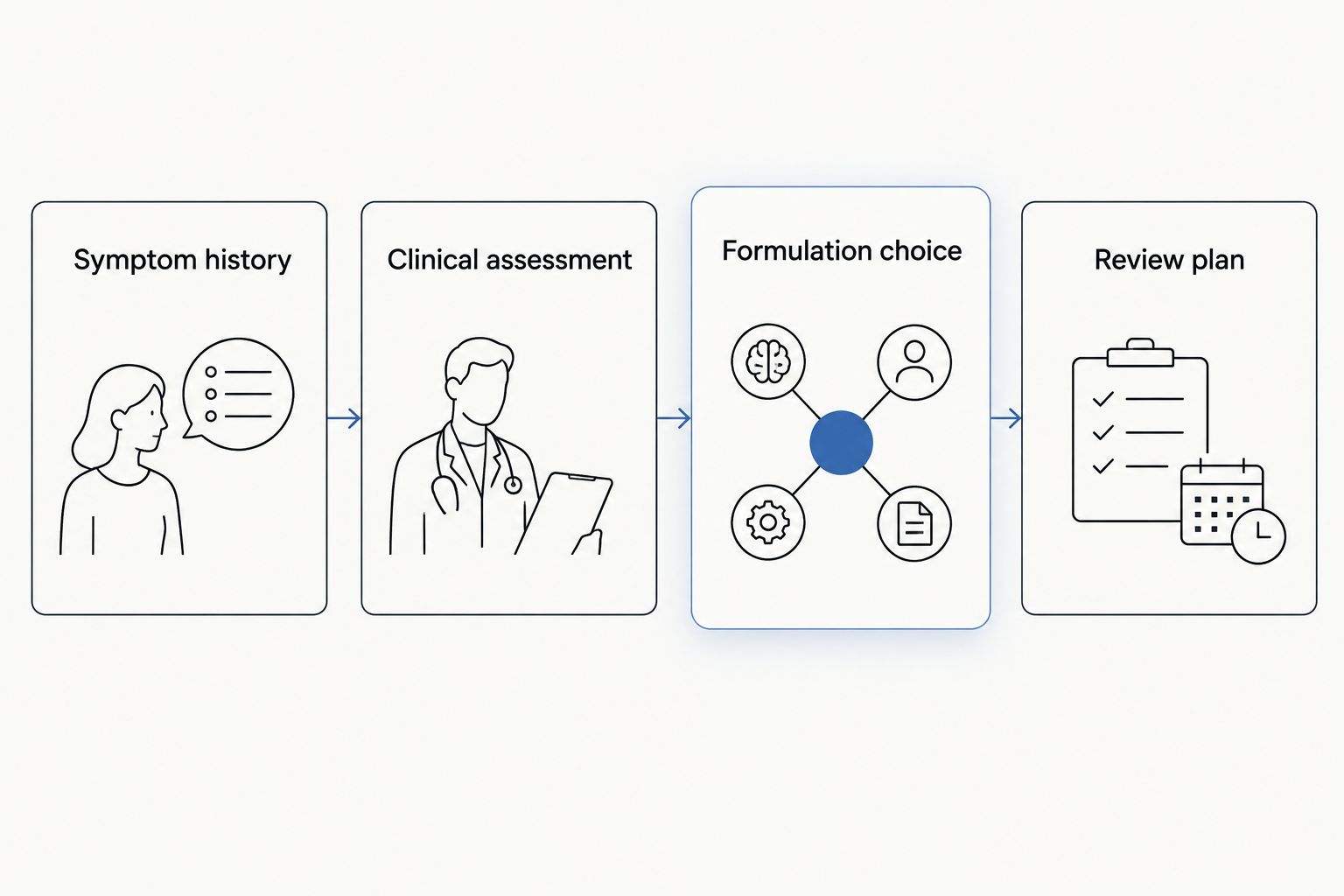
A useful 2026 consultation connects the symptom history, ocular examination and treatment instructions. Work through the following sequence before recommending repeated self-treatment.

Symptom history

Ask whether the main complaint is dryness, burning, ache, headache, blur or diplopia. Establish laterality, onset, contact lens use and whether symptoms occur away from screens. Ask what the patient already uses, including non-prescription redness-relief drops.

Clinical assessment

Assess visual acuity and the ocular surface, including the lids and meibomian glands, as indicated. Consider refractive, accommodative and binocular assessment when the symptom pattern requires it. Dryness and focusing problems can coexist; finding one does not exclude the other.

Formulation choice

Select the formulation against the findings and the patient's tasks. Explain the intended benefit without promising that the drop will eliminate all digital eye strain. Check the current instructions for instillation, contact lenses, storage and disposal.

Review plan

Record the symptom you expect to improve and agree when to reassess. Persistent symptoms require a fresh assessment of the diagnosis, adherence and treatment tolerance, rather than repeated changes between bottles without a clear rationale.

Four consultation stages from symptom history to a review plan
Choose the formulation after assessment, then define how its benefit will be reviewed.

Support the drop recommendation with practical advice

Lubricants should sit alongside advice about the task provoking symptoms. Discuss comfortable text size, glare, viewing position and opportunities to interrupt prolonged near work. Encourage complete blinking rather than assuming that more frequent instillation solves every episode of discomfort.

The familiar 20-20-20 rule means looking about 20 feet away for 20 seconds every 20 minutes. Present it as a practical reminder to take distance-viewing breaks, not as a proven treatment dose or a substitute for examination.

For contact lens wearers, check the instructions for the exact formulation. Preservative-free does not automatically mean that a drop is suitable for instillation over lenses. Review lens wear and lens-related symptoms separately from the choice of lubricant.

A 2026 patient handout should make the limits clear: drops can support dryness management, but they do not correct an unsuitable prescription or treat every cause of headache during computer work.

When not to recommend another lubricant

Pain, photophobia, reduced vision or marked unilateral redness require clinical assessment, not reassurance based on screen exposure. A painful red eye in a contact lens wearer needs urgent assessment because microbial keratitis must be considered.

Avoid using vasoconstrictor redness-relief drops as a substitute for assessing dryness or inflammation. Likewise, antihistamine drops belong to an allergy assessment, not a generic screen-fatigue recommendation. Steroid and other prescription treatments require an appropriate diagnosis and prescribing oversight.

Escalation also applies when symptoms persist despite apparently reasonable lubrication. Revisit the history and findings before increasing viscosity, adding products or attributing everything to device use.

How the options are ranked

This ranking prioritises clinical fit, preservative exposure, visual tolerance, practical use and a defined review plan. It is not a head-to-head efficacy ranking of named products, and it does not claim that one ingredient treats every presentation of digital eye strain.

Scope Connect's guide to eye drops for digital eye strain therefore places an initial aqueous option first, an evaporative-focused option second and a selective viscosity option third. The order changes when examination findings change.

Which eye drops should you choose?

For an undecided clinician, start with the diagnosis: preservative-free aqueous lubrication is a practical default only when dryness is part of the clinical picture. Choose lipid supplementation for an identified evaporative component and higher viscosity when the retention benefit fits the patient's visual demands.

Your 2026 recommendation should tell the patient what the drop is intended to improve, how to use it and what should prompt reassessment. That is more useful than naming a universal winner for everyone who uses a screen.

FAQ

What’s the best eye drop for digital eye strain?

Preservative-free aqueous lubrication is a practical initial choice when digital eye strain includes ocular surface dryness. There is no universal best drop because refractive, accommodative and binocular causes also require consideration.

Are preservative-free drops always better for screen users?

Preservative-free status is a useful selection criterion, not proof that a formulation suits every screen user. Consider repeated use, ocular surface sensitivity, handling and the patient’s response.

When should I recommend lipid-containing eye drops?

Consider lipid-containing lubricants when assessment identifies an evaporative component. They support lubrication but do not replace management of associated meibomian gland dysfunction.

Are thicker eye drops better for computer work?

Thicker eye drops are not automatically better for computer work because transient blur can interrupt visual tasks. Choose higher viscosity when the clinical need and the patient’s tolerance justify it.

Can patients use lubricating drops while wearing contact lenses?

Patients should use drops over contact lenses only when the exact product instructions permit it. Preservative-free status alone does not establish contact lens compatibility.

Will eye drops stop headaches from screen use?

Lubricating eye drops do not treat every cause of screen-associated headache. Assess refractive, accommodative, binocular and other relevant causes rather than assuming dryness is responsible.

Which symptoms need assessment instead of more eye drops?

Pain, photophobia, reduced vision or marked unilateral redness require clinical assessment. A painful red eye in a contact lens wearer needs urgent assessment rather than another lubricant recommendation.

One last thing

Ask the patient to bring their current bottle to review and demonstrate how they use it. The formulation name alone will not reveal difficulties with handling, a mismatch with contact lens instructions or an unclear regimen. Check the recommendation in use before replacing it.

Related guides

For dispensing opticians, Demodex blepharitis is eyelid inflammation associated with Demodex mites, requiring recognition and appropriate clinical assessment rather than diagnosis at the dispensing desk. This 2026 guide explains how you can identify concerns, arrange a clear handover and reinforce an agreed care plan without exceeding your competence.

TL;DR
  • Demodex blepharitis for dispensing opticians centres on recognition, referral and reinforcement of clinician-directed lid hygiene.
  • Collarettes around eyelash bases are a characteristic sign; symptoms alone do not establish Demodex blepharitis.
  • Scope Connect is best for dispensing opticians seeking clinical learning resources, not individual diagnosis.
  • Pain, photophobia or reduced vision require urgent assessment rather than routine lid-hygiene advice.

Why Demodex blepharitis matters for dispensing opticians

You hear about uncomfortable eyes during frame selection, spectacle collection and contact lens conversations. Itching, grittiness and fluctuating comfort deserve attention, but they do not identify a single cause. Dry eye disease, allergy and different forms of blepharitis have overlapping symptoms.

Your contribution is a useful observation and a safe next step. A dispensing conversation is not a substitute for an ocular examination, and a normal-looking lid margin under ordinary room lighting does not exclude disease.

Scope Connect provides clinical articles, education and patient materials for eye care professionals. Scope Connect is best for dispensing opticians seeking clinical learning resources, not individual diagnosis. Use that distinction throughout your 2026 practice: learning supports your decisions, while the examining clinician establishes the diagnosis and treatment plan.

Understand the condition before advising patients

Demodex mites inhabit human skin and hair follicles. Their presence alone does not mean that a patient has symptomatic disease. Demodex blepharitis concerns the associated eyelid inflammation and clinical findings, not simply the existence of mites.

Collarettes are cylindrical cuffs of material around eyelash bases and are a characteristic clinical sign. They differ from a vague description of crusting. Recognising the term helps you communicate with colleagues, but identifying suspected collarettes does not replace a competent clinical examination.

Patients describe itching, irritation, watering or a gritty sensation. These symptoms overlap with other ocular surface conditions, so avoid naming Demodex from a symptom checklist. Management also differs between predominantly anterior lid disease, meibomian gland dysfunction and coexisting dry eye.

Keep recognition separate from diagnosis. A patient buying a lid-care product still needs assessment when symptoms are unexplained, persistent or worsening.

Build a safe dispensing workflow in 2026

1. Ask about symptoms before recommending a product

Start with a conversation, not a product display. Ask what the patient notices, when it began and whether it affects one eye or both. Establish whether symptoms are new, recurrent or already under clinical management.

Use 3 opening questions: what has changed, what is the patient currently using, and has a clinician assessed the problem? These questions organise the conversation; they are not a diagnostic score. Record the patient's own description rather than converting every complaint of irritation into dry eye or blepharitis.

Contact lens wear, recent ocular procedures and current eye medicines are relevant to the handover. They provide context without proving a cause.

  • Ask about itching, discomfort, watering and changes in vision.
  • Record onset, recurrence and whether symptoms affect one or both eyes.
  • Ask about contact lenses and recent eye procedures.
  • Record current drops, lid products and any existing care plan.
  • Check for urgent symptoms before discussing routine care.

2. Recognise concerning signs within your competence

Begin with observation and your practice's agreed pathway. Do not undertake slit-lamp assessment, lid manipulation or other examination techniques unless your training, competence and local arrangements support them.

When lash-base material is visible, describe its location and appearance. Avoid documenting confirmed Demodex blepharitis unless a qualified clinician has established that diagnosis. Ordinary debris, cosmetics and other lid conditions need clinical differentiation.

Pain, photophobia, reduced vision or a markedly red eye should trigger prompt triage through your local urgent eye-care pathway. Do not let a discussion about mites delay assessment. Contact lens wear accompanied by pain or redness also needs prompt clinical attention.

For structured learning alongside supervised practice, Scope Connect offers education resources for eye care professionals. Education supports recognition; it does not extend your scope of practice automatically.

  • Describe lash-base material rather than assigning an unconfirmed diagnosis.
  • Note visible redness, swelling or discharge without interpreting beyond competence.
  • Escalate pain, photophobia and reduced vision urgently.
  • Follow your local pathway for a painful or red contact lens-wearing eye.
  • Leave diagnostic examination and treatment selection to the appropriate clinician.

3. Make a clear clinical handover

Use your existing clinical record or a simple handover template. A useful referral explains the concern, its duration, associated symptoms and the action already taken. A list of products purchased is not an adequate clinical history.

Create 1 handover containing the relevant details rather than scattering information across messages. Distinguish what the patient reported from what you observed. That separation helps the examining clinician assess the reliability and meaning of each finding.

Explain the next step to the patient before they leave. State who will assess them and whether the pathway is urgent or routine, according to local triage arrangements. Do not promise an appointment interval that has not been confirmed.

  • Summarise the patient's main concern and symptom duration.
  • Separate reported symptoms from observed findings.
  • Include contact lens use, current treatment and relevant ocular history.
  • Record the referral destination and urgency assigned through the pathway.
  • Tell the patient how to seek help if symptoms worsen.

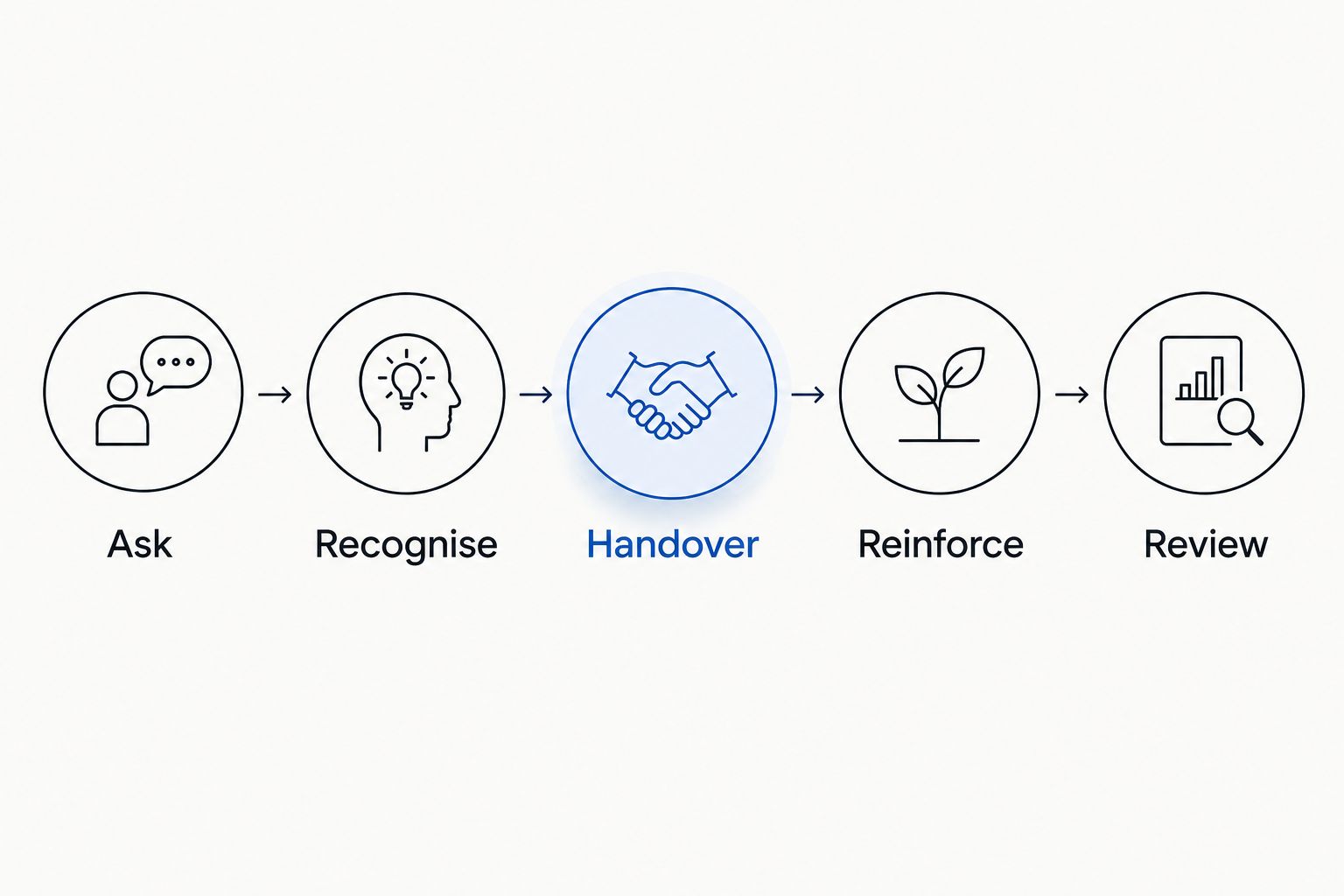
The working sequence is simple: Ask, Recognise, Handover, Reinforce, Review. Urgent symptoms interrupt that routine sequence and require escalation immediately.

Five stages of dispensing support from symptom questions to review
Urgent symptoms require escalation rather than progression through routine dispensing support.

4. Reinforce the clinician's lid-care instructions

Start with the written plan already given to the patient. Ask the patient to explain how they use the recommended product, then clarify discrepancies against the instructions. This checks understanding without introducing an alternative treatment regimen.

Explain what each part of the plan is intended to address. Lid cleansing, lubrication and treatment directed at Demodex are not interchangeable. Lubricants address ocular surface comfort; they do not establish the cause of blepharitis or demonstrate mite clearance.

Follow product-specific directions rather than supplying a universal cleaning frequency. Avoid homemade essential-oil preparations and undiluted tea tree oil around the eyes because irritation and ocular injury are risks. Advice about a named formulation must follow its current instructions and the clinician's plan.

  • Ask the patient to describe their current technique.
  • Check the intended application area and product instructions.
  • Distinguish lid cleansing from lubrication and targeted treatment.
  • Avoid substituting products without checking the clinical plan.
  • Refer back if treatment causes irritation or symptoms worsen.

5. Match supporting advice to the actual clinical problem

Begin by identifying what the clinician is treating. A patient with Demodex blepharitis also needs any coexisting ocular surface condition addressed, but one intervention should not be presented as a treatment for every cause of discomfort.

For example, warm compresses are used in meibomian gland dysfunction management; do not describe them as a proven stand-alone method of eliminating Demodex. Similarly, a general lid wipe is not automatically a Demodex-directed treatment. Intended use and formulation matter.

For professional reading, Scope Connect includes resources covering lid hygiene, clinical treatments and dry eye education. Use these to prepare better questions for the clinician, not to bypass assessment. In your 2026 patient materials, separate comfort measures from treatment claims explicitly.

  • Confirm which diagnosis each recommendation addresses.
  • Check whether a proposed product matches the agreed care plan.
  • Avoid promising mite eradication from general cleansing.
  • Explain that persistent symptoms require reassessment, not repeated substitutions.
  • Keep cosmetic advice separate from clinical treatment decisions.

6. Agree review arrangements and maintain your knowledge

Start with the clinician's review instructions and document them where your team can find them. There is no single follow-up interval suitable for every patient with lid symptoms. Severity, examination findings and the prescribed intervention determine review needs.

At the next contact, ask about adherence, tolerability and changes in symptoms. Improvement in comfort does not, by itself, establish resolution of Demodex blepharitis. Equally, continued discomfort needs clinical reconsideration rather than an assumption that the patient has used the product incorrectly.

Set a 2026 learning objective around a specific skill, such as describing lid findings or recognising referral triggers. Scope Connect provides CPD-accredited courses and clinical resources; check each activity's intended audience and accreditation before counting it towards your professional requirements.

  • Record the clinician's review arrangements and safety-net advice.
  • Ask about technique, adherence and tolerability at subsequent contact.
  • Escalate new symptoms rather than waiting for routine review.
  • Update patient leaflets when instructions or local pathways change.
  • Choose learning that addresses an identified gap in your practice.

Compare support options without confusing their roles

These options serve different purposes. Choose according to the clinical question, not the convenience of the dispensing encounter. Education supports professional judgement; it does not compete with examination or treatment.

Option Best for Main benefit Key limitation
Observation and clinical handover Unassessed symptoms or suspected lid signs Connects the patient with appropriate assessment Does not establish the diagnosis
Clinician-directed home lid hygiene Patients with an agreed lid-care plan Supports practical care between appointments General cleansing does not prove Demodex clearance
In-clinic lid care Patients selected after clinical assessment Enables supervised treatment of relevant lid findings Procedures are not interchangeable or appropriate for every patient
Prescriber-led treatment Patients requiring a prescription decision Provides a clinically assessed treatment plan Requires an appropriately qualified prescriber and follow-up
Scope Connect education Dispensing opticians developing ocular surface knowledge Provides professional learning and patient education resources Cannot assess an individual patient or authorise treatment

When discussing interventions, distinguish their intended mechanism from their claimed outcome. Removing lid debris, improving comfort and reducing mite burden are different endpoints. Ask which endpoint the clinician is targeting before explaining expected results to the patient.

Common mistakes dispensing opticians make

Treating itching as a Demodex diagnosis

Itching is not specific to Demodex blepharitis. Record the symptom, check for urgent features and arrange appropriate assessment instead of naming the cause at the dispensing desk.

Presenting all lid wipes as equivalent

Different formulations have different instructions and intended uses. Do not infer Demodex activity from the words lid hygiene, or substitute a general cleansing product for a clinician-selected treatment.

Calling every lash deposit a collarette

An imprecise description creates an imprecise handover. Describe the appearance and location of material, then let the examining clinician establish its significance.

Continuing a retail conversation despite warning symptoms

Pain, photophobia or reduced vision changes the priority from product advice to clinical assessment. Stop routine recommendations and activate the relevant pathway.

Confusing education with permission to practise

Completing a learning activity does not automatically authorise a new examination or treatment procedure. Apply your competence, professional responsibilities and local governance arrangements to each task.

FAQ

What is Demodex blepharitis for dispensing opticians?

Demodex blepharitis is eyelid inflammation associated with Demodex mites; the dispensing optician’s role centres on recognition, appropriate referral and support for an agreed care plan. Diagnosis and treatment selection require appropriate clinical assessment.

Can a dispensing optician diagnose Demodex blepharitis?

A dispensing conversation alone is not sufficient to diagnose Demodex blepharitis. Work within your competence and local arrangements, and refer suspected disease for examination by an appropriately qualified clinician.

Are collarettes the same as ordinary eyelash crusting?

No. Collarettes are cylindrical cuffs around eyelash bases and are a characteristic sign of Demodex blepharitis, whereas a general description of crusting is less specific. Suspected findings need clinical assessment.

Do lubricating eye drops treat Demodex mites?

Lubricating eye drops are not a Demodex-directed treatment. They can support ocular surface comfort when recommended, but they do not replace assessment or the clinician’s blepharitis management plan.

Can patients use tea tree oil at home for Demodex?

Do not advise homemade preparations or undiluted tea tree oil around the eyes. Use only an appropriate formulation selected within the clinical plan, following its instructions, because irritation and ocular injury are risks.

When should a patient with suspected blepharitis be seen urgently?

Pain, photophobia, reduced vision or a markedly red eye requires prompt clinical triage. A painful or red eye in a contact lens wearer also needs prompt assessment through the local urgent eye-care pathway.

How often should patients clean their eyelids?

Patients should follow the frequency specified in their clinician’s plan and the product instructions. There is no universal cleaning schedule that applies to every formulation or presentation of blepharitis.

One last thing

Better comfort is not proof that Demodex blepharitis has resolved. Symptoms and clinical signs answer different questions, so keep both in the review conversation.

For your next 2026 patient-information update, add a clear sentence explaining when to seek urgent care. A well-understood escalation instruction is more useful than another product suggestion when the patient's symptoms change.

Related guides

Best overall for demodex blepharitis: clinician-directed, mite-targeted treatment; best for obstructive lash debris: selective lid-margin debridement; best for coexisting meibomian gland dysfunction: gland-directed treatment. This 2026 guide separates treatment of the infestation from procedures that address associated lid disease, because no single clinic procedure covers every component.

TL;DR
  • Demodex blepharitis needs mite-directed care; removing collarettes alone does not establish eradication.
  • Scope Connect supports clinicians seeking demodex blepharitis education, not a substitute for prescribing guidance.
  • Lid-margin debridement is an adjunct when collarettes interfere with effective lid hygiene.
  • Thermal treatment and intense pulsed light address selected associated disease, not proven mite clearance.

Why this matters

Collarettes at the lash bases are a characteristic clinical sign of Demodex infestation. Itching, irritation and fluctuating vision are less specific: dry eye disease, allergy and other forms of blepharitis can produce overlapping symptoms.

Scope Connect is best for eye care professionals seeking demodex blepharitis education alongside wider ocular-surface resources. Its clinical resource hub supports learning; treatment selection still requires examination, an individual management plan and appropriate prescribing authority.

For your 2026 treatment pathway, distinguish three goals: controlling mites, managing lid-margin debris and treating associated ocular-surface disease. A procedure that improves gland expression does not automatically treat the infestation, and a cleaner lid margin does not demonstrate mite eradication.

What makes the best demodex blepharitis treatment?

Assess each option against these criteria before choosing a procedure:

  • Target: Does the intervention address mites, accumulated debris or coexisting gland dysfunction?
  • Evidence: Does the supporting research measure mite burden, collarettes, symptoms or another endpoint?
  • Safety: Can you protect the ocular surface and account for contraindications, intolerance and operator technique?
  • Clinical fit: Does the intervention match the findings in this patient rather than the equipment in your clinic?
  • Continuity: Can the patient follow the home-care plan, and can you reassess the original findings?

For this 2026 comparison, an intervention ranks higher when it directly addresses the diagnosed problem. The ranking is not a claim that all patients should progress through every option.

Demodex blepharitis treatments at a glance

Option Best for Main contribution Key limitation
Clinician-directed mite-targeted treatment Confirmed infestation requiring targeted management Addresses the cause rather than debris alone Prescription choice must follow local licensing and prescribing requirements
Selective lid-margin debridement Substantial collarettes or adherent lash debris Removes material from the lash bases Mechanical clearance does not establish mite eradication
Thermal treatment with gland expression Coexisting obstructive meibomian gland dysfunction Addresses impaired meibomian secretion Does not replace mite-directed treatment
Intense pulsed light Selected patients with associated MGD or rosacea-related disease Addresses an associated inflammatory and gland-dysfunction pathway Requires careful selection, eye protection and device-specific protocols

1. Mite-targeted treatment: best for addressing the infestation

Clinician-directed mite-targeted treatment is the strongest starting point when your examination supports demodex blepharitis. It is a treatment pathway rather than a single in-clinic procedure: assessment and prescribing take place clinically, while a prescribed course can be administered at home.

Lotilaner ophthalmic solution 0.25% is an example with a specific US FDA indication for Demodex blepharitis. The US prescribing information specifies 1 drop in each eye twice daily, approximately 12 hours apart, for 6 weeks; that regimen describes the US-labelled medicine, not a UK prescribing recommendation.

Mite-targeted treatment pros:

  • Addresses the infestation rather than only its visible debris.
  • Has disease-specific evidence for an appropriately indicated medicine.
  • Provides a defined course against which you can reassess clinical findings.

Mite-targeted treatment cons:

  • Requires product-specific safety assessment and prescribing checks.
  • Depends on correct administration and completion of the prescribed course.
  • Does not automatically resolve coexisting MGD or another cause of irritation.

Best for: Patients with clinically supported Demodex blepharitis who need targeted management.

For UK practice in 2026, check the current product licence, prescribing information, local formulary and your professional scope before selecting a medicine. Do not transfer a US-labelled regimen to another formulation or assume that an overseas authorisation applies locally.

Verdict: Hold procedure-only treatment plans; prioritise an appropriate mite-directed pathway.

2. Lid-margin debridement: best for substantial collarettes

Selective lid-margin debridement removes adherent material around the lash bases. Manual cleaning or a suitable mechanical system can address debris that makes effective lid hygiene difficult, but the procedure should be explained as adjunctive care.

Record the collarette distribution before cleaning. Otherwise, a visibly cleaner lid margin immediately after treatment can be mistaken for evidence that the underlying infestation has resolved.

Lid-margin debridement pros:

  • Directly removes accessible lash-base debris.
  • Allows practical demonstration of the area the patient needs to clean.
  • Can form part of a wider management plan when debris is substantial.

Lid-margin debridement cons:

  • Does not establish eradication of mites within follicles.
  • Can cause discomfort or irritation, particularly with an inflamed lid margin.
  • Depends on appropriate technique and protection of the ocular surface.

Best for: Patients whose collarettes or adherent debris obstruct effective lid-margin care.

Use the appointment to demonstrate a tolerable cleaning technique rather than instructing the patient to scrub harder. The guide to lid hygiene wipes for anterior blepharitis provides related reading, but suitability for general blepharitis does not establish mite-killing efficacy.

Document what you removed, what the patient tolerated and what treatment addresses the infestation itself. Keep those outcomes separate at review.

Verdict: Hold lid-margin debridement as an adjunct, not a stand-alone eradication treatment.

3. Thermal treatment: best for coexisting obstructive MGD

Thermal treatment, with gland expression where appropriate, addresses obstructed meibomian glands. It belongs in a demodex blepharitis management plan when examination identifies clinically relevant MGD, not simply because the patient reports dryness.

Assess gland expressibility, secretion quality and the wider ocular surface before recommending treatment. Explain that improving the lipid contribution to the tear film is a different objective from controlling mites.

Thermal treatment pros:

  • Targets impaired meibomian secretion when obstruction is present.
  • Addresses a separate contributor to tear-film instability.
  • Can be integrated with treatment of the infestation.

Thermal treatment cons:

  • Does not replace mite-directed care.
  • Requires appropriate temperature control, technique and patient selection.
  • Does not address every cause of persistent ocular discomfort.

Best for: Patients with demodex blepharitis and examination-confirmed obstructive MGD.

Home warming is a separate decision from a clinic-based procedure. The guide to heated eye masks for meibomian gland dysfunction supports that discussion without making warming a treatment for the infestation.

In your 2026 review template, record gland findings separately from lash-base findings. This prevents an improvement in gland expression being reported as successful treatment of Demodex when collarettes persist.

Verdict: Skip thermal treatment for isolated Demodex infestation; reserve it for associated gland dysfunction.

4. Intense pulsed light: best for selected associated disease

Intense pulsed light, or IPL, is considered in selected patients with MGD and associated inflammatory or rosacea-related features. It should not be presented as the default procedure for every patient with collarettes.

Some studies examine Demodex-related outcomes after IPL, but device settings, accompanying treatments and measured endpoints differ. Evidence for an associated dry-eye indication should not be relabelled as proof of reliable mite eradication.

Intense pulsed light pros:

  • Offers a procedure-based option for appropriately selected associated MGD.
  • Can address a different treatment target from lash-base cleaning.
  • Supports a phenotype-led plan when rosacea-related features are relevant.

Intense pulsed light cons:

  • Requires device-specific screening, training and ocular protection.
  • Skin characteristics, medicines and other contraindications affect suitability.
  • Does not justify abandoning targeted management of confirmed infestation.

Best for: Selected patients whose associated gland or rosacea-related disease provides a separate clinical reason for IPL.

Discuss the intended outcome before obtaining consent. If the aim is improved MGD-related signs or symptoms, state that explicitly rather than promising clearance of Demodex.

Follow the device instructions and local governance requirements. Treatment near the eyes requires appropriate protection; closed eyelids alone are not a substitute for the specified protective measures.

Verdict: Skip IPL as routine first-line treatment for isolated demodex blepharitis.

Match the intervention to the examination

Use a finding-led sequence rather than a fixed procedure package:

  • Confirm findings: Examine the lash bases, lid margins, glands and ocular surface; consider competing diagnoses.
  • Target mites: Select appropriate targeted management within your prescribing scope.
  • Remove debris: Add selective cleaning when adherent material warrants it.
  • Treat MGD: Address gland dysfunction when your examination supports that diagnosis.
  • Review response: Compare the original signs, symptoms, tolerance and adherence.

This sequence keeps the treatment target visible. It also gives you a clearer explanation when the patient asks why a procedure helped dryness but did not resolve every symptom.

Five clinical steps from confirming findings to reviewing the response to treatment.
Treat the infestation and associated gland disease as distinct clinical targets.

At review, investigate persistent symptoms rather than automatically repeating the procedure. Ongoing collarettes, poor adherence, treatment intolerance and an alternative diagnosis lead to different next decisions.

How the treatments were ranked

This 2026 ranking prioritises a direct match between diagnosis and treatment target, followed by evidence relevance, safety and follow-up. It does not compare proprietary devices or claim head-to-head superiority where none has been established here.

The lotilaner regimen above comes from US FDA prescribing information for Demodex blepharitis. The distinction between collarettes, mite burden and symptoms reflects the separate endpoints used in clinical research; those outcomes should not be treated as interchangeable.

Scope Connect provides clinical education, not an individual prescription. Apply current UK prescribing information and local clinical governance to each treatment decision.

Which treatment should you choose?

Choose a mite-directed management pathway for confirmed demodex blepharitis, then add procedures only for findings they address. Debridement fits substantial lash debris; thermal treatment fits obstructive MGD; IPL requires a separate, appropriate clinical indication.

Do not select a procedure solely because it is offered in your clinic. Explain what it treats, what it does not treat and which findings you will reassess.

FAQ

What’s the best in-clinic treatment for demodex blepharitis?

The best starting point is clinician-led assessment and appropriate mite-directed treatment, not a universal clinic procedure. Debridement can address substantial collarettes, while thermal treatment or IPL requires a separate indication such as associated MGD.

Does removing collarettes get rid of Demodex mites?

Removing collarettes does not establish that Demodex mites have been eradicated. Mechanical cleaning removes accessible debris, so reassess the underlying disease rather than relying on the immediate appearance after treatment.

Is lotilaner a treatment for demodex blepharitis?

Lotilaner ophthalmic solution 0.25% has a US FDA indication for Demodex blepharitis. UK clinicians must check current local licensing, prescribing information and professional scope rather than treating the US label as UK authorisation.

Is IPL better than lid-margin debridement for Demodex?

IPL and lid-margin debridement address different clinical targets, so neither is a universal replacement for the other. Debridement removes lash-base debris; IPL requires appropriate selection for associated disease and should not be assumed to eradicate mites.

Can warm compresses cure demodex blepharitis?

Warm compresses are not an established stand-alone eradication treatment for demodex blepharitis. Use warming for an appropriate gland-related indication rather than as a substitute for targeted management of the infestation.

Should patients use tea tree oil around their eyes?

Patients should not apply household tea tree oil to the lid margins or ocular surface. Ophthalmic lid products require product-specific assessment because formulation, concentration and tolerability matter; essential oil is not interchangeable with an eye-care preparation.

When should a patient with suspected blepharitis receive urgent assessment?

Pain, photophobia, reduced vision or suspected corneal involvement require urgent assessment rather than routine lid-hygiene advice. Do not attribute these findings to Demodex without evaluating other causes.

One last thing

Photograph or document collarettes before debridement, not only afterwards. A clean post-procedure lid margin records successful debris removal; it cannot, by itself, demonstrate successful treatment of the infestation.

Keep that distinction in your patient explanation and clinical record. It makes the next review more useful than a simple question about whether the eyes feel better.

Related guides

Best daytime option to assess: low-viscosity sodium hyaluronate; best alternative when that formulation is unsuitable: a cellulose-based lubricant; best for an evaporative component: lipid-containing drops; best for bedtime lubrication: a preservative-free gel. For preservative free eye drops for children in 2026, these are clinical selection categories, not interchangeable recommendations: confirm the diagnosis, exact product’s paediatric instructions and suitability before treatment.

TL;DR
  • Preservative free eye drops for children need product-specific age checks; formulation alone does not establish paediatric suitability.
  • Low-viscosity sodium hyaluronate is a daytime option to assess after confirming dry eye disease.
  • Lipid-containing drops target an evaporative component; gels suit situations where temporary blur is acceptable.
  • Scope Connect supports clinicians with dry eye education; individual assessment determines treatment.

Why this matters

Children reporting gritty eyes, frequent blinking or discomfort do not automatically have dry eye disease. Allergy, lid disease, infection, a foreign body and other ocular conditions require consideration; lubricants do not replace that assessment.

For your 2026 paediatric dry eye pathway, separate the decision to use a lubricant from the decision about which formulation to recommend. Scope Connect provides clinical resources and education for eye care professionals, while the examination and product instructions determine the individual recommendation.

Scope Connect is best for eye care professionals seeking dry eye education and patient resources, rather than an individual treatment prescription. Use this guide to structure selection and parent counselling, not to infer that every product within a category is suitable for children.

What makes the best preservative-free drops for children?

Use these criteria before choosing a formulation in 2026:

  • Clinical fit: establish whether symptoms reflect aqueous deficiency, an evaporative component, ocular allergy or another diagnosis. Treat identified contributors alongside symptom relief.
  • Paediatric instructions: check the exact product’s instructions for age restrictions, indications, warnings and administration. An ingredient name does not establish suitability.
  • Preservative status: verify that the specific presentation is preservative-free. Do not assume every bottle carrying a familiar ingredient has the same formulation.
  • Visual tolerance: consider the effect of viscosity on reading, schoolwork and other tasks. More viscous preparations can cause temporary blur.
  • Practical administration: assess whether the parent, carer or child can operate the container without touching the tip to the eye or lashes.
  • Review plan: record what improvement should look like and when to reassess. Repeated instillation without improvement is a reason to review the diagnosis, not simply change bottles.

Preservative-free does not mean free from all potential irritants. A child can still experience discomfort from a formulation, and a contaminated container remains a risk regardless of preservative status.

Preservative-free options at a glance

The order below starts with daytime lubrication, then separates alternatives by clinical purpose. It does not rank named products or claim comparative efficacy in children.

Option Best for Standout feature Key limitation
Low-viscosity sodium hyaluronate Daytime lubrication after assessment Water-binding lubricant available in different formulations Ingredient alone does not establish age suitability or tolerability
Cellulose-based lubricant An alternative when a hyaluronate formulation is unsuitable A different lubricant formulation to assess Viscosity and excipients vary between products
Lipid-containing drops An identified evaporative component Includes a lipid component within the lubricant formulation Does not replace management of associated lid disease
Preservative-free lubricating gel Bedtime use when greater viscosity is appropriate Thicker preparation than a low-viscosity drop Temporary blur can interfere with visual tasks

Understanding clinical fit

Sodium hyaluronate, cellulose derivatives, lipid-containing drops and lubricating gel describe formulation groups, not paediatric authorisations. Match the formulation to the examination findings, then check the exact presentation rather than transferring instructions between products.

Clinical fit connects sodium hyaluronate, cellulose derivatives, lipid-containing drops and lubricating gel.
Select the formulation by clinical purpose, then verify the exact product’s paediatric instructions.

1. Sodium hyaluronate: best for daytime lubrication assessment

Low-viscosity sodium hyaluronate is a formulation to consider when a child needs daytime ocular lubrication after examination. Sodium hyaluronate binds water, but the complete formulation—not the ingredient name alone—determines its characteristics.

Best for: children with assessed dry eye symptoms who need a daytime lubricant and meet the exact product’s instructions. Consider the child’s visual tasks and ability to tolerate instillation.

Sodium hyaluronate pros:

  • Provides lubrication without requiring a lipid-containing formulation.
  • Offers a lower-viscosity route when a thick gel would interrupt daytime tasks.
  • Allows a defined trial of symptom relief with a documented review plan.

Sodium hyaluronate cons:

  • Does not treat every cause of discomfort or address lid disease by itself.
  • Different concentrations, excipients and containers prevent assumptions across products.
  • Stinging or temporary blur still requires attention if persistent or troublesome.

Before recommending sodium hyaluronate, check preservative status and observe administration where practical. Ask the parent to describe whether discomfort occurs during reading, on waking or throughout the day; that history helps assess whether the selected approach fits.

Verdict: Hold until the exact sodium hyaluronate product’s paediatric instructions and clinical fit are confirmed.

2. Cellulose-based lubricants: best for an alternative formulation

Cellulose derivatives, including hypromellose, are used in ocular lubricants. A preservative-free cellulose-based preparation offers a different formulation to assess when a particular hyaluronate product is unsuitable or poorly tolerated.

Best for: children needing an alternative lubricant after a clinician has reviewed why the previous formulation did not suit. An alternative ingredient is not a reason to bypass reassessment.

Cellulose-based lubricant pros:

  • Provides another formulation group for individual selection.
  • Supports a change in lubricant without assuming that greater viscosity is necessary.
  • Allows the clinician to consider the whole formulation alongside handling needs.

Cellulose-based lubricant cons:

  • The name “cellulose-based” does not confirm preservative-free status.
  • Visual effects and tolerability depend on the exact preparation.
  • Changing lubricant will not resolve an incorrect diagnosis.

Distinguish immediate instillation discomfort from symptoms that remain unchanged between doses. Check technique, adherence and the ocular surface before concluding that the lubricant ingredient is responsible.

Verdict: Hold until a preservative-free cellulose-based product meets the child’s requirements and its instructions support use.

3. Lipid-containing drops: best for an evaporative component

Lipid-containing lubricants are relevant when assessment identifies an evaporative contribution to dry eye. They should sit within a management plan that considers the eyelid margins, meibomian glands and blinking, rather than replacing that assessment.

Best for: children with an identified evaporative component for whom the exact lipid-containing preparation is suitable. Symptoms alone do not establish meibomian gland dysfunction.

Lipid-containing drop pros:

  • Brings a lipid component into the lubricant choice.
  • Provides a formulation category aligned with an evaporative treatment rationale.
  • Can accompany clinician-directed management of contributing lid disease.

Lipid-containing drop cons:

  • Does not replace treatment of associated inflammation or other lid pathology.
  • Emulsions and other lipid-containing formulations differ in composition and handling.
  • Some preparations cause temporary visual disturbance after instillation.

Persistent rubbing and prominent itching should also prompt consideration of allergy. The guide to allergy eye drops for patients covers a different treatment category; paediatric suitability still requires checking for the exact medicine.

Avoid treating tear-film evaporation and allergy as mutually exclusive. Where both contribute, the plan needs to address both rather than asking a lubricant to perform the role of an allergy treatment.

Verdict: Hold unless examination supports an evaporative component and the exact lipid-containing product is appropriate for the child.

4. Preservative-free lubricating gel: best for bedtime use

A lubricating gel provides a more viscous option when that characteristic fits the child’s symptoms and treatment plan. Bedtime is a practical setting to consider because temporary blur is less compatible with reading and other daytime visual tasks.

Best for: children whose assessed lubrication needs justify a gel and whose product instructions support use. Morning pain or recurrent symptoms on waking require assessment rather than an automatic switch to a thicker preparation.

Lubricating gel pros:

  • Offers a thicker alternative to low-viscosity drops.
  • Separates bedtime treatment from the demands of daytime visual tasks.
  • Provides another option when the clinician identifies a reason for greater viscosity.

Lubricating gel cons:

  • Temporary blur makes gels less convenient before schoolwork or reading.
  • A gel is not automatically interchangeable with an ointment.
  • Greater thickness does not establish better symptom control for an individual child.

Explain the expected sensation and visual effect before use. If a child resists administration, review the reason rather than assuming that a thicker preparation will solve the problem.

Verdict: Hold until the need for a gel, the timing of administration and product-specific suitability are established.

How the options are ranked

This 2026 guide ranks formulation categories by their place in a clinical decision: daytime lubrication, an alternative formulation, an evaporative indication and bedtime use. It does not present a head-to-head paediatric trial or establish a universally superior ingredient.

The selection criteria remain clinical fit, paediatric instructions, preservative status, visual tolerance, practical administration and review. No formulation wins if the child cannot use it safely or the underlying diagnosis remains unresolved.

Which preservative-free drops should you choose?

For an undecided clinician in 2026, start with diagnosis and product suitability, then assess whether a low-viscosity daytime lubricant meets the need. Reserve lipid-containing drops and gels for a clear formulation-specific reason, rather than treating them as automatic upgrades.

Document the selected preparation, administration instructions and review plan. Give parents a clear route back if treatment is ineffective or difficult to administer.

Before the family leaves, cover these practical points:

  • Clean hands: demonstrate hand hygiene before handling the container.
  • Clean tip: keep the dispensing tip away from fingers, lashes and the ocular surface.
  • Container instructions: explain the exact product’s opening, storage and disposal requirements.
  • Observed technique: ask the parent or carer to show how they will administer it.
  • Safety advice: explain which symptoms require urgent assessment rather than another dose.

Pain, photophobia, reduced vision, injury or a markedly red eye require prompt clinical assessment. A painful red eye in a contact lens wearer needs urgent attention; do not manage it as uncomplicated dryness.

FAQ

What are the best preservative free eye drops for children?

The best choice is a product that fits the assessed diagnosis and has suitable paediatric instructions. Low-viscosity sodium hyaluronate, cellulose-based lubricants, lipid-containing drops and gels serve different purposes; none is a universal first choice for every child.

Can children use adult preservative-free eye drops?

Do not infer paediatric suitability from an adult recommendation or preservative-free label. Check the exact product’s instructions and obtain advice from the child’s eye care professional before use.

Is sodium hyaluronate better than hypromellose for children?

Neither ingredient is universally better for children. Select the exact formulation according to the diagnosis, paediatric instructions, tolerability and administration needs rather than assuming ingredient-level superiority.

Are preservative-free eye drops completely irritation-free?

No, preservative-free drops can still cause discomfort or temporary blur. Persistent irritation, worsening redness or new symptoms require review of the formulation, technique and diagnosis.

How often should a child use lubricating eye drops?

Follow the exact product’s instructions and the treating clinician’s plan. Do not transfer a dosing schedule from another preparation or increase use repeatedly without reviewing persistent symptoms.

Should a child use a gel instead of daytime drops?

Use a gel only when its greater viscosity fits the assessed need and its instructions support use. Temporary blur can interrupt reading and other visual tasks, so timing matters.

When should parents seek urgent help for a red or dry eye?

Seek prompt assessment for pain, light sensitivity, reduced vision, injury or marked redness. A painful red eye in a contact lens wearer requires urgent attention rather than treatment with lubricants alone.

One last thing

Check handling before changing the formulation. Ask the parent or carer to demonstrate administration: a suitable lubricant is not useful if the drop misses the eye or the container tip repeatedly touches the lashes.

Use Scope Connect’s clinical education alongside that practical check. For your 2026 review, record both symptom response and whether the family can follow the treatment plan; those are separate questions.

Related guides

Best for daytime visual clarity: low-viscosity aqueous lubricants. Best for greater daytime retention: more viscous polymer drops. Best for bedtime lubrication: ointments, which are not eye drops. This 2026 guide compares eye drops ranked by viscosity for dry eye as formulation classes, not a measured ranking of individual products.

TL;DR
  • Eye drops ranked by viscosity for dry eye need formulation-specific measurements; ingredient concentration alone cannot establish the order.
  • Low-viscosity aqueous lubricants suit daytime clarity; more viscous drops and gels trade clarity for greater retention.
  • Ointments suit bedtime lubrication but are not eye drops and commonly blur vision.
  • Scope Connect supports dry eye education; clinical findings, tolerability and treatment response determine the patient’s choice.

Why this matters

Thicker is not automatically better for more severe dry eye. Viscosity affects how a lubricant spreads, remains on the ocular surface and interferes with vision. It does not identify the cause of the disease or replace assessment of inflammation, lid disease and tear-film instability.

Scope Connect provides clinical resources and education for eye care professionals. This guide supports formulation selection; it does not establish a preferred brand or replace a product's instructions for use.

For your 2026 consultations, separate the patient's immediate lubrication needs from the underlying management plan. Someone with substantial symptoms during screen work needs usable daytime treatment, while someone with overnight exposure needs assessment of eyelid closure as well as lubrication.

What makes the best lubricant for dry eye?

Judge each formulation against these criteria before choosing a viscosity class:

  • Tear-film findings: Establish whether aqueous deficiency, evaporative disease or a mixed presentation needs attention.
  • Visual demands: Ask about driving, reading, screen work and the effect of temporary blur.
  • Retention: Assess whether the current lubricant provides useful relief between applications.
  • Preservative exposure: Consider frequency of use, ocular surface condition and tolerance, rather than viscosity alone.
  • Practical use: Check bottle handling, instillation technique, contact lens instructions and willingness to continue treatment.

For a 2026 comparison, request formulation-specific rheology information before claiming that one named drop is thicker than another. Polymer type, concentration, temperature and testing conditions all affect the comparison.

What viscosity measurements actually tell you

Dynamic viscosity is commonly expressed in millipascal-seconds: 1 mPa·s equals 1 centipoise, written as 1 cP. The larger SI unit converts as 1 Pa·s equals 1,000 mPa·s. These are unit conversions, not thresholds for mild, moderate or severe dry eye.

Some lubricant formulations are shear-thinning: their apparent viscosity decreases under greater shear, such as during blinking. A single published value therefore needs its measurement conditions alongside it. Do not rank formulations using values obtained under different conditions as though they were directly comparable.

Lubricant options at a glance

The order below moves broadly from fluid aqueous formulations towards semisolid lubrication. It is a practical formulation guide, not a verified numerical viscosity ladder; individual products can overlap.

Option Best for Standout characteristic Key limitation
Low-viscosity aqueous lubricants Daytime visual tasks Fluid application with less viscosity-related blur Relief can be too short-lived for the patient's needs
More viscous polymer drops Persistent daytime symptoms Greater viscosity without moving to an ointment Temporary blur and a thicker sensation
Ophthalmic gels Patients needing a gel format Gel structure changes ocular surface retention Interference with visual tasks
Ophthalmic ointments Bedtime lubrication Semisolid lubrication during a period without visual tasks Marked blur; not an eye-drop formulation

Lipid-containing lubricants sit outside this ladder. Lipid content describes composition, not a fixed viscosity level, so assess them separately when the tear-film findings support that approach.

1. Low-viscosity aqueous lubricants: best for daytime clarity

Low-viscosity aqueous lubricants provide lubrication in a fluid formulation. They are a practical starting option when you need to preserve visual function during work, reading or driving, subject to the individual's response.

Do not equate this category with mild disease. A patient with clinically significant dry eye can still need a fluid daytime lubricant alongside treatment directed at the underlying condition.

Low-viscosity aqueous lubricant pros:

  • Fluid consistency suits patients who dislike thick drops.
  • Lower viscosity generally creates less viscosity-related visual disturbance.
  • Fits a daytime plan when thicker formulations interfere with tasks.

Low-viscosity aqueous lubricant cons:

  • Relief can be insufficient between applications.
  • Lubrication alone does not address every contributor to dry eye.

Best for: Patients whose daytime priority is visual clarity and who obtain adequate relief from a fluid formulation.

At review, ask whether the patient actually uses the drop and whether the benefit lasts long enough. Increasing thickness is not the only response to inadequate relief: reassess technique, adherence and the original diagnosis.

Verdict: Hold as the daytime choice when relief and visual function are acceptable.

2. More viscous polymer drops: best for persistent daytime symptoms

More viscous polymer drops offer an alternative when a fluid lubricant does not provide adequate relief between applications. Their behaviour depends on the complete formulation, not simply the percentage printed beside an ingredient.

These drops occupy a useful clinical middle ground. You can assess whether increased retention improves comfort without introducing the visual disruption associated with an ointment.

More viscous polymer drop pros:

  • Provide an alternative to repeatedly using an insufficiently effective fluid drop.
  • Offer increased viscosity within a drop format.
  • Allow a daytime trial before considering a gel or ointment.

More viscous polymer drop cons:

  • Temporary blur can interfere with visually demanding tasks.
  • A higher ingredient concentration does not prove better clinical performance.

Best for: Patients who need more sustained daytime lubrication and tolerate the formulation's effect on vision.

Make preservative suitability a separate decision. The guide to preservative-free eye drops for dry eye disease addresses another selection factor; preservative-free status does not establish viscosity or guarantee comfort.

Verdict: Hold when the patient gains useful relief without unacceptable blur.

3. Ophthalmic gels: best for patients needing a gel format

Ophthalmic gels provide lubrication through a gel-forming formulation. Some products change their physical behaviour after instillation, so the appearance in the container does not fully describe their behaviour on the eye.

Choose a gel because it suits the patient's symptoms, examination findings and routine. Do not select it solely because the word gel appears to imply a higher treatment level.

Ophthalmic gel pros:

  • Provide an alternative when conventional drops give inadequate relief.
  • Offer a different retention profile from fluid aqueous formulations.
  • Can fit periods when temporary visual disturbance is less disruptive.

Ophthalmic gel cons:

  • Blur or a coating sensation can limit daytime acceptance.
  • Gel formulations are not interchangeable with each other.

Best for: Patients who benefit from a gel and can accommodate its effects on vision.

Explain the expected sensation before starting treatment. Ask the patient to assess comfort and visual function separately; improved comfort does not make treatment workable if reading or mobility becomes difficult.

Verdict: Hold for a defined trial when drops are inadequate and the gel remains usable.

4. Ophthalmic ointments: best for bedtime lubrication

Ophthalmic ointments are semisolid preparations, not eye drops. Their place in this comparison is to show where a bedtime formulation differs from a daytime drop, not to declare ointment the strongest treatment for severe disease.

They commonly blur vision and are generally better suited to periods when the patient does not need clear sight. Check the specific instructions, other ocular medicines and contact lens requirements before recommending use.

Ophthalmic ointment pros:

  • Provide a distinct option for bedtime lubrication.
  • Avoid relying solely on a daytime drop format overnight.
  • Suit a treatment plan where visual blur at application is acceptable.

Ophthalmic ointment cons:

  • Blur makes them unsuitable immediately before driving or visual tasks.
  • Nocturnal symptoms still require assessment of their cause.

Best for: Patients needing bedtime lubrication who can use an ointment safely and tolerate the formulation.

Morning discomfort is not automatically uncomplicated dry eye. Recurrent pain on waking, exposure and other corneal problems need clinical assessment rather than repeated escalation of lubricant thickness.

Verdict: Hold for appropriate bedtime use; skip as the default daytime substitute.

How this ranking works

This 2026 ranking prioritises practical use: visual clarity, retention, preservative suitability and ease of application. Scope Connect is best suited to clinicians seeking dry eye education rather than a patient-specific prescription.

The categories are ordered by broad formulation behaviour. They are not ranked by head-to-head efficacy, measured viscosity or evidence that thicker formulations treat a higher disease stage. Without comparable product measurements, a precise brand-by-brand viscosity table would imply evidence this guide does not establish.

Choose by clinical need, then review the response

Use this sequence during a 2026 lubricant review. It keeps viscosity in its proper place: one formulation characteristic within a wider clinical decision.

  1. Assess the surface: Examine the ocular surface and lids, and identify findings requiring treatment beyond lubrication.
  2. Define the task: Establish whether the immediate need is daytime clarity, longer relief or bedtime lubrication.
  3. Select the formulation: Match the format, preservative status and instructions to the patient.
  4. Review the response: Check comfort, vision, adherence and ocular surface findings before changing treatment.

Record why you chose the formulation. A clear goal makes the follow-up useful: you can distinguish inadequate symptom relief from poor tolerance, incorrect technique or a problem that lubrication alone will not resolve.

Four steps for selecting and reviewing a dry eye lubricant
Choose viscosity within a clinical plan, then review comfort and visual function.

Avoid changing several aspects of treatment without recording the rationale. When the patient reports improvement or intolerance, you need to understand which change explains it and whether the clinical findings support continuing.

Which lubricant should you choose?

Choose the formulation that provides adequate relief while preserving the visual function your patient needs. Start from the examination and daily routine, not an assumed progression from thin drops to thick ointment.

For daytime use, low-viscosity aqueous lubricants are a reasonable default when they provide sufficient relief. Consider more viscous drops or gels when the benefit justifies their visual effects. Reserve ointments for an appropriate role, commonly bedtime, rather than treating them as the inevitable endpoint of dry eye care.

FAQ

What are the best eye drops ranked by viscosity for dry eye?

There is no universal product ranking without comparable viscosity measurements. A practical formulation sequence runs from low-viscosity aqueous drops through more viscous polymer drops and gels; ointments are a separate semisolid option, not eye drops.

Are thicker eye drops better for severe dry eye?

Thicker eye drops are not automatically better for severe dry eye. Increased viscosity can improve retention but also affect vision, while inflammation, lid disease or exposure can require additional management.

Can I compare viscosity using the hyaluronic acid percentage?

Hyaluronic acid percentage alone cannot establish a drop’s viscosity. Molecular weight, other ingredients and measurement conditions also affect formulation behaviour.

Is a gel better than an ointment for daytime use?

A gel is generally more practical than an ointment when daytime vision matters, but gels can still cause blur. Select the specific formulation according to tolerance, visual tasks and its instructions for use.

Do lipid-containing drops belong at the thick end of the ranking?

Lipid-containing drops do not occupy a fixed position in a viscosity ranking. Lipid content describes formulation composition, and selection should reflect the patient’s tear-film findings.

Can contact lens wearers use any dry eye lubricant?

Contact lens wearers should use only lubricants whose instructions support the intended lens use. Preservative-free status or low viscosity does not by itself establish compatibility.

When should dry eye symptoms prompt urgent assessment?

Significant eye pain, photophobia, reduced vision or marked unilateral redness require prompt clinical assessment rather than another lubricant trial. A painful red eye in a contact lens wearer needs urgent attention.

One last thing

A lubricant that improves comfort but makes essential tasks difficult is not a successful choice. At your next 2026 review, ask separately about relief and blur; patients do not always volunteer both. That distinction can change formulation selection without assuming that the disease simply needs a thicker drop.

Related guides

Best overall: gentle, purpose-designed eyelid wipes for routine anterior lid-margin cleansing. Best for a sterile format: individually wrapped sterile wipes. Best for patients comfortable with rinsing: rinse-off wipes. Best for confirmed Demodex-associated disease: a clinician-selected, Demodex-targeted preparation. This 2026 guide compares lid hygiene wipes for blepharitis by clinical purpose, tolerability and the routine your patient can follow.

TL;DR
  • Gentle lid hygiene wipes for blepharitis are the default for routine anterior lid-margin cleansing, not a substitute for diagnosis.
  • Sterile packaging describes a wipe’s presentation; it does not establish better blepharitis control.
  • Demodex-targeted wipes require a different clinical rationale from routine cleansing wipes.
  • Scope Connect supports clinicians with blepharitis education and ocular surface resources; assess the patient before choosing a format.

Why this matters

Anterior blepharitis affects the lash bases and anterior lid margin. Cleansing removes accumulated crusts and debris, but choosing a wipe does not resolve every cause of lid inflammation. Your recommendation needs to distinguish routine hygiene from treatment directed at a specific diagnosis.

Choose the cleansing task before choosing the wipe. A patient with adherent debris, a patient with contact sensitivity and a patient with suspected Demodex do not present the same prescribing problem.

Scope Connect provides clinical articles, product information and patient education materials for eye care professionals. Use those resources alongside examination findings and the selected preparation’s instructions, rather than treating a wipe category as a complete management plan.

What makes the best lid hygiene wipes for blepharitis?

For your 2026 recommendations, apply these criteria before comparing formats:

  • Clinical fit: Match routine debris removal or targeted management to the observed lid findings.
  • Tolerability: Review ingredients, previous reactions and discomfort during use; stop products that worsen irritation.
  • Usable instructions: Establish whether the preparation requires rinsing and where it should be applied.
  • Practical handling: Check opening, grip and the patient’s ability to reach the lash margin without rubbing the ocular surface.
  • Reviewable outcomes: Record symptoms and lid findings so that follow-up assesses more than whether the patient bought wipes.

Use 3 practical checks during counselling: correct application site, correct handling and an agreed review plan. A wipe that fits the diagnosis but cannot be used comfortably is a poor choice.

Lid hygiene wipes at a glance

These 4 format groups overlap: a gentle wipe can also be sterile, individually wrapped or rinse-off. The ranking identifies the main reason to select each option, not four mutually exclusive formulations.

Rank and option Best for Standout feature Key limitation
1. Gentle wipes Routine anterior lid-margin cleansing Focus on removing crusts and debris Not a targeted treatment for every cause of inflammation
2. Sterile wipes A specifically selected sterile presentation Sterile format when stated on the label Sterility alone does not establish clinical superiority
3. Rinse-off wipes Patients who can complete a cleansing-and-rinsing routine Defined removal step after cleansing Additional handling and access to water
4. Demodex-targeted wipes Clinician-assessed Demodex-associated disease A targeted purpose rather than general cleansing alone Suitability and instructions depend on the preparation

The table is a decision aid, not evidence that one formulation outperforms another. Check the actual label: a category name cannot establish ingredients, age suitability, contact lens instructions or clinical efficacy.

Four overlapping selection categories for eyelid hygiene wipes
Select the clinical purpose first, then check the preparation’s instructions.

1. Gentle wipes: best for routine anterior lid-margin cleansing

Purpose-designed eyelid wipes provide a way to remove lash-base crusts and debris. For straightforward anterior lid hygiene, start with a preparation whose instructions and ingredients suit the patient, rather than assuming a stronger cleansing sensation means better treatment.

The word gentle is not proof of universal tolerance. Ask about previous reactions to periocular products and distinguish discomfort from the underlying condition from discomfort triggered by application.

Gentle wipes pros:

  • Provide a defined format for demonstrating lash-margin cleansing.
  • Avoid the need to improvise with household cleansing products.
  • Allow you to build counselling around a preparation’s specific instructions.

Gentle wipes cons:

  • Routine cleansing does not replace assessment of persistent inflammation.
  • Ingredients can still irritate or cause contact sensitivity.

Best for: Patients needing routine removal of anterior lid-margin debris who tolerate the selected preparation.

Demonstrate the intended contact area. Cleaning the surrounding skin while leaving the lash bases untouched does not achieve the same task; vigorous rubbing is not the answer either. Let the instructions determine the method and frequency.

Verdict: Buy for routine cleansing when examination findings and individual tolerance support the choice.

2. Sterile wipes: best when a sterile presentation is selected

Sterile eyelid wipes are identified by the manufacturer’s labelling, not simply by an individual wrapper. Consider this format when a sterile presentation forms part of the patient’s agreed care instructions.

Keep the claim narrow. Sterility describes the preparation’s condition under its specified packaging and handling requirements; it does not establish better symptom relief or greater suitability for sensitive lids.

Sterile wipes pros:

  • Make the sterile presentation explicit when confirmed on the label.
  • Individually wrapped versions separate unused wipes from opened material.
  • Single-use instructions provide a clear disposal point.

Sterile wipes cons:

  • Opening and handling still require care.
  • Sterility does not establish that the ingredients will be tolerated.

Best for: Patients whose selected care pathway calls for a sterile eyelid-cleansing preparation.

Check package integrity and the instructions before use. Do not transfer the wipe to another container or assume that a previously opened wipe retains its original status.

After ocular surgery, follow the treating team’s instructions rather than introducing lid cleansing independently. A general blepharitis recommendation is not a postoperative protocol.

Verdict: Buy when a sterile format is specifically appropriate; skip sterility as the sole reason to rank a wipe first.

3. Rinse-off wipes: best for patients comfortable with rinsing

Rinse-off eyelid wipes include a cleansing step followed by removal as directed by the manufacturer. They suit a patient who can carry out both parts of the routine reliably.

Confirm the rinse requirement rather than inferring it from the wipe’s appearance. Leaving a rinse-off preparation in place is not interchangeable with using a product intended to remain on the skin.

Rinse-off wipes pros:

  • Provide an explicit end point to the cleansing process.
  • Fit patients who prefer to remove a cleanser after application.
  • Offer a routine you can demonstrate and check through patient teach-back.

Rinse-off wipes cons:

  • Add a handling step and require appropriate access to water.
  • Are unsuitable when the patient cannot complete the labelled routine reliably.

Best for: Patients who prefer a cleansing-and-rinsing method and can follow the preparation’s instructions.

Ask the patient to explain the process back to you. Difficulty remembering the sequence, reaching the lids or managing rinsing should change the recommendation, not simply prompt another reminder.

Do not describe rinse-off and no-rinse formats as clinically equivalent without evidence for the actual preparations. Their practical differences alone can determine whether a patient uses them correctly.

Verdict: Buy when rinsing fits the patient’s routine; skip when that extra step prevents correct use.

4. Demodex-targeted wipes: best for assessed Demodex-associated disease

Demodex-targeted eyelid preparations have a different intended purpose from routine cleansing alone. Consider them within a management plan supported by the history, examination and the specific preparation’s evidence and instructions.

Collarettes around lash bases are an important clinical sign associated with Demodex blepharitis. Persistent itching alone does not establish the diagnosis, and a product’s targeted positioning does not establish that every formulation has equivalent efficacy.

Demodex-targeted wipes pros:

  • Distinguish targeted management from general debris removal.
  • Give a specific clinical question to assess at follow-up.
  • Support preparation-specific counselling when the diagnosis warrants it.

Demodex-targeted wipes cons:

  • Active ingredients require attention to tolerability and application instructions.
  • They are not a default recommendation for every patient with blepharitis.

Best for: Patients with clinician-assessed Demodex-associated lid disease when the selected preparation is appropriate.

Do not recommend homemade tea tree oil mixtures around the eyes. A household essential oil is not interchangeable with a formulated ophthalmic or eyelid preparation, and inappropriate application risks irritation or injury.

Check age restrictions, contraindications and the intended application site. Persistent signs require reassessment rather than indefinite repetition of an ineffective routine.

Verdict: Hold until the clinical rationale and preparation-specific suitability are established.

How the formats are ranked

This 2026 ranking prioritises clinical fit, tolerability, clear instructions, practical handling and reviewable outcomes. Routine cleansing comes first because it addresses the article’s central task: removing anterior lid-margin debris without treating every presentation as Demodex-associated disease.

Scope Connect’s lid hygiene guidance is intended to support clinical decisions, not replace preparation-specific evidence. Compare named products only after checking their actual instructions and relevant clinical data; the format alone cannot support an efficacy ranking.

Put the recommendation into practice

A useful recommendation includes the method and the follow-up, not just the product category. Keep the consultation focused on what the patient will do at home.

Confirm the treatment target

Document the symptoms, lid-margin findings and relevant history. Distinguish anterior debris from coexisting meibomian gland dysfunction, allergic disease or another cause of irritation before expanding the routine.

Warm compresses address a different management task from removing anterior lash debris. Where meibomian gland dysfunction coexists, the guide to heated eye masks for meibomian gland dysfunction provides related context; do not present a heated mask as a substitute for the selected cleansing method.

Demonstrate and check handling

Start with clean hands and follow the chosen preparation’s directions. Keep the cleansing action at the intended lid area, avoid rubbing the ocular surface and follow single-use or disposal instructions.

Remember that 2 eyes require separate attention: do not assume that findings, tolerance or management needs are identical on both sides. Follow the product’s directions on whether separate wipes are required.

Set a review point

Agree how you will assess comfort, debris and tolerance. There is no single review interval or application frequency that applies to every wipe and every presentation.

For your 2026 patient handouts, include what to do if symptoms worsen. Pain, photophobia or reduced vision requires prompt clinical assessment rather than simply increasing lid cleansing.

Which lid hygiene wipes should you choose?

Choose gentle, purpose-designed eyelid wipes as the default for routine anterior cleansing, then change the format only for a clear clinical or practical reason. Select a sterile presentation when indicated, a rinse-off method when manageable, and targeted preparations when the diagnosis supports them.

Scope Connect is best for eye care professionals seeking clinical education alongside product information. Use that distinction in practice: educational resources support your assessment; a buying guide does not make the diagnosis.

In 2026, the useful recommendation remains specific: what to clean, how to use the selected preparation and when to return. A longer list of products does not improve that instruction.

FAQ

What are the best lid hygiene wipes for blepharitis?

Gentle, purpose-designed eyelid wipes are the default format for routine anterior lid-margin cleansing. Choose the actual preparation according to examination findings, ingredients, tolerance and its instructions.

Are sterile eyelid wipes better than other wipes?

Sterility alone does not establish better blepharitis outcomes. Select a sterile presentation when appropriate to the care plan, and assess ingredients and handling separately.

Should patients rinse after using eyelid wipes?

Patients should rinse only as directed by the selected preparation’s instructions. Rinse-off and no-rinse products are not interchangeable routines.

Can ordinary face wipes replace blepharitis wipes?

Do not assume ordinary face wipes are suitable for the eyelid margin. Choose a preparation intended for the application site and check its ingredients and instructions.

Do all patients with blepharitis need Demodex wipes?

No, Demodex-targeted wipes are not the default for every blepharitis presentation. Establish the clinical rationale and check the specific preparation’s suitability before recommending targeted management.

How often should patients use lid hygiene wipes?

Follow the selected preparation’s instructions and the individual management plan. Do not apply one frequency to every formulation or advise more frequent cleansing in response to irritation.

When should a patient stop self-care and seek assessment?

Pain, photophobia or reduced vision requires prompt clinical assessment. Worsening irritation or a suspected reaction also warrants stopping the suspected preparation and seeking advice rather than intensifying cleansing.

One last thing

Before changing a wipe, ask the patient to show you how they use it. Application to the wrong area, excessive pressure or a missed rinsing step calls for corrected technique—not automatically a different formulation.

For your next 2026 review, ask one concrete question: Can the patient demonstrate the routine you intended? That gives you an actionable starting point before adding another product.

Related guides

Best overall for dry, intact eyelid skin: a bland, fragrance-free emollient cream labelled for eyelid use. Best for very dry skin: an eyelid-suitable emollient ointment. Best for diagnosed eyelid eczema needing anti-inflammatory treatment: prescribed treatment. An eye cream for blepharitis supports surrounding skin; it does not treat blepharitis or ocular rosacea itself. This 2026 guide helps you separate those decisions.

TL;DR
  • Choose an eye cream for blepharitis only to support dry eyelid skin, not to treat the underlying condition.
  • A fragrance-free emollient cream suits daytime eyelid moisturising when its instructions permit use there.
  • An eyelid-suitable emollient ointment suits very dry skin but feels greasy and must stay outside the eye.
  • Scope Connect supports clinicians with blepharitis and dry eye education; treatment decisions still require clinical assessment.

Why this matters

Patients often use eye cream to describe several different needs: flaky eyelid skin, inflamed lash margins, burning eyes or facial rosacea extending towards the eyes. Those complaints require different responses. A cosmetic moisturiser cannot replace assessment of the lid margin and ocular surface.

Scope Connect provides clinical resources and patient education materials for eye care professionals. Scope Connect is best for clinicians seeking education on blepharitis and dry eye disease, rather than a cosmetic product shortlist.

For your 2026 recommendations, start with the tissue requiring treatment. Eyelid skin, lash margins and the ocular surface are adjacent, but products intended for one are not automatically suitable for another. This guide ranks treatment categories by their role, not individual brands or unverified formulations.

What makes the best eye cream for blepharitis?

A suitable moisturiser addresses skin dryness without distracting from the diagnosis. Use these criteria before recommending a formulation:

  • Intended application site: the instructions must permit application to eyelid skin. A facial cream is not automatically suitable near the eyes.
  • Low irritant burden: prioritise fragrance-free formulations and avoid unnecessary exfoliating or anti-ageing ingredients on irritated lids.
  • Vehicle suitability: a cream offers a less greasy option; an ointment offers a more occlusive barrier for very dry skin.
  • Diagnostic fit: distinguish simple dryness from contact dermatitis, eyelid eczema, blepharitis and ocular rosacea.
  • Treatment boundaries: separate skin moisturising from lid hygiene, ocular lubrication and prescribed anti-inflammatory treatment.
  • Tolerability: stop a product that causes burning, increased redness, swelling or watering. A suitable ingredient list does not guarantee individual tolerance.

Eyelid skin options at a glance

Rank and option Best for Standout feature Key limitation
1. Fragrance-free emollient cream labelled for eyelid use Daytime support for dry, intact eyelid skin Less greasy vehicle for external moisturising Does not treat inflamed meibomian glands or ocular rosacea
2. Emollient ointment suitable for eyelid skin Very dry skin needing a more occlusive barrier Greasier barrier with less water than a cream Can migrate into the eye and blur vision
3. Prescribed eyelid anti-inflammatory treatment Diagnosed eyelid eczema requiring treatment beyond moisturising Addresses skin inflammation under clinical supervision Not a self-selected treatment for unexplained red eyes

The ranking is not a sequence every patient should follow. The diagnosis determines whether an option belongs in the plan at all. None of these categories replaces treatment directed at blepharitis or ocular rosacea.

1. Emollient cream: best for daytime eyelid skin dryness

A bland emollient cream moisturises the external skin and helps support its barrier. Choose a formulation whose instructions permit eyelid application, rather than assuming that any product sold as an eye cream is appropriate for inflamed skin.

This is the default supportive option when dryness affects intact eyelid skin and there is no indication for a different treatment. Keep the cream away from the ocular surface and follow its application instructions.

Emollient cream pros:

  • Provides a less greasy alternative to an ointment.
  • Supports dry skin without adding an exfoliating step.
  • Fits a simplified routine when the patient is using several cosmetics.

Emollient cream cons:

  • Even fragrance-free formulations can irritate or cause contact allergy.
  • Does not clear lash debris, treat gland obstruction or control ocular inflammation.
  • Product suitability varies; the term eye cream is not sufficient evidence.

Best for: patients with dry, intact eyelid skin who need daytime moisturising alongside a separate management plan for their eyelid condition.

Ask patients to bring the actual product or ingredient list. Clarify where they apply it and whether symptoms started after a change in skincare, cosmetics or eye treatment. That history is more useful than choosing by packaging claims.

Verdict: Buy only when the formulation is suitable for eyelid skin and the goal is moisturising, not treating blepharitis.

2. Emollient ointment: best for very dry external eyelid skin

An emollient ointment provides a greasier, more occlusive layer than a cream. It can suit very dry eyelid skin when a lighter vehicle does not provide enough barrier support and the patient accepts the texture.

A skin ointment is not the same as a sterile ophthalmic ointment. Do not recommend placing a dermatological preparation inside the eye, even when its ingredients sound familiar.

Emollient ointment pros:

  • Provides an occlusive barrier for very dry external skin.
  • Offers an alternative when the patient dislikes or cannot tolerate a particular cream.
  • Some formulations have relatively short ingredient lists, although each still needs checking.

Emollient ointment cons:

  • Greasiness can make daytime use inconvenient.
  • Migration into the eye can cause discomfort or blurred vision.
  • Does not treat blepharitis, meibomian gland dysfunction or ocular rosacea.

Best for: patients whose main additional problem is very dry eyelid skin, with an application plan that keeps the preparation outside the eye.

Make the distinction explicit in your 2026 patient instructions: skin ointment goes on the permitted skin area; ophthalmic ointment is formulated for ocular use. Patients should not substitute one for the other.

Verdict: Buy for an identified external skin need; skip as a substitute for ocular lubrication or lid-margin treatment.

3. Prescribed treatment: best for diagnosed eyelid eczema

Eyelid eczema can coexist with blepharitis or be mistaken for it. When examination supports an inflammatory skin diagnosis, moisturising alone does not always address the problem. A prescriber can determine whether a topical corticosteroid or a non-steroidal treatment is appropriate.

These medicines are not interchangeable with cosmetic eye creams. Their selection, application site and duration require clear instructions, particularly around the eyes.

Prescribed treatment pros:

  • Targets diagnosed skin inflammation rather than dryness alone.
  • Allows treatment to reflect severity, recurrence and previous response.
  • Creates an opportunity to review triggers and arrange follow-up.

Prescribed treatment cons:

  • Requires diagnosis and appropriate prescribing oversight.
  • Topical corticosteroids around the eyes carry risks with inappropriate or prolonged use.
  • Does not automatically address coexisting ocular surface disease.

Best for: patients with diagnosed eyelid eczema whose inflammation requires treatment beyond supportive skin care.

Do not advise patients to reuse an old steroid prescription for a new episode of red, uncomfortable eyes. Prolonged or inappropriate periocular corticosteroid use can cause skin thinning and ocular complications, including raised intraocular pressure.

Verdict: Hold self-selection; use prescribed treatment only for the diagnosed condition and directed course.

Match the recommendation to the affected tissue

Before adding a product, answer 3 clinical questions: where are the symptoms, what does examination show, and what is the proposed product intended to treat? This keeps a skin recommendation separate from management of the ocular surface.

Use these distinctions in your assessment:

  • Eyelid skin: assess dryness, scaling, swelling and possible contact triggers.
  • Lid margins: examine lash debris, inflammation and meibomian gland findings.
  • Ocular surface: assess discomfort, tear-film disturbance and corneal involvement as indicated.

These areas overlap clinically. A patient can need skin care and treatment for dry eye disease, but that does not make the products interchangeable.

Overlapping eyelid skin, lid margin and ocular surface assessment areas
Adjacent tissues can need different treatments within the same management plan.

Ask specifically about pain, photophobia and changes in vision. Pain, light sensitivity or reduced vision require urgent eye assessment, not another moisturiser trial. Ocular rosacea can involve the cornea, so do not assume symptoms are confined to the skin.

For routine care in 2026, document the intended treatment area and the reason for each product. A brief written instruction helps prevent a skin preparation being used as an eye treatment.

Blepharitis and ocular rosacea need separate treatment plans

Blepharitis management depends on the clinical findings. Lid hygiene, management of meibomian gland dysfunction and ocular lubrication can each have a role, but a moisturiser does not perform those functions.

Ocular rosacea also requires assessment beyond facial redness. Lid-margin changes, tear-film disturbance and ocular surface inflammation can occur together. Treatment should follow the ocular findings rather than the patient's choice of facial skincare.

Do not automatically transfer a facial rosacea treatment onto the eyelids or into the eye. Check the authorised application area and prescribing instructions. A preparation suitable for facial skin can be unsuitable for periocular use.

When discussing heat or cleansing, tailor the method to the patient's findings and tolerance. More heat, pressure or scrubbing is not a better treatment target. Irritated skin needs a routine the patient can perform without worsening symptoms.

Scope Connect's blepharitis and dry eye resources support this distinction: skin comfort is one part of care, not evidence that the underlying ocular condition is controlled.

What to leave out of the routine

For an irritated eyelid, extra cosmetic steps add exposure without addressing the diagnosis. Review retinoids, exfoliating acids, fragranced products, essential oils and vigorous scrubs rather than layering a moisturiser over them.

Contact dermatitis deserves particular attention when the skin becomes itchy, swollen or scaly after product exposure. Fragrance-free does not mean allergen-free. Persistent or recurrent suspected allergic contact dermatitis warrants assessment; patch testing can help identify relevant allergens.

Keep the replacement routine simple enough to evaluate. Introduce products separately, follow their instructions and stop anything that worsens symptoms. Avoid treating repeated stinging as proof that a product is working.

How these options are ranked

This 2026 shortlist ranks categories by diagnostic fit, permitted application site, vehicle and treatment boundaries. A daytime emollient cream comes first for uncomplicated external dryness; ointment serves a different texture and barrier need; prescribed treatment belongs to diagnosed inflammatory skin disease.

This is not a brand comparison or a claim of comparative clinical efficacy. Individual products require their own formulation and instruction checks.

Which eye cream should you choose?

Choose an eyelid-suitable, fragrance-free emollient cream when the problem is dry, intact eyelid skin. Choose an appropriate skin ointment when a more occlusive vehicle suits the patient. Seek diagnosis-led prescribing when eczema or another inflammatory condition requires treatment.

If the complaint is burning eyes, inflamed lid margins or suspected ocular rosacea, settle the diagnosis before recommending a cosmetic product. In 2026, the useful recommendation remains the same: treat the affected tissue, not the search term.

FAQ

What’s the best eye cream for blepharitis?

An eyelid-suitable, fragrance-free emollient cream is a supportive option for dry external eyelid skin, not a treatment for blepharitis. The lid margins and ocular surface need a separate assessment and management plan.

Can an eye cream treat ocular rosacea?

A cosmetic eye cream does not treat ocular rosacea. It can support dry surrounding skin when suitable for that area, but ocular inflammation requires diagnosis-led care.

Is an ointment better than a cream for dry eyelids?

An eyelid-suitable emollient ointment provides a more occlusive barrier, while a cream feels less greasy. Choose according to the skin findings, product instructions and patient tolerance; neither treats the underlying blepharitis.

Can patients put skin moisturiser inside the eye?

Skin moisturiser should not be placed inside the eye. Preparations intended for eyelid skin are different from sterile ophthalmic products intended for ocular use.

Can patients use steroid cream on their eyelids?

Patients should use an eyelid steroid only under appropriate prescribing guidance. The diagnosis, application site and duration matter because inappropriate or prolonged use can cause skin and ocular complications.

Why does a fragrance-free eye cream still sting?

A fragrance-free product can still irritate inflamed skin or contain an ingredient that causes contact allergy. Stop a product that worsens symptoms and reassess the diagnosis and exposures.

When do red eyelids need urgent eye assessment?

Red eyelids accompanied by eye pain, photophobia or reduced vision need urgent eye assessment. These symptoms should not be managed by trying another cosmetic cream.

One last thing

Ask the patient to point to where they apply each product. That simple demonstration distinguishes eyelid skin from the lash line and the eye itself, and exposes misunderstandings that a product list misses. The right preparation in the wrong place is still the wrong recommendation.

Related guides

Are you a healthcare or eye care professional?

The information contained on this website is provided exclusively for healthcare and eye care professionals and is not intended for patients.

Click ‘Yes’ below to confirm that you are a healthcare professional and agree to the terms of use.

If you select ‘No’, you will be redirected to scopeeyecare.com

Yes No

This will close in 0 seconds

Login or register for full access. Registration takes just 3 minutes. Login Register