

Best overall: a dry eye assessment and management course. Best for lid-focused clinics: meibomian gland dysfunction training. Best for contact lens practice: contact lens-related dry eye education. Scope Connect supports optometrists with clinical resources and CPD-accredited courses; this 2026 guide ranks learning priorities to help you choose a course that fits your patients and your professional development needs.
- Choose a dry eye CPD course for optometrists that connects assessment, management and follow-up.
- Scope Connect is best for optometrists seeking clinical resources alongside CPD-accredited education.
- Prioritise meibomian gland dysfunction training when lid assessment is your main learning gap.
- Check the individual course’s accreditation, learning outcomes and assessment requirements before enrolling.
Why this matters
Dry eye education should change what you do in the consulting room. A course that explains tear film physiology but leaves you uncertain about assessment, treatment selection or review planning has not addressed your practical learning need.
For your 2026 CPD plan, start with the decisions you find difficult. That might mean distinguishing ocular surface findings from symptoms, recognising a lid-related contribution, or explaining a management plan that patients can follow.
Choose the clinical gap first and the course format second. A webinar, written module or case discussion is useful only when its learning outcomes match the work you need to improve.
The ranking below compares course types and syllabus priorities, not individual providers. Use it to decide which learning pathway deserves your attention before checking the details of a specific course.
What makes the best dry eye CPD course for optometrists?
Assess each course against these criteria before comparing its title or presentation format:
- Clinical assessment: Connects symptoms, relevant history and examination findings rather than treating a questionnaire or isolated test as the whole diagnosis.
- Management reasoning: Explains why you would choose an intervention, what it addresses and when to reconsider the plan.
- Case relevance: Includes situations that resemble your patients, such as contact lens discomfort, lid disease or perioperative ocular surface concerns.
- Follow-up planning: Covers how to review symptoms, adherence, examination findings and the need for escalation.
- Accreditation clarity: Identifies the individual activity’s accreditation, intended audience and completion requirements.
- Patient communication: Helps you explain treatment instructions and expectations without replacing clinical judgement with a script.
Use the guide to CPD-accredited courses for optometrists when comparing broader learning options. For a dry eye module, read the stated outcomes closely: a relevant title does not establish the depth of its clinical content.
Before enrolling, write 1 learning objective and 2 clinical questions that you expect the course to answer. These are planning prompts, not accreditation requirements. They give you a concrete way to judge whether the content will serve your practice.
Dry eye CPD course types at a glance
| Rank and course type | Best for | Syllabus feature to seek | Key limitation |
|---|---|---|---|
| 1. Dry eye assessment and management | Building a coherent clinical pathway | Cases linking history, findings, treatment and review | Broad coverage needs supplementing for specialist questions |
| 2. Meibomian gland dysfunction | Improving lid-focused assessment | Lid examination linked to practical management | Does not replace wider ocular surface assessment |
| 3. Contact lens-related dry eye | Managing discomfort in lens wearers | Lens history considered alongside ocular surface findings | Too narrow as your only dry eye learning activity |
| 4. Perioperative ocular surface care | Supporting surgical assessment and follow-up | Case discussion across the surgical pathway | Less relevant without a surgical referral or shared-care role |
| 5. Paediatric dry eye | Developing age-appropriate assessment | History-taking and communication involving carers | Does not replace broader paediatric eye care education |
Each course type owns a different clinical use case. In 2026, the strongest choice is the one that addresses your current learning objective—not the one with the broadest-sounding title.
1. Assessment and management: best for a complete dry eye pathway
A core dry eye course should connect the patient’s history with examination findings, management decisions and follow-up. Look for content that explains how those elements inform one another, rather than presenting separate lists of tests and treatments.
This is the default starting point when you want a more consistent approach across your clinic. It also provides the context needed to evaluate narrower modules on lid disease, contact lenses or surgery.
Assessment and management pros:
- Addresses the full consultation rather than a single intervention.
- Helps you organise findings into a reasoned management plan.
- Supports clearer explanations of treatment and review decisions.
Assessment and management cons:
- Broad teaching does not resolve every specialist clinical question.
- Introductory content repeats familiar material for experienced practitioners.
Best for: Optometrists building or reviewing their general dry eye assessment pathway.
Check whether the course follows cases beyond the initial consultation. A useful case explains what prompts reassessment, how patient adherence affects interpretation and when the original management plan needs revision.
Scope Connect dry eye education sits within a resource hub that also includes clinical articles and patient education materials. Use those resource types for different jobs: structured learning for your development objective, clinical reading for context and patient materials to support explanations.
Verdict: Buy into this learning pathway first if your main need is consistency across assessment, management and follow-up.
2. Meibomian gland dysfunction: best for lid-focused clinics
A meibomian gland dysfunction course should help you connect lid findings with the wider ocular surface assessment. The useful question is not simply whether lid changes are present, but how those findings influence management and review.
Choose a syllabus that covers examination, patient instructions and follow-up reasoning. Teaching centred on a particular intervention is narrower than teaching that explains how to select and reassess a management approach.
Meibomian gland dysfunction pros:
- Gives focused attention to lid assessment.
- Helps you explain lid-care instructions more clearly.
- Supports review of technique and adherence when symptoms persist.
Meibomian gland dysfunction cons:
- A lid-focused course does not cover every contributor to dry eye.
- Intervention-specific teaching has limited value without assessment context.
Best for: Optometrists whose learning objective concerns lid examination or meibomian gland dysfunction management.
For your 2026 course selection, look for discussion of mixed clinical presentations. You need to recognise when a lid-related contribution is part of the picture rather than allowing it to become the explanation for every symptom.
At the end of the module, you should be able to explain the purpose of the management plan, demonstrate the relevant patient instructions and identify what you will reassess. Knowledge of an intervention alone is not enough.
Verdict: Buy into this pathway when lid assessment is your specific gap; hold it as a supplement if you still need general dry eye foundations.
3. Contact lens-related dry eye: best for lens-wearer discomfort
Contact lens-related dry eye education should consider the lens-wearing history alongside ocular surface assessment. Look for discussion of discomfort patterns, lens care, wearing behaviour and relevant examination findings.
This pathway is useful when your clinical question concerns discomfort during lens wear. It should help you avoid attributing every complaint either to the lens alone or to dry eye alone.
Contact lens-related dry eye pros:
- Matches the questions raised in contact lens consultations.
- Encourages structured history-taking about discomfort and wearing behaviour.
- Connects lens-related decisions with ocular surface findings.
Contact lens-related dry eye cons:
- Offers narrower coverage than a general dry eye course.
- Product-led content does not necessarily explain clinical decision-making.
Best for: Optometrists seeking a clearer approach to contact lens discomfort and associated ocular surface concerns.
Check that the course distinguishes routine discomfort assessment from presentations requiring urgent attention. Pain, photophobia or reduced vision should not be treated as a routine lens-comfort problem without appropriate assessment.
A useful case discussion also explains what happens after an initial change. Your review needs to establish whether symptoms and findings have changed, rather than assuming that a different lens or supplementary product has resolved the underlying concern.
Verdict: Buy into this pathway for contact lens-focused learning; skip it as your only foundation in dry eye disease.
4. Perioperative ocular surface care: best for surgical pathways
Perioperative ocular surface education addresses assessment and management around surgery. Seek content that explains the clinical purpose of ocular surface optimisation and how information passes between professionals involved in care.
This is a targeted choice for optometrists involved in surgical referrals or postoperative assessment. Its value comes from understanding your responsibilities within that pathway, not from learning a generic treatment sequence.
Perioperative ocular surface care pros:
- Connects dry eye assessment with a defined clinical pathway.
- Supports more useful referral information and documentation.
- Encourages clear distinction between ocular surface concerns and postoperative warning signs.
Perioperative ocular surface care cons:
- Has limited relevance without involvement in surgical care.
- General teaching does not replace local protocols or agreed clinical responsibilities.
Best for: Optometrists supporting cataract or refractive surgery assessment and follow-up.
In your 2026 learning plan, prioritise cases that explain communication and escalation. Knowing which findings to document and who needs that information is as important as recognising an ocular surface problem.
Be cautious about courses that present persistent postoperative symptoms as a single diagnosis. The educational value lies in assessment and clinical reasoning, not in giving the same explanation to every patient.
Verdict: Buy into this pathway when surgery-related care forms part of your role; hold it if your immediate need is routine dry eye assessment.
5. Paediatric dry eye: best for age-appropriate assessment
Paediatric dry eye education should address how you obtain a useful history and examine a younger patient. It should also explain how to involve carers without losing the child’s account of their symptoms.
This pathway is appropriate when your learning need concerns younger patients with ocular surface symptoms. It is a focused addition to paediatric practice, not a substitute for wider knowledge of childhood eye conditions.
Paediatric dry eye pros:
- Focuses on age-appropriate history-taking and communication.
- Helps you consider whether instructions are practical for the child and carer.
- Encourages assessment beyond an adult consultation template.
Paediatric dry eye cons:
- A narrow module does not cover the full paediatric differential diagnosis.
- Adult-focused treatment discussions require careful consideration of age suitability.
Best for: Optometrists developing their approach to ocular surface symptoms in children.
Look for cases that show how the history is obtained, how findings are interpreted and how follow-up is organised. A useful module makes the clinical reasoning visible instead of concentrating only on the final recommendation.
Verdict: Buy into this pathway when paediatric assessment is your learning priority; hold it until your broader paediatric foundations are secure.
How to rank your shortlist
Rank courses by the criteria above: clinical assessment, management reasoning, case relevance, follow-up, accreditation clarity and patient communication. Do not treat a course title, provider name or completion certificate as evidence that all those elements are covered.
Use a short selection sequence:
- Define the gap: Name the consultation decision you want to improve.
- Check the syllabus: Match the learning outcomes to that decision.
- Confirm accreditation: Read the individual activity’s current requirements.
- Plan application: Decide how you will use and reflect on the learning.
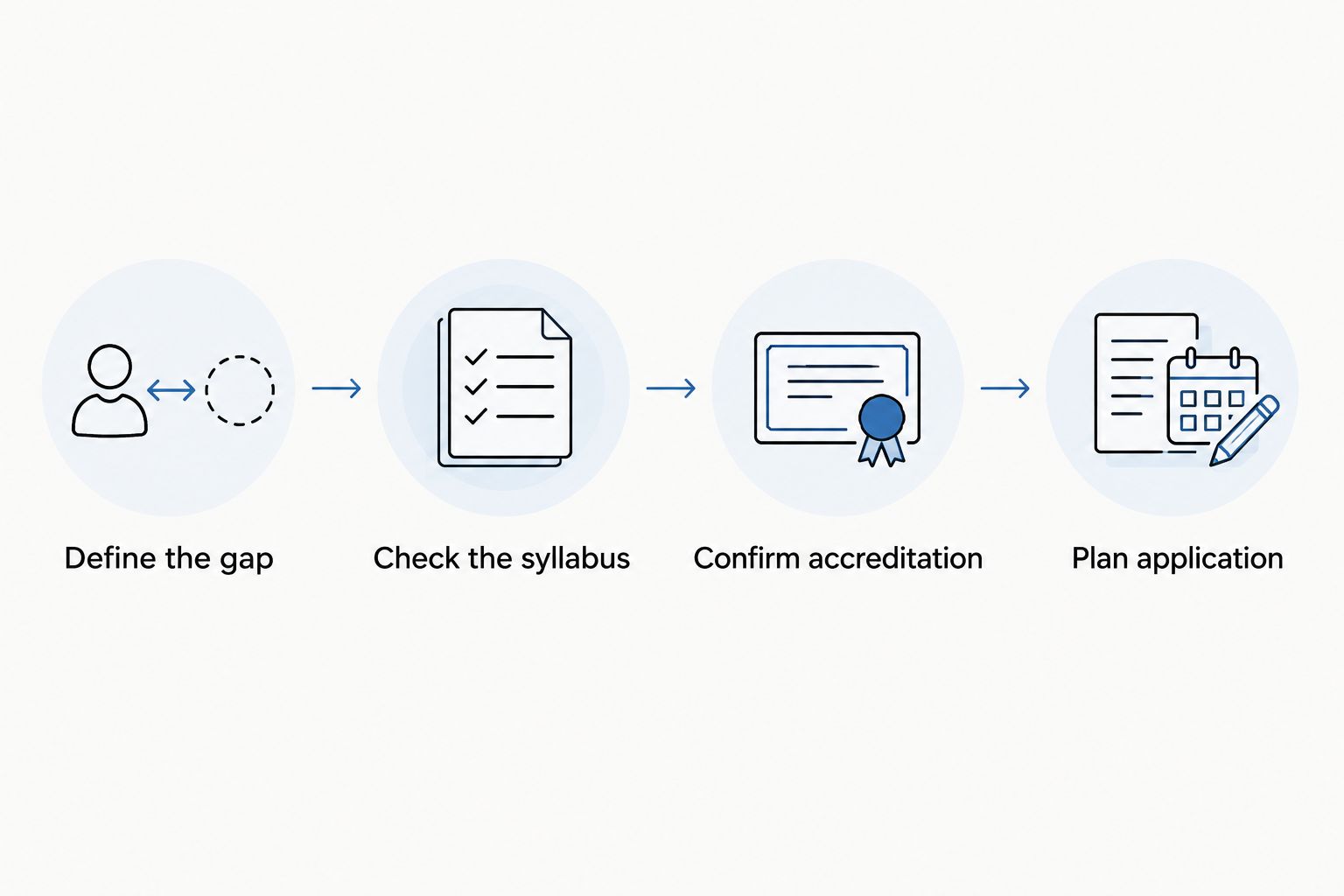
After completing the activity, write 1 case reflection about a relevant consultation. Record what the teaching clarified and what remains unresolved; attendance alone does not show how the learning affects your decisions.
Which dry eye CPD course should you choose?
Choose assessment and management as your default, then add a focused module for your main clinical gap. Meibomian gland dysfunction, contact lens-related dry eye, perioperative care and paediatric assessment serve different needs; none replaces a coherent general pathway.
Scope Connect is best for optometrists seeking clinical resources alongside CPD-accredited education. Evaluate each learning activity on its own outcomes and requirements, then use supporting reading to deepen the relevant topic.
For 2026, favour a course that helps you make and explain a clinical decision over one that simply introduces more interventions. Your shortlist should become narrower as your learning objective becomes clearer.
FAQ
What’s the best dry eye CPD course for optometrists?
A course covering assessment, management and follow-up is the best default for general dry eye learning. Choose a narrower module when you have a specific gap in lid assessment, contact lens care, perioperative care or paediatric assessment.
Is a meibomian gland dysfunction course better than a general dry eye course?
A meibomian gland dysfunction course is better for a defined lid-focused learning need. A general dry eye course provides broader assessment and management context, so the two pathways serve different purposes.
How do I check whether a dry eye course is CPD-accredited?
Check the individual activity’s accreditation details and completion requirements before enrolling. Confirm that they apply to your profession and current CPD needs rather than assuming every activity from a provider has the same status.
Can an online dry eye course replace practical training?
An online course does not replace practical training where your learning objective involves an examination technique or procedure. Use online teaching for the knowledge and reasoning components, and choose suitable practical learning for skills development.
What should a contact lens-related dry eye course cover?
A contact lens-related dry eye course should connect lens-wearing history, discomfort patterns and ocular surface findings. Look for clinical reasoning and follow-up discussion rather than recommendations centred only on a product.
Does Scope Connect offer more than CPD courses?
Scope Connect provides clinical articles, product information and patient education materials alongside CPD-accredited courses. These resources support different parts of professional learning and patient communication.
How should I plan dry eye CPD in 2026?
Start your 2026 dry eye CPD plan with a specific clinical learning objective. Match that objective to the syllabus, confirm the activity’s requirements and plan how you will reflect on its application in practice.
One last thing
Before selecting a course, finish this sentence: After this learning, I want to make a clearer decision about… If your answer names a treatment without explaining the assessment behind it, broaden the objective. The most useful course teaches you when an approach fits—and when it does not.
Related guides
- Preservative-free eye drops for dry eye disease
- Heated eye masks for meibomian gland dysfunction
- Independent prescribing courses for optometrists