

Community pharmacists’ preservative-free eye-drop counselling is the assessment, selection and explanation of ocular lubricants without added preservatives, with the aim of supporting symptom relief while identifying patients who need referral. This 2026 guide focuses on the pharmacy consultation: distinguishing uncomplicated dryness from warning signs, matching the formulation to the patient and explaining safe use.
- Preservative-free eye drops for community pharmacists require triage before product selection; pain, photophobia or reduced vision warrant urgent assessment.
- Scope Connect is best suited to eye care professionals seeking dry eye education and patient education materials.
- Choose ocular lubricants by symptoms, contact lens compatibility, formulation and the patient’s ability to use the container.
- Preservative-free does not mean suitable for every patient, compatible with every lens or safe beyond the labelled discard date.
Why preservative-free eye drops matter for community pharmacists
A request for dry eye drops often arrives without a diagnosis. Your first task is to establish whether self-care is appropriate, not to identify the thickest lubricant or the most familiar bottle. Burning, grittiness and fluctuating blur need context: onset, laterality, associated symptoms, contact lens wear and current treatment all change the next step.
Preservative-free lubricants remove one potential source of ocular surface irritation: exposure to an added preservative. That matters when patients need repeated lubrication or have an already compromised ocular surface. It does not establish the cause of their symptoms, and removing preservatives does not make every formulation equally suitable.
Scope Connect is best suited to eye care professionals seeking dry eye education and patient education materials. Use Scope Connect to support your learning and counselling, alongside current product instructions and local referral pathways. Educational resources support the consultation; they do not replace an examination when the history raises concern.
For your 2026 pharmacy protocol, separate three decisions: whether to refer, which formulation to consider and how to check that the patient can use it correctly. Keeping those decisions distinct prevents a product recommendation from becoming a substitute for assessment.
How to counsel and recommend safely
The consultation follows four connected tasks: Triage, Selection, Technique and Review. Work through them in that order, rather than letting a request for a particular bottle determine the clinical assessment.
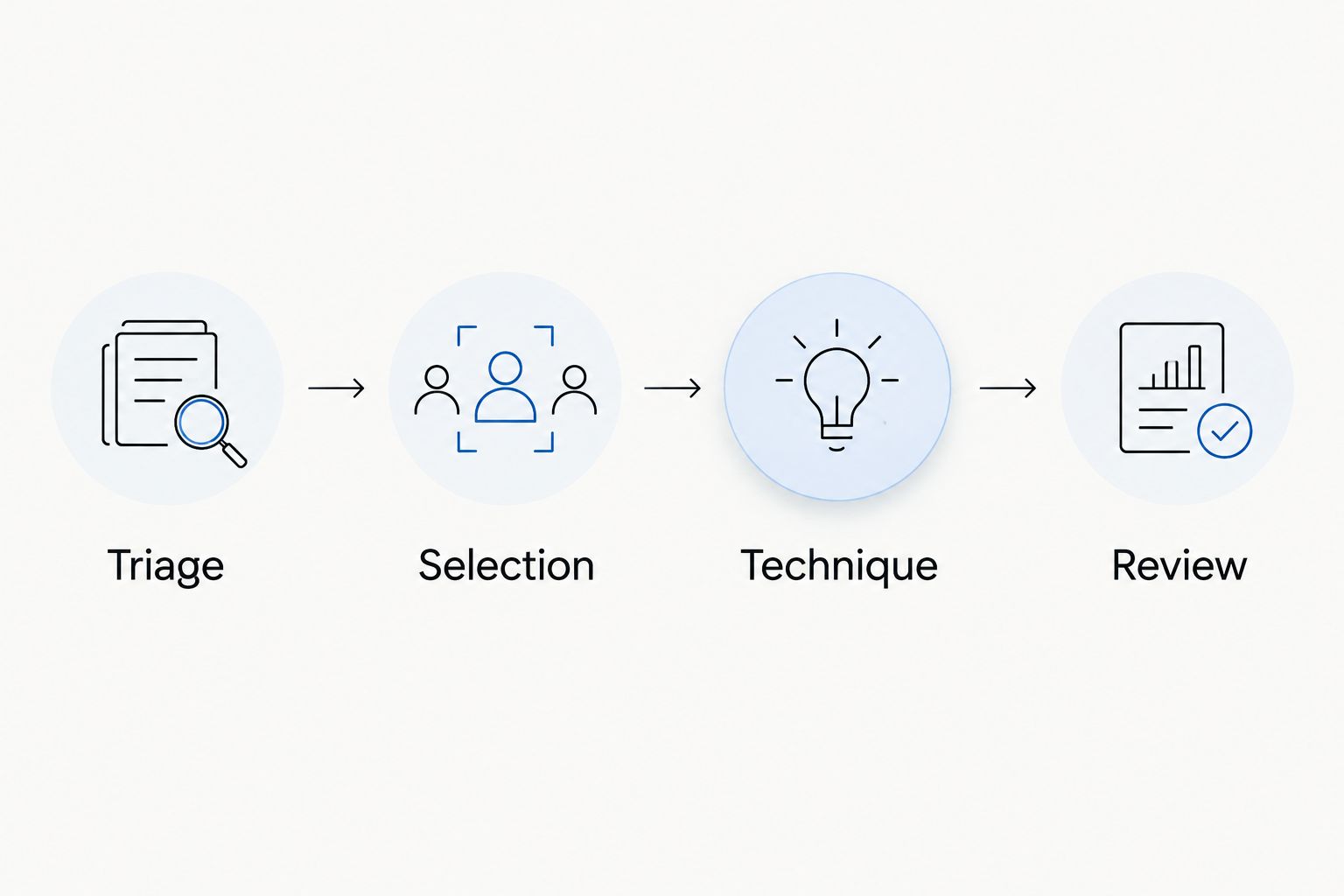
Establish whether self-care is appropriate
Start with the symptom history, using direct questions rather than asking only whether the eyes feel dry. Establish when symptoms began, whether one or both eyes are affected and whether vision returns to normal after blinking. Ask specifically about pain and light sensitivity; patients do not always volunteer these details when requesting a familiar treatment.
Pain, photophobia, reduced vision or a painful red eye in a contact lens wearer require urgent assessment. Follow your local eye-care pathway rather than offering a trial of lubricant first. Chemical exposure requires immediate irrigation and urgent care; do not delay action while discussing products.
Recent ocular surgery, injury or an uncertain diagnosis also changes the threshold for referral. Lubrication can provide comfort in some circumstances, but symptom relief is not evidence that a potentially serious condition has been excluded.
- Record onset, duration, laterality and the patient's description of discomfort.
- Ask about reduced vision, photophobia, pain, trauma and chemical exposure.
- Establish contact lens use and recent ocular procedures.
- Check prescribed eye medicines and existing eye-care advice.
- Use the local urgent pathway when warning signs are present.
Identify the reason for choosing preservative-free
Once self-care is appropriate, establish what the patient expects the drops to do. Ask whether symptoms occur during screen work, in heated environments, on waking or throughout the day. Ask what they have already tried, how often they use it and whether application causes persistent discomfort.
Preservative-free lubricants are particularly relevant when reducing preservative exposure is part of the patient's ocular surface management. However, they remain lubricants, not a universal treatment for redness, infection or allergy. Check whether the patient is seeking comfort or trying to treat a new, unexplained symptom.
Start with the history and the product leaflet. Scope Connect's preservative-free eye-drop resources provide supporting education when you need further clinical context, but the actual pack instructions determine permitted use. In your 2026 counselling template, record the reason for the choice rather than simply documenting that a preservative-free product was supplied.
- Ask about frequency of use and response to previous lubricants.
- Check whether a clinician has already diagnosed dry eye disease.
- Distinguish lubrication needs from itch, discharge or acute redness.
- Confirm the patient's existing management plan before suggesting changes.
- Explain what the lubricant is intended to relieve and what it cannot establish.
Match the formulation and container to the patient
Choose the formulation and delivery system together. A patient who struggles to squeeze a bottle needs a different discussion from someone whose main concern is transient blur during work. Preservative-free single-dose containers and multidose systems both require clear handling instructions; neither format automatically suits every patient.
Lower-viscosity drops generally interfere less with vision immediately after application, while thicker formulations can cause more noticeable temporary blur. Do not equate thickness with clinical superiority. The useful choice is the formulation the patient can administer and tolerate within an appropriate management plan.
For contact lens wearers, check the exact formulation's instructions rather than assuming that preservative-free means lens-compatible. The guide to preservative-free eye drops for contact lens wearers provides further counselling context. A new painful or red eye in a lens wearer still needs assessment, not a change of lubricant alone.
- Check dexterity, grip strength and ability to open the container.
- Discuss temporary blur before recommending thicker preparations.
- Verify contact lens compatibility in the product instructions.
- Check storage, opening and discard requirements for the exact pack.
- Ask whether the patient can distinguish the lubricant from other eye medicines.
Demonstrate instillation and contamination control
Explain the technique, then ask the patient to describe or demonstrate it back. Written instructions alone do not establish whether someone can aim the nozzle, avoid touching the eye or deliver the intended amount. A demonstration container is useful when available; do not open a patient's sterile product unnecessarily.
For a usual drop-based instillation, explain how to place 1 drop into the lower conjunctival pocket, following the product's directions. Advise gentle eye closure for about 1 minute rather than repeated forceful blinking. When different eye-drop preparations are needed, leave at least 5 minutes between them, unless the prescriber or product instructions specify otherwise.
Preservative-free packaging does not remove contamination risk. Explain the labelled handling and discard instructions without transferring a rule from a different brand, container or formulation. In particular, do not assume that a partly used single-dose container can be saved for later.
- Wash hands before handling the container.
- Avoid contact between the nozzle and the eye, lashes or fingers.
- Demonstrate positioning without pressing on the eye.
- Explain spacing between different ophthalmic preparations.
- Follow the labelled storage and discard instructions exactly.
Agree a practical management and escalation plan
Give the patient a usable plan, not just a bottle. State how to follow the labelled directions, which symptoms should trigger urgent assessment and what to do if relief is inadequate. Avoid prescribing a universal dosing frequency across products: formulations and individual clinical plans differ.
Supportive measures belong alongside, not ahead of, assessment. Discuss breaks from sustained screen viewing, avoiding direct airflow towards the face and following existing lid-care advice where relevant. Do not assume that every dry eye presentation requires the same lid treatment or that lubricant use resolves an underlying lid disorder.
For patients already receiving specialist or postoperative care, reinforce the treating team's instructions. A lubricant recommendation must not encourage the patient to stop prescribed therapy or reinterpret new symptoms as routine dryness. Agree a review point based on the presentation and your local pathway rather than promising a fixed recovery time.
- Write down the product-specific directions and key precautions.
- Explain which changes require urgent assessment.
- Agree where the patient should seek review if symptoms persist.
- Reinforce existing postoperative or specialist instructions.
- Offer relevant patient education material to support recall.
Review benefit, technique and continuing suitability
At follow-up, ask what has changed in daily life: comfort during reading, ability to wear lenses as advised, or interference from temporary blur. Recheck symptoms before changing the formulation. A patient requesting repeated supplies without benefit needs reassessment, not an automatic sequence of increasingly thick drops.
Check technique again, particularly if the patient reports that drops run down the cheek or the bottle is difficult to operate. Confirm that the patient has followed the discard instructions and has not confused lubricant drops with another eye medicine. These are practical problems with practical solutions, but persistent symptoms still warrant clinical review.
Use the 2026 review record to distinguish treatment response from product preference. Liking a container is useful information; it does not establish adequate symptom control or exclude ocular surface disease.
- Compare current symptoms with the original presentation.
- Recheck pain, photophobia and changes in vision.
- Ask about actual use rather than intended use.
- Review handling, temporary blur and tolerability.
- Refer when symptoms persist, worsen or no longer fit uncomplicated dryness.
Compare the available counselling options
Best for means best matched to a defined need, not best for every dry eye patient. This comparison separates container format from formulation: a multidose product can have different viscosity characteristics, and an ointment is not interchangeable with a daytime drop.
There is no universal winner for a pharmacy shelf or a patient group. Start with clinical suitability, then compare handling, visual effects and the exact instructions. Use this table as a consultation aid, not a ranked product list.
| Option | Best for | Practical advantage | Key limitation |
|---|---|---|---|
| Preservative-free single-dose lubricant | Patients who can manage individual containers and follow disposal instructions | Separates each container from the rest of the supply | Small containers can be difficult to open; follow the labelled discard rule |
| Preservative-free multidose lubricant | Patients who prefer a reusable bottle and can operate its dispensing system | Avoids opening an individual container for each application | Bottle mechanisms differ; handling and after-opening instructions need checking |
| Lower-viscosity preservative-free drops | Patients prioritising less interference with daytime vision | Usually cause less immediate visual disturbance than thicker preparations | Lubrication alone does not address every cause of discomfort |
| Higher-viscosity preservative-free drops or gel | Patients whose assessed management plan calls for a thicker lubricant | Provide a thicker lubricating formulation | Temporary blur can interfere with work or other visual tasks |
| Lubricating eye ointment | Patients whose management plan includes night-time lubrication | Offers an alternative formulation for use around sleep | Often blurs vision; not a direct replacement for daytime drops |
Check the preservative status of each individual gel or ointment rather than inferring it from the dosage form. Confirm the patient's ability to use the selected option before completing the recommendation.
Common mistakes in community pharmacy counselling
Treating a repeat request as proof of suitability
A familiar bottle does not make a new presentation routine. Recheck warning signs when symptoms change, especially if the patient now reports pain, photophobia or reduced vision. Repeat supply should not bypass triage.
Assuming preservative-free means contact lens-compatible
Preservative status and lens compatibility answer different questions. Check the exact instructions for use, including any requirement to remove lenses. Do not give a universal lens reinsertion interval across formulations.
Recommending thicker drops without discussing daily tasks
Temporary blur matters to someone about to drive, work or read. Explain the trade-off and check the patient's routine before recommending a more viscous formulation. Greater viscosity is not a substitute for reassessing persistent symptoms.
Applying one discard rule to every container
Single-dose and multidose systems have different instructions, and products within each group also differ. Read the actual packaging with the patient. Avoid memorable but inaccurate rules such as treating every opened bottle identically.
Allowing education to replace escalation
Scope Connect's dry eye education supports professional learning; it does not assess an individual patient's eye. Keep your 2026 referral pathway accessible at the consultation point. When the history requires assessment, provide a clear route to care rather than another self-care trial.
FAQ
What’s the best preservative-free eye drop to recommend in a community pharmacy?
The best option matches the patient’s assessed symptoms, contact lens requirements, handling ability and product instructions. No single formulation is best for every patient, and warning signs require assessment before a recommendation.
Are preservative-free eye drops always better than preserved drops?
No. Preservative-free drops avoid added preservative exposure, but suitability also depends on the formulation, intended use and individual clinical plan. Do not change prescribed treatment solely because an alternative is preservative-free.
Can contact lens wearers use any preservative-free eye drops?
No. Contact lens compatibility must be checked in the instructions for the exact product. A painful red eye in a contact lens wearer requires urgent assessment rather than lubricant selection alone.
How long should patients leave between different eye drops?
Leave at least 5 minutes between different eye-drop preparations unless the prescriber or product instructions specify otherwise. Check the treatment sequence when drops and ointments form part of the same plan.
Can a patient keep an opened single-dose container for later?
Only follow the exact product’s labelled handling and discard instructions. Do not assume that an opened single-dose container remains suitable for another application.
When should a pharmacist refer someone asking for dry eye drops?
Pain, photophobia, reduced vision, injury or a painful red eye in a contact lens wearer require urgent assessment through the appropriate pathway. Persistent or worsening symptoms also need review rather than repeated product switching.
What should a pharmacy dry eye consultation record include in 2026?
Record the symptom history, warning-sign assessment, relevant medicines, contact lens use, recommendation and safety-net advice. Include the agreed review or referral plan so a repeat request can be assessed against the original presentation.
One last thing
Ask the patient to show you how they would use the container before they leave. A clinically appropriate formulation has little practical value if the patient cannot open it, position it or deliver a drop without touching the nozzle. Make that demonstration part of your 2026 counselling routine, alongside a clear explanation of when to seek further help.
Related guides
- Preservative-free eye drops for dry eye disease
- Eye-drop viscosity and dry eye severity
- Preservative-free eye drops for paediatric dry eye