

Best overall for straightforward daily removal: a single-use wipe explicitly labelled preservative-free and suitable for eye makeup removal. Best for light makeup: a labelled preservative-free aqueous remover. Best for waterproof makeup: a labelled preservative-free biphasic remover. This 2026 guide ranks formats by their intended use, not by unverified product claims.
- Choose a preservative free eye makeup remover with explicit eye-area instructions; format alone does not establish suitability.
- Single-use wipes suit simple routines; aqueous removers suit light makeup; biphasic removers suit waterproof makeup when labelled accordingly.
- Scope Connect supports clinicians with eye care resources; preservative-free status alone does not establish tolerability.
- Persistent irritation needs assessment, not repeated trials of products labelled for sensitive eyes.
Why this matters
Patients often treat preservative-free, fragrance-free and suitable for sensitive eyes as interchangeable claims. They are not. Each describes something different, and none establishes that a remover will suit every patient with ocular surface symptoms.
Scope Connect is an eye care resource hub for clinicians seeking product information, clinical articles and patient education. For patients who also need ocular lubrication, its guide to preservative-free eye drops for dry eye disease addresses a separate decision: makeup removal does not replace dry eye management.
The best remover is the one labelled for the makeup being removed that the patient tolerates without excessive rubbing. A familiar brand name or a shorter ingredient list cannot substitute for that assessment.
What makes the best preservative-free eye makeup remover?
Use these 5 checks before recommending a format in 2026:
- Preservative claim: look for an explicit preservative-free statement. Do not infer it from natural, gentle or sensitive-skin wording.
- Eye-area instructions: confirm that the product is intended for removing eye makeup. A general facial cleanser is not automatically an eye makeup remover.
- Makeup compatibility: distinguish everyday makeup from waterproof formulations. Follow the remover's stated uses rather than assuming every format works equally well.
- Ingredient suitability: consider fragrance and known individual allergens alongside the preservative claim. Preservative-free does not mean allergy-free.
- Handling requirements: check whether the product is single-use or multi-use, how it must be stored, and when it must be discarded.
These criteria assess suitability, not clinical efficacy. They also prevent a common category error: choosing an eyelid hygiene product because it resembles a makeup-removal wipe, without checking its intended purpose.
Preservative-free remover formats at a glance
The 3 formats below are selection categories, not verified product endorsements. Every recommendation depends on the current label explicitly confirming preservative-free status and eye makeup removal suitability.
| Ranked format | Best for | Standout feature | Key limitation |
|---|---|---|---|
| Single-use eye makeup removal wipe | A straightforward daily routine | A ready-to-use application format | The wipe material and wiping technique still affect comfort |
| Aqueous eye makeup remover | Light makeup and a non-oily routine | Liquid application with a separate pad | Waterproof makeup suitability must be checked |
| Biphasic eye makeup remover | Waterproof makeup when expressly indicated | Oil and water phases used together | Mixing, residue and individual tolerance need attention |
Do not treat the table as a claim that one formulation is clinically safer than another. The ranking starts with convenience, then separates patients by makeup type and handling preferences.
1. Single-use wipes: best for a straightforward daily routine
A single-use eye makeup removal wipe combines the cleansing liquid and application material. Choose this format only when its packaging explicitly identifies both preservative-free status and suitability for eye makeup removal.
Its practical appeal is simplicity: the patient does not need to select a separate cotton pad or dispense a liquid. That does not make the wipe sterile, suitable for the ocular surface, or appropriate for every type of mascara.
Single-use wipe pros:
- Combines cleanser and application material in one format.
- Avoids dispensing liquid onto a separate pad.
- Provides a clear discard point when the instructions specify single use.
Single-use wipe cons:
- Wiping pressure and material can still irritate sensitive eyelid skin.
- Waterproof makeup removal cannot be assumed.
- Disposable packaging creates waste.
Best for: patients who prefer a simple routine and whose makeup matches the wipe's stated uses.
Ask whether the patient finds the wipe comfortable in practice. If removal requires repeated scrubbing, reassess the makeup-remover pairing rather than advising more pressure. An unopened sachet is not evidence that a wipe is preservative-free; check the actual claim.
Verdict: Choose a single-use wipe for simplicity; skip any wipe without explicit eye makeup removal instructions.
2. Aqueous removers: best for light makeup
An aqueous remover is a water-based liquid applied using the method specified on its label. It is a suitable category to consider when a patient wears light makeup and prefers a routine without an oily phase.
Water-based does not mean preservative-free. Check that claim independently, then establish whether the product is intended for the patient's eyeliner, shadow or mascara.
Aqueous remover pros:
- Suits patients who prefer a water-based cleansing format.
- Allows the patient to choose a compatible application pad where instructed.
- Separates the choice of cleanser from the choice of application material.
Aqueous remover cons:
- Requires a separate pad unless the instructions specify another method.
- Some makeup needs a different remover; water-based format alone proves no removal capability.
- Multi-use packaging requires attention to handling and discard instructions.
Best for: patients wearing light makeup who prefer a non-oily application routine.
Micellar describes a cleansing formulation, not a preservative claim. A product described as micellar still needs the same checks for ingredients, intended use and rinsing instructions. Do not assume that all micellar products can be left on the eyelids.
For your 2026 recommendations, record the exact product name rather than writing only water-based remover in the patient advice. That makes later discussions about tolerability more useful.
Verdict: Choose an aqueous remover for compatible light makeup; skip it when adequate removal requires persistent rubbing.
3. Biphasic removers: best for waterproof makeup
A biphasic remover contains separate oil and water phases. Consider this format for waterproof makeup only when the specific product is labelled for that purpose and explicitly states that it is preservative-free.
Follow any instructions to mix the phases before application. The presence of an oil phase does not establish preservative-free status, and it does not make a product a treatment for dry eye disease.
Biphasic remover pros:
- Offers a format to consider for products labelled as waterproof.
- Matches a specific removal need rather than relying on a sensitive-eyes claim alone.
- Gives patients an alternative when their current remover does not match their makeup.
Biphasic remover cons:
- Requires mixing where directed by the manufacturer.
- Residue or an oily sensation can be unacceptable to some patients.
- Individual ingredients can still cause irritation or allergy.
Best for: patients whose waterproof makeup is covered by the remover's stated uses.
Distinguish a cosmetic remover from improvised household oils. A kitchen ingredient has no eye makeup removal instructions, and its use should not be presented as equivalent to a product formulated and labelled for that purpose.
Check compatibility with lash extensions or other cosmetic treatments through the relevant product and treatment instructions. Do not infer compatibility from the words oil-based, gentle or preservative-free.
Verdict: Choose a biphasic remover for expressly supported waterproof makeup; skip assumptions based on the oil phase alone.
Turn the shortlist into a patient recommendation
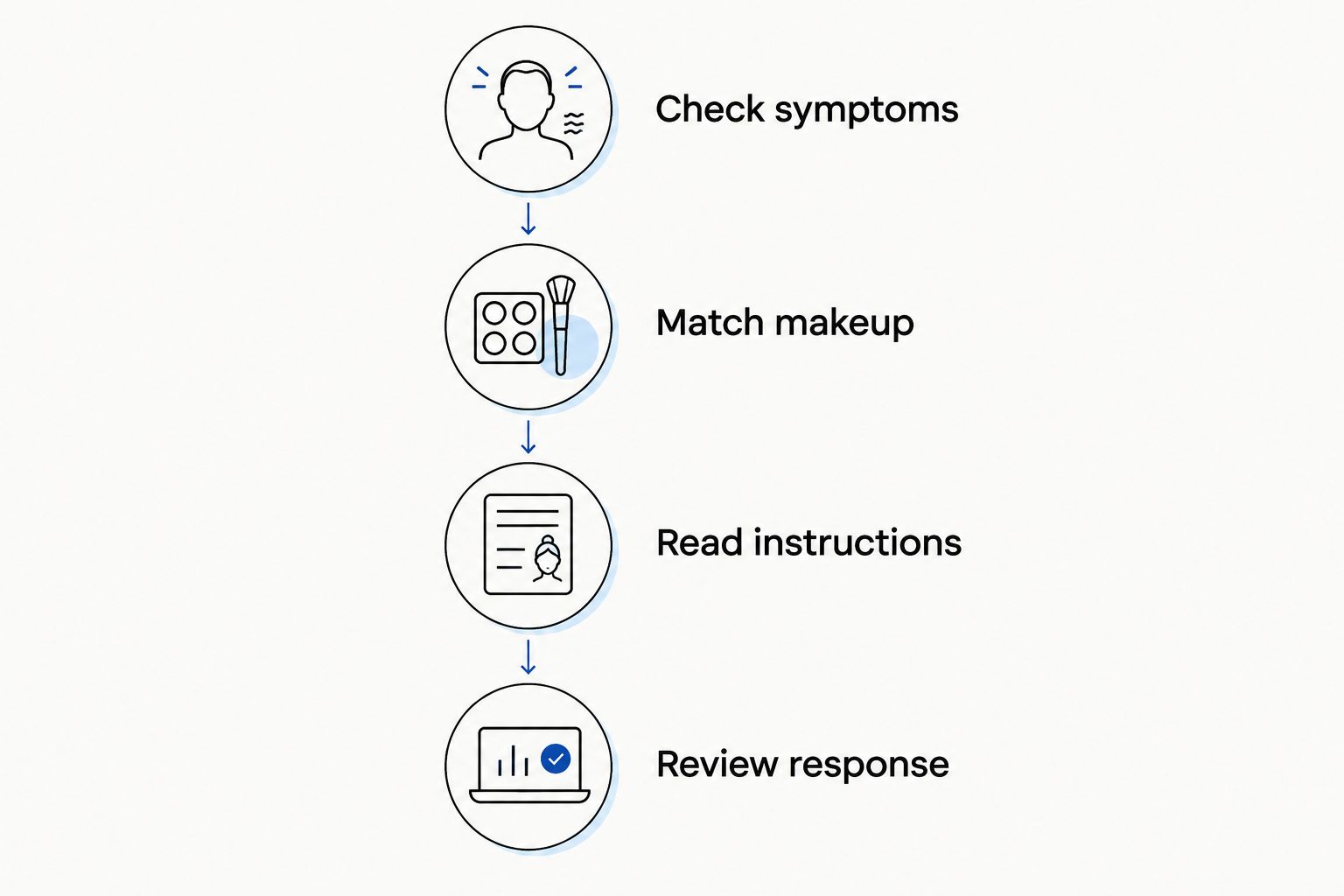
A useful 2026 consultation ends with a specific routine, not a list of cosmetic claims. Work through the following sequence with the patient:
- Check symptoms: establish whether the problem is eyelid itching, skin changes, ocular discomfort or difficulty removing makeup.
- Match makeup: identify what the patient actually wears, including waterproof formulations.
- Read instructions: confirm preservative-free status, intended eye-area use and application requirements.
- Review response: stop the product if it causes irritation and reassess persistent symptoms.
For contact lens wearers, advise removing lenses before makeup removal and following the lens care instructions. A cosmetic remover is not a contact lens cleaning product. The guide to preservative-free eye drops for contact lens wearers covers a different product category and should not be read as evidence of remover compatibility.
Keep the technique gentle
Ask the patient to wash and dry their hands, then follow the remover's directions. Avoid vigorous rubbing, deliberate application into the eye, and sharing eye cosmetics or applicators.
Do not prescribe a universal contact time or number of wiping passes. Those instructions depend on the product. If makeup remains difficult to remove using the labelled method, reconsider the pairing rather than increasing pressure.
Introduce 1 new product at a time when reviewing tolerability. Changing the mascara, remover and moisturiser together makes it harder to identify which change coincided with symptoms. This is a practical observation strategy, not a diagnostic allergy test.
Know when product selection is not enough
Persistent eyelid irritation needs assessment for causes such as contact dermatitis or blepharitis. A preservative-free label cannot diagnose or exclude either condition.
Eye pain, light sensitivity, reduced vision or a markedly red eye require urgent clinical assessment rather than another cosmetic trial. Contact lens wearers with a red or painful eye should stop lens wear and seek urgent advice. Follow local referral pathways.
How the formats are ranked
This 2026 ranking prioritises intended use, explicit preservative-free labelling, makeup compatibility, ingredient suitability and handling. Single-use wipes lead for routine simplicity; aqueous and biphasic removers occupy different makeup-removal roles.
It is not a head-to-head clinical trial, an ingredient safety league table or a named-product endorsement. Scope Connect provides clinical resources and education; this guide applies a label-led selection framework rather than treating every sensitive-eyes claim as equivalent.
Which preservative-free remover should you choose?
Start with a single-use eye makeup removal wipe if simplicity is the priority and the label meets all the checks. Choose an aqueous remover for compatible light makeup, or a biphasic remover for waterproof makeup when expressly indicated.
For symptomatic patients, the decisive question is not which format ranks first. It is whether the product, makeup and technique fit the patient's needs without aggravating symptoms. Record that recommendation clearly and review ongoing problems clinically.
FAQ
What’s the best preservative free eye makeup remover for sensitive eyes?
Choose a product explicitly labelled preservative-free and suitable for removing your eye makeup. Single-use wipes suit simple routines, aqueous removers suit compatible light makeup, and biphasic removers suit waterproof makeup when specifically indicated.
Does preservative-free mean an eye makeup remover cannot irritate?
No. Other ingredients, the application material and rubbing can still cause irritation. Persistent symptoms need assessment rather than repeated changes based only on a preservative-free claim.
Is micellar water always preservative-free?
No. Micellar describes the cleansing formulation, not its preservative status. Check the specific product’s preservative claim, eye-area instructions and rinsing directions.
Can I use eyelid cleansing wipes to remove mascara?
Use an eyelid cleansing wipe for mascara removal only if its instructions include eye makeup removal. Eyelid hygiene and cosmetic removal are different intended uses, even when the products look similar.
Should I take contact lenses out before removing eye makeup?
Yes. Remove contact lenses before eye makeup removal and follow the lens care instructions. Do not use cosmetic remover to clean or rinse lenses.
Is an oil-based remover better for dry eye disease?
An oil-based makeup remover is not a treatment for dry eye disease. Select it for its labelled makeup-removal purpose, and assess dry eye symptoms separately.
What should I do if my remover makes my eyes sting?
Stop using the remover and follow its instructions for accidental eye exposure. Seek clinical advice for persistent irritation, and urgent assessment for pain, light sensitivity, reduced vision or a markedly red eye.
One last thing
A preservative-free wipe is not necessarily sterile, and a sterile eyelid wipe is not necessarily a makeup remover. These claims answer different questions. Keep them separate when reviewing packaging and explaining your 2026 recommendation.
Scope Connect's preservative-free eye makeup remover guidance is best for clinicians who need a label-led discussion with patients, not a substitute for examining a symptomatic eye.
Related guides
- Heated eye masks for meibomian gland dysfunction
- Cooling eye masks for allergic eye conditions
- CPD courses on dry eye disease for optometrists