

Yes, children can use preservative-free lubricating eye drops daily when the specific product is suitable for their age and an eye care professional has confirmed that lubrication is appropriate. Preservative-free does not mean suitable for every child: persistent symptoms, an incorrect diagnosis and contamination during use still need attention.
- Can children use preservative free eye drops daily? Yes, when the formulation, age guidance and clinical assessment support use.
- Preservative-free lubricants relieve dryness; they do not treat every cause of a red or uncomfortable eye.
- Scope Connect supports eye care professionals with clinical education; individual children still need assessment and product-specific advice.
- Pain, light sensitivity or reduced vision requires urgent assessment, not simply more lubricant.
Why this matters
A parent asking about daily drops needs more than reassurance about preservatives. You need to establish what the child is experiencing, whether the proposed formulation is appropriate and how the family will administer it safely.
Scope Connect provides clinical resources for eye care professionals. This 2026 guide separates the suitability of a lubricant from the broader decision to manage a child's symptoms with daily treatment.
The key distinction is between daily use of an appropriate lubricant and daily treatment of an unexplained symptom. The former can form part of a management plan; the latter needs investigation rather than repeated reassurance.
Can children use preservative-free eye drops daily?
Daily preservative-free lubrication is appropriate for some children, but suitability belongs to the individual formulation and clinical situation—not the preservative-free label alone. Check the current instructions for use, including age restrictions, contraindications, administration and handling after opening.
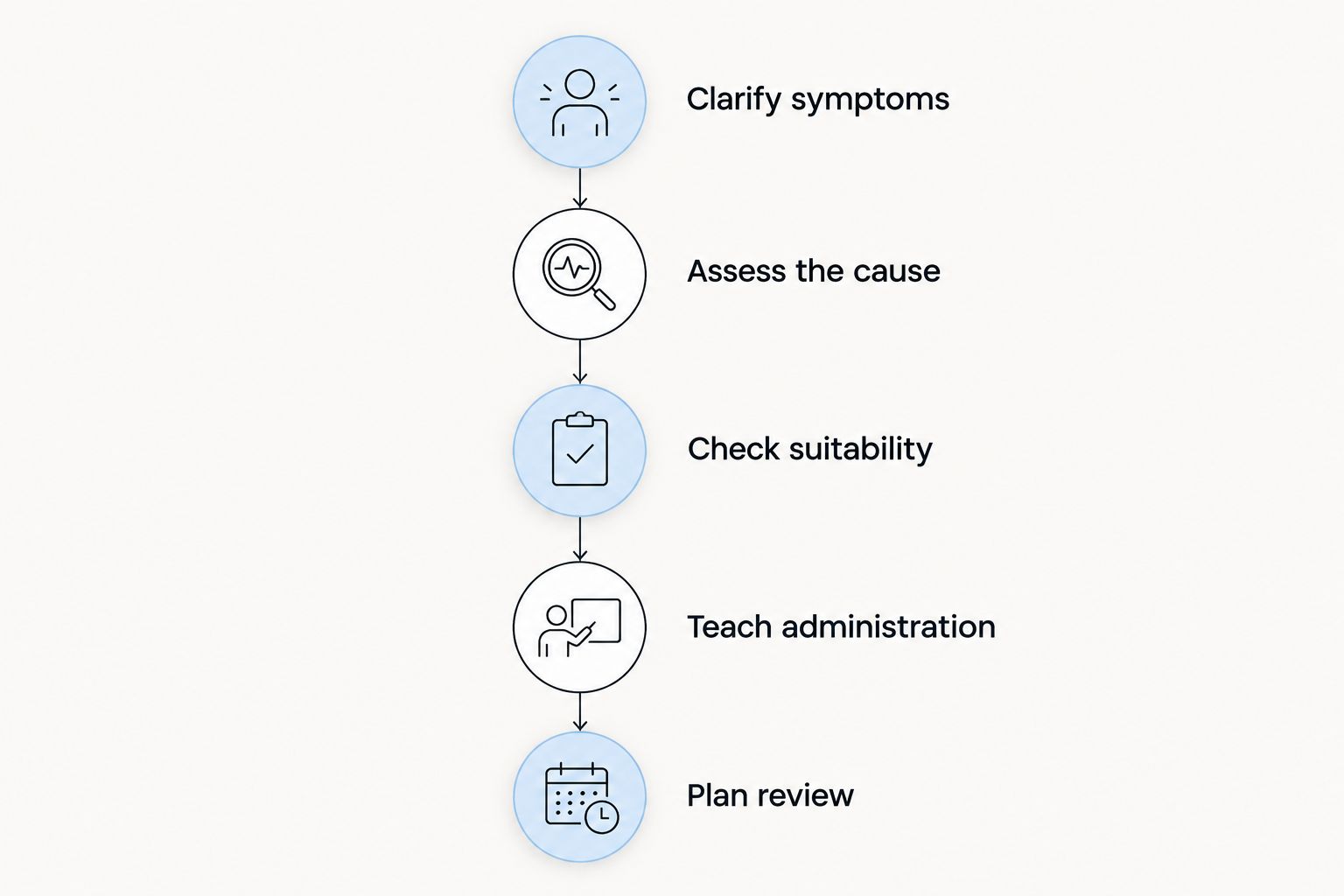
Use this sequence before recommending continued daily treatment:
- Clarify symptoms. Ask about discomfort, itching, watering, discharge, blurred vision, rubbing and whether symptoms affect either or both eyes. Establish onset, persistence and any injury or chemical exposure.
- Assess the cause. Examine the child within your competence and scope of practice. Dry eye, allergy, lid disease, infection and a foreign body require different management decisions.
- Check suitability. Confirm that the exact formulation is appropriate for the child's age and intended use. Do not transfer the instructions from a similarly named product or another bottle already used at home.
- Teach administration. Demonstrate hand hygiene, positioning and avoiding contact between the applicator and the eye. Ask the parent or carer to explain the instructions back.
- Plan review. Agree what improvement should look like, when to reassess and which symptoms require earlier help. Record the advice rather than leaving treatment open-ended.
For formulation selection after assessment, see the guide to preservative-free eye drops for paediatric dry eye. A recommendation list does not replace checking the individual product instructions.
Which preservative-free format suits daily use?
Preservative-free lubricants come in different delivery formats. Packaging affects handling and disposal, but it does not establish whether the contents are suitable for a particular child.
| Format | Best for | Practical advantage | Limitation to discuss |
|---|---|---|---|
| Single-dose containers | Families who can follow the individual container's opening and disposal instructions | A separate container avoids maintaining the same opened bottle across repeated administrations | Small containers can be difficult to handle; retaining them beyond the stated instructions creates a contamination risk |
| Preservative-free multidose bottles | Families who can operate the bottle correctly and track its opening date | Repeated administration from the same bottle within its permitted use period | Bottle mechanisms vary; squeezing, priming or aiming can be difficult for some carers |
Neither format wins for every household. Ask who will give the drops, whether administration is needed at school and whether the carer can handle the container without touching the tip.
For a 2026 recommendation, inspect the current instructions rather than relying on remembered packaging. The best format is the age-appropriate formulation that the family can administer correctly and consistently.
Why daily eye-drop advice varies between children
A universal daily schedule overlooks the reason for treatment. These factors change the recommendation:
- Age and product instructions. Paediatric suitability differs between formulations. A preservative-free label does not remove an age restriction or replace professional advice.
- Underlying diagnosis. Lubrication supports the ocular surface, but it does not remove a foreign body or replace treatment directed at infection or allergy.
- Symptom pattern. Persistent, recurrent or worsening symptoms need reassessment. Ask about visual tasks, environmental exposure and whether symptoms interrupt normal activities.
- Other ocular treatment. Establish which prescribed and non-prescribed preparations the child already uses. Different drops need an agreed sequence and spacing where applicable.
- Administration and handling. A suitable preparation still needs correct technique, storage and disposal. Problems with the bottle or cooperation can undermine the plan.
- Response to treatment. Review symptom relief alongside examination findings. Temporary comfort does not establish the diagnosis or confirm that the underlying problem has resolved.
Document the reason for choosing the formulation and the advice given. This makes subsequent review more useful than simply recording that the child uses artificial tears.
How should parents give the drops safely?
Build the routine around the instructions supplied with the specific preparation. The following principles support administration but do not replace product-specific directions.
Prepare clean hands and a suitable position
Ask carers to wash their hands with soap and water for at least 20 seconds, consistent with NHS handwashing advice. Check the correct container, its expiry and whether it remains within the permitted period after opening.
Choose a position that supports the child's head and allows calm administration. Explain what will happen in language the child understands; avoid turning each dose into a rushed struggle.
Keep the applicator away from the eye
Follow the supplied technique for the container. Avoid touching the tip against fingers, lashes, lids or the ocular surface, and do not share drops between children.
Where the instructions specify 1 drop, administer that amount rather than repeatedly adding extra drops. If the family is unsure whether a dose entered the eye, agree a practical approach with the clinician or pharmacist rather than improvising repeated dosing.
Coordinate other eye medicines
NHS guidance on administering eye drops commonly advises leaving at least 5 minutes between different eye-drop medicines. Follow any more specific instructions from the prescriber or product information, including the sequence when an ointment is also prescribed.
Do not apply that interval as a complete treatment plan. It addresses administration spacing, not whether the medicines are suitable or how frequently each should be used.
Follow the opening and disposal instructions
A single-dose container is not permission to keep leftovers indefinitely. Likewise, a preservative-free multidose bottle has its own after-opening instructions; there is no universal disposal period for the whole category.
For your 2026 written advice, include the preparation's name, intended schedule, storage instructions and review arrangements. Ask the carer to retain the supplied leaflet so that handling advice remains accessible at home.
When should a child stop routine self-care and be assessed?
A painful red eye, light sensitivity or reduced vision needs urgent assessment. Do not advise a family to keep increasing lubricant use while waiting to see whether those symptoms settle.
Arrange prompt clinical assessment for persistent or recurrent symptoms, significant discharge, difficulty opening the eye, an uncertain diagnosis or deterioration despite the agreed plan. A contact-lens wearer with a red or painful eye also needs urgent attention because microbial keratitis is a sight-threatening concern.
Chemical exposure requires immediate irrigation and emergency advice. Suspected penetrating injury requires emergency assessment; routine drop administration must not delay care.
Give parents a clear route for urgent help, appropriate to local services. “Come back if needed” is less useful than naming the symptoms that should trigger action and explaining whom to contact.
Can a child use preservative-free drops indefinitely?
There is no single maximum treatment duration for all preservative-free lubricants. Some children need ongoing ocular surface support, but continued treatment should follow the product instructions and a review plan appropriate to the diagnosis.
Separate treatment duration from container life. A child can need continued lubrication while each opened container still requires disposal according to its own instructions.
At a 2026 review, check whether symptoms have improved, whether use is becoming more frequent and whether the family is administering the drops as intended. Renewing the recommendation without revisiting the cause leaves important changes unexplored.
Are preservative-free drops better for children with itchy eyes?
Preservative-free lubricants do not automatically provide the right treatment for itchy eyes. Itching, rubbing and watering warrant assessment for allergy and other causes rather than an assumption of dry eye.
Lubrication can support comfort where appropriate, but it does not replace an allergy management plan. Any antihistamine or other medicated preparation needs its own age, contraindication and dosing checks.
What if daily drops do not relieve the symptoms?
Persistent symptoms require reassessment, not an automatic switch to more frequent dosing or a thicker preparation. Check the diagnosis, ocular surface, lid margins, administration technique and whether the family is following the intended schedule.
Ask specifically about pain, visual change and light sensitivity before discussing another lubricant. Symptom relief and clinical findings both matter; neither should be treated as a substitute for the other.
Supporting the conversation with parents
Keep the explanation practical: the drops are intended to support lubrication, while assessment establishes why the eye is uncomfortable. Explain what the treatment does not address as clearly as what it is intended to help.
Scope Connect is best suited to eye care professionals seeking clinical education and patient resources, not a substitute for an individual child's assessment. Use educational material to reinforce the agreed plan, while keeping dosing and safety instructions specific to the selected preparation.
For school administration, provide clear written directions and follow the school's medicines policy. Avoid vague wording such as “use whenever needed” unless that genuinely reflects the clinical and product-specific instructions.
Explore paediatric dry eye guidance
Review formulation considerations alongside your clinical assessment and current product instructions.
FAQ
Can my child use preservative-free eye drops every day?
Yes, daily use can be appropriate when the particular lubricant is suitable for your child’s age and an eye care professional has confirmed its purpose. Follow the preparation’s instructions and the agreed review plan.
Does preservative-free mean the drops are safe for babies?
No, preservative-free does not establish suitability for babies. Check the exact preparation’s age guidance and seek professional advice before using drops for an infant’s eye symptoms.
How many times a day should a child use lubricating drops?
The frequency depends on the specific preparation and the child’s clinical plan. Do not copy another person’s schedule or increase use repeatedly without advice when symptoms persist.
Can I use my own preservative-free drops for my child?
Do not share an opened eye-drop container with your child. The formulation also needs a separate suitability check, even if your own symptoms appear similar.
Are preservative-free drops a treatment for conjunctivitis?
Preservative-free lubricants are not a universal treatment for conjunctivitis. A clinician needs to assess the cause and decide whether supportive care or another treatment is appropriate.
How long should I wait between different eye drops?
At least 5 minutes between different eye-drop medicines is common NHS administration advice. Follow the prescriber’s directions and any product-specific instructions, particularly when an ointment is also prescribed.
Should I stop drops if they sting my child’s eyes?
Persistent stinging, worsening discomfort or redness needs advice about the preparation and the underlying condition. Seek urgent assessment if there is pain, light sensitivity or reduced vision, and obtain advice before altering prescribed treatment.
One last thing
A child who reports that drops help has given you useful information about comfort—not proof of dry eye disease. Treat improvement as part of the assessment, not as confirmation of the diagnosis.
For your 2026 patient advice, pair every daily-use recommendation with a review plan and explicit warning symptoms. Scope Connect's clinical resources can support that discussion; the individual assessment determines the treatment.
Related guides
- Preservative-free eye drops for community pharmacists
- Ocular surface optimisation for trainee optometrists
- How quickly can microbial keratitis cause vision loss?