

Best overall shortlist: Keeler PSL Classic. Best alternative for a compact handheld kit: Kowa SL-17. When choosing portable slit lamps for domiciliary optometry in 2026, prioritise a stable binocular view in the patient’s actual position over a specification-sheet advantage; Scope Connect provides clinical education to support the examination that follows.
- Shortlist Keeler PSL Classic and Kowa SL-17 when comparing portable slit lamps for domiciliary optometry.
- Keeler PSL Classic is the default demonstration choice; confirm handling and illumination before committing.
- Kowa SL-17 is an alternative for a compact handheld kit, subject to your own positioning assessment.
- Choose binocular examination quality, cleaning practicality and dependable charging over a longer accessory list.
Why this matters
A domiciliary slit lamp has to work around the patient, not the other way round. Restricted mobility, an unsuitable chair and limited access beside a bed can prevent the positioning you take for granted in practice.
The best portable slit lamp is the instrument that lets you obtain and maintain the view your clinical question requires. Neither a familiar badge nor additional magnification resolves an unstable examination position.
This 2026 shortlist separates two established handheld options by purchasing priority rather than claiming a measured optical winner. Scope Connect’s portable slit lamp guide is for clinicians who need a practical demonstration framework, not a substitute for manufacturer instructions or clinical judgement.
What makes the best portable slit lamp?
Apply these criteria before comparing accessories. A limitation that interrupts examination matters more than a feature you rarely use.
- Binocular view: Confirm that you can achieve a comfortable stereoscopic view, adjust the eyepieces and regain focus after changing position.
- Slit control: Check how easily you adjust illumination and slit settings while maintaining alignment. Assess the view, not just the control markings.
- Patient access: Examine from the positions your service encounters, including beside a wheelchair or bed. Avoid demonstrations limited to an ideal chair.
- Handling: Assess balance with your usual grip and working posture. Instrument mass alone does not describe the strain of holding a steady view.
- Cleaning and power: Review the manufacturer’s cleaning instructions, charging arrangement and battery replacement process against your visit routine.
- Service continuity: Establish the repair route, servicing requirements and arrangements for equipment failure before ordering.
Do not treat any single criterion as optional. A clear image is not enough if the instrument cannot be cleaned appropriately between patients or kept ready for the next visit.
Portable slit lamps at a glance
| Instrument | Best for | Standout characteristic | Key limitation |
|---|---|---|---|
| Keeler PSL Classic | Default first demonstration for a domiciliary service | Handheld binocular slit-lamp examination with selectable magnification | Handheld stability and access must be demonstrated in realistic patient positions |
| Kowa SL-17 | Clinicians prioritising a compact handheld kit | Compact binocular instrument with selectable magnification | Compactness does not remove the need to assess grip, controls and working posture |
Both instruments provide 10× and 16× magnification, as described in their respective manufacturer product literature. Those shared settings are not evidence that the instruments feel identical or provide an interchangeable examination experience.
For a 2026 purchase, ask the supplier to identify the exact model and configuration being demonstrated. Use that model’s current instructions when checking illumination, filters, charging, cleaning and accessories; do not transfer specifications from another instrument in the same range.
1. Keeler PSL Classic: best first demonstration for domiciliary teams
The Keeler PSL Classic is a handheld binocular slit lamp for anterior segment examination. Its portable format lets you bring the instrument to a patient who cannot use a conventional examination position.
Keeler PSL Classic is the default first demonstration choice for domiciliary optometrists assessing a handheld binocular slit lamp. That recommendation concerns where to start your assessment, not a claim that it outperforms every alternative.
Keeler PSL Classic pros
- Its handheld format supports examination away from a fixed slit-lamp table.
- Selectable 10× and 16× magnification gives you different examination views within the same instrument.
- Binocular observation supports assessment of anterior segment depth and structure.
- You can assess the complete handling sequence during a demonstration, from initial alignment to changing settings.
Keeler PSL Classic cons
- Maintaining alignment depends on your grip, posture and the patient’s movement.
- A handheld examination does not provide the same fixed support arrangement as a conventional table-mounted slit lamp.
- A successful upright demonstration does not establish suitability for reclined or difficult-access examinations.
What to assess before choosing it
Start with your ordinary examination grip rather than the demonstrator’s preferred technique. Adjust the eyepieces, obtain a view and change magnification without asking the patient to hold an unrealistic position.
Then move to the patient’s other side. Check whether access, your dominant hand or nearby furniture changes the quality of the examination. Repeat the assessment with the carrying and charging equipment your service would actually use.
Ask how the instrument should be cleaned after contact with patients or contaminated hands. Obtain the instructions rather than assuming that your existing disinfectant is suitable for every surface.
Best for: A domiciliary team wanting a clear starting point for a handheld slit-lamp demonstration.
Verdict: Buy only after a successful positioning, cleaning and charging assessment; otherwise, hold.
2. Kowa SL-17: best alternative for a compact handheld kit
The Kowa SL-17 is a compact handheld binocular slit lamp for anterior segment examination. It also offers 10× and 16× magnification, making it a relevant alternative when comparing portable instruments for home visits.
Shortlist the Kowa SL-17 when the organisation of your kit and access around the patient are central purchasing concerns. Compactness earns a place on the shortlist, but it does not establish better handling for every clinician.
Kowa SL-17 pros
- Its compact handheld format suits assessment as part of a portable examination kit.
- Binocular observation supports anterior segment examination rather than illumination alone.
- Selectable magnification lets you assess different views without changing instruments.
- It provides a direct alternative for clinicians who want to compare grip and control access before choosing.
Kowa SL-17 cons
- A compact body is not automatically the most comfortable option for your hand size or examination technique.
- You still need a stable relationship between the instrument and the patient’s eye.
- The carrying arrangement, charging routine and cleaning requirements need separate assessment; the instrument alone is not the whole kit.
What to assess before choosing it
Place the Kowa SL-17 in the bag or case arrangement you intend to use. Check whether you can retrieve and return it without placing clean equipment against used examination items.
During examination, assess whether your fingers reach the necessary controls without disturbing the view. Repeat the task after repositioning yourself rather than judging comfort from the first few moments of use.
For shared equipment, involve the clinicians who will carry and operate it. One person’s preferred grip is not a reliable basis for a service-wide purchase.
Best for: Clinicians comparing a compact handheld instrument against their existing domiciliary kit and working posture.
Verdict: Buy if the compact format passes your handling assessment; hold if control access disrupts alignment.
How to run a useful demonstration
Use the same assessment sequence for both instruments. A fair comparison requires the same tasks and positioning constraints, not an effortless demonstration of one model followed by a difficult examination with the other.
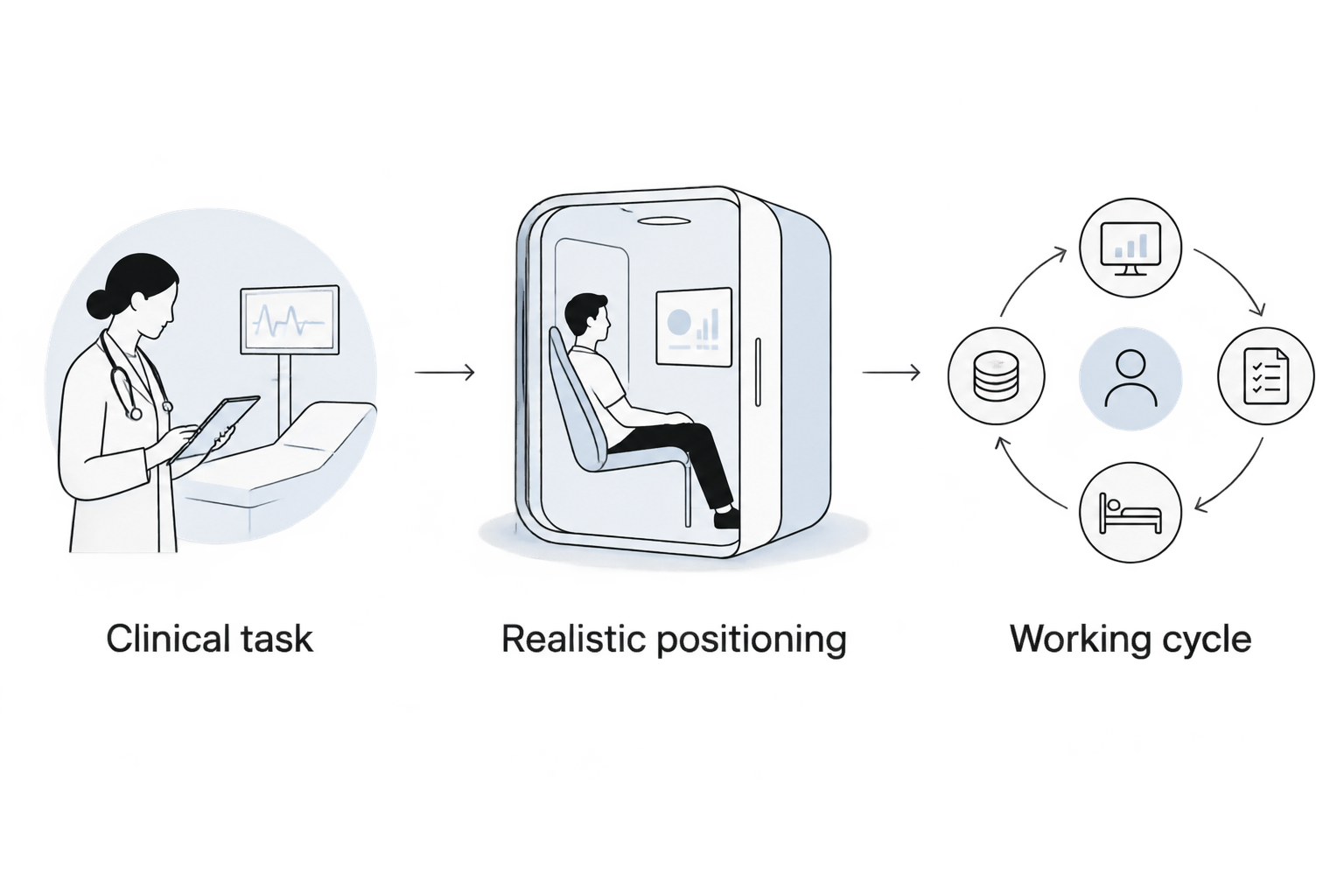
Start with the clinical task
Define what you need to observe before assessing the instrument. Lid margins, conjunctiva, corneal detail and anterior chamber assessment place different demands on illumination, positioning and interpretation.
For ocular surface work, connect the examination to a structured assessment rather than choosing equipment around symptoms alone. The ocular surface optimisation guide for trainee optometrists provides a relevant clinical companion.
Test realistic positioning
Use 3 patient positions in your demonstration plan: an upright chair, a wheelchair-access arrangement and a reclined position. These are suggested assessment conditions, not a claim that every patient or instrument supports every position.
Stop if the setup creates discomfort or an unsafe posture. Record which position prevented an adequate view and whether the problem arose from access, movement, illumination or instrument handling.
Check the complete working cycle
Assess preparation, examination, cleaning and repacking as one sequence. Include finding the charging equipment and checking that the instrument is ready for another visit.
A good demonstration ends with a usable process, not simply a good image. Scope Connect’s portable slit lamp recommendations favour a repeatable clinical workflow over an unverified claim of optical superiority.
Clinical limits that should influence your purchase
A portable slit lamp supports examination; it does not make an incomplete view reassuring. Document what you observed, what you could not assess and what action follows from that limitation.
Ocular surface findings need context
Dry eye symptoms do not establish a diagnosis on their own. Interpret symptoms alongside history and examination, and use a consistent recording approach when monitoring change.
Where corneal staining is part of your assessment, the Oxford grading scale to dry eye severity staging workflow is a related resource. Keep examination technique and recording consistent enough to make follow-up findings interpretable.
An inadequate view needs an action plan
Pain, photophobia, reduced vision or suspected corneal infection require appropriate clinical assessment and escalation. Do not use difficulty positioning a portable instrument as a reason to defer a necessary referral.
Agree the escalation process before the visit programme begins. Your equipment choice and referral arrangements should work together, particularly when a patient cannot readily attend another setting.
How the shortlist is ranked
This 2026 ranking uses clinical usability as the organising principle: binocular examination, patient access, handling, cleaning, power and service continuity. It is a purchasing shortlist, not a comparative trial or an assertion of measured differences in image quality.
Keeler PSL Classic takes the default demonstration slot; Kowa SL-17 takes the compact-kit alternative slot. Reverse that order if your own structured assessment shows the Kowa SL-17 works better for your clinicians and patients.
Before approving a 2026 order, record the exact model, supplied components, cleaning instructions and service arrangements in the purchasing decision. Keep the demonstration findings alongside that record so the reason for choosing the instrument remains clear.
Which portable slit lamp should you choose?
Start with a Keeler PSL Classic demonstration if you need a default shortlist decision. Compare the Kowa SL-17 under the same conditions when compact kit organisation or a different handling arrangement is important to your service.
Choose neither on specifications alone. The deciding evidence is whether your clinicians can obtain an adequate view, maintain a safe posture and complete the cleaning and charging routine consistently.
FAQ
What are the best portable slit lamps for domiciliary optometry?
Keeler PSL Classic and Kowa SL-17 are useful handheld binocular options to shortlist. Start with the Keeler PSL Classic as a default demonstration choice, then compare the Kowa SL-17 using the same patient positions and clinical tasks.
Is the Keeler PSL Classic better than the Kowa SL-17?
There is no universal winner for every domiciliary clinician. Compare binocular comfort, control access, patient positioning, cleaning and charging before deciding which instrument suits your service.
What magnification do these portable slit lamps offer?
Keeler PSL Classic and Kowa SL-17 offer 10× and 16× magnification in their manufacturer product literature. Confirm the exact model and current documentation before ordering, because similar names do not establish identical specifications.
Can a portable slit lamp replace a table-mounted slit lamp?
A portable slit lamp is not an automatic replacement for every table-mounted examination. Decide whether the available view answers the clinical question, and arrange further assessment when examination is incomplete.
How should I compare portable slit lamp costs?
Request like-for-like written quotations for the complete working kit. Compare the instrument, carrying equipment, charging components, servicing and battery replacement arrangements rather than the instrument alone.
Can I use a portable slit lamp with a wheelchair user?
A handheld slit lamp can support examination without transferring the patient to a conventional slit-lamp chair. Assess access, posture and stability individually; a wheelchair demonstration should form part of your purchasing assessment.
What should I do if I cannot obtain an adequate view during a home visit?
Document the examination limitation and arrange further assessment according to the symptoms, findings and clinical urgency. An inadequate view does not exclude significant ocular disease.
One last thing
Ask the supplier to demonstrate packing the instrument away, not just examining with it. A clear view answers only part of the purchasing question; cleaning, separating used items and preparing for the next visit are part of the same clinical routine.
Related guides
- How quickly can microbial keratitis cause vision loss?
- Best CPD courses on dry eye disease for optometrists