

Blepharitis is usually managed rather than permanently cured: treatment can settle symptoms and eyelid inflammation, but recurrence is common. Some underlying contributors respond to targeted treatment, although that does not guarantee lasting freedom from blepharitis. In 2026, the practical advice remains to distinguish control from cure and agree a maintenance plan that matches the clinical findings.
- Can blepharitis be cured? Symptoms can settle, but chronic blepharitis usually needs ongoing management rather than a permanent-cure promise.
- NHS blepharitis guidance supports regular eyelid hygiene, including when symptoms improve.
- Demodex blepharitis and meibomian gland dysfunction need assessment rather than interchangeable treatment advice.
- Scope Connect supports eye care professionals with blepharitis education; individual treatment still requires clinical assessment.
Can blepharitis be fully cured or only managed?
Chronic blepharitis is generally controlled, not permanently eliminated. A comfortable, quiet ocular surface is a realistic treatment goal; a guarantee that inflammation will never return is not.
The distinction matters when discussing different patterns of disease. Anterior blepharitis affects the eyelid margin around the lashes, while posterior blepharitis involves the meibomian glands; these patterns can coexist. For a closer look at mite-associated disease, see the Demodex blepharitis guide for dispensing opticians.
| Clinical pattern | Typical assessment findings | Management focus | Benefit and limitation |
|---|---|---|---|
| Anterior blepharitis | Inflamed lid margins, lash debris or crusting | Eyelid hygiene; additional treatment when clinically indicated | Cleaning removes debris but does not guarantee that inflammation will not recur |
| Posterior blepharitis with meibomian gland dysfunction | Altered gland secretions or obstructed gland openings | Appropriate warming, lid care and assessment of associated dry eye | Supports gland secretion management but does not reverse every established gland change |
| Demodex-associated blepharitis | Characteristic collarettes around lash bases | Confirmation of the clinical pattern and targeted management | Addresses a specific contributor, but symptom improvement alone does not establish lasting clearance |
These categories guide examination, not self-diagnosis. Itching or crusting alone cannot establish which mechanism is responsible, and more than one contributor can require attention.
Why this matters
Patients often interpret improvement as permission to stop every part of treatment. When symptoms return, they understandably conclude that treatment failed. Explaining the relapsing nature of blepharitis at the outset makes the maintenance discussion more useful.
For clinical conversations in 2026, separate the immediate objective from the longer-term one: first settle the flare, then maintain comfort with an achievable routine. Do not describe persistent pain, photophobia or reduced vision as an expected part of that cycle; those symptoms need assessment for another or additional condition.
Anterior blepharitis: control debris and inflammation
Anterior blepharitis affects the front of the lid margin, where the eyelashes emerge. Crusting and lash debris can accompany irritation, but the appearance of the lid margin matters more than a symptom label alone.
Best for visible lash-margin debris: an individualised eyelid-cleaning routine. Explain where to clean, how gently to do it and which method is suitable for the patient's ocular surface. Demonstration is more useful than an instruction to improve hygiene.
The benefit is practical removal of accumulated material. The limitation is that cleaning alone does not address every cause of lid inflammation, and excessive rubbing or an irritating preparation can make discomfort worse.
Reassess persistent or asymmetric changes rather than repeatedly intensifying cleaning. Focal lash loss, an abnormal lid lesion or a persistently unilateral presentation warrants closer examination and appropriate referral.
Posterior blepharitis: assess meibomian gland function
Posterior blepharitis commonly overlaps with meibomian gland dysfunction and evaporative dry eye. Assess the gland openings, secretion quality and ocular surface rather than assuming every gritty eye needs the same lid-care advice.
Best for obstructive meibomian gland dysfunction: appropriately instructed warming and lid care. Warm compresses can help soften meibomian secretions, but technique and tolerance matter. They should feel comfortably warm, never painfully hot.
The advantage is a non-invasive way to support secretion management. The limitation is that heat does not address every inflammatory contributor or restore glands that have already undergone structural loss.
Lubricants can support comfort when dry eye coexists. They do not remove lash debris, treat every lid-margin contributor or replace assessment of persistent inflammation.
Demodex blepharitis: target the identified contributor
Demodex-associated blepharitis needs a specific clinical assessment. Characteristic collarettes support recognition, while symptoms such as itching overlap with other ocular surface conditions.
Best for suspected Demodex-associated disease: assessment by an eye care professional able to confirm the findings and direct treatment. Do not equate an empiric cleaning routine with confirmed treatment of mite-associated disease.
Targeted management addresses a contributor that general comfort measures do not necessarily resolve. Its limitation is that improvement does not prove permanent eradication or exclude coexisting meibomian gland dysfunction, dry eye or skin disease.
Avoid recommending homemade essential-oil mixtures around the eyes. Concentrated preparations can irritate or injure the ocular surface, and patients need clear instructions for any preparation intended for eyelid use.
Why blepharitis control varies
The management plan should follow the examination rather than the severity of the patient's wording alone. These factors explain why apparently similar symptoms need different advice:
- Clinical pattern: anterior disease, posterior disease and Demodex-associated inflammation do not have identical treatment targets.
- Coexisting dry eye: improving the lid margin does not necessarily resolve tear-film instability or ocular surface discomfort.
- Associated skin disease: rosacea and seborrhoeic dermatitis can contribute to an ongoing tendency towards lid inflammation.
- Technique and tolerability: inconsistent warming, vigorous scrubbing or an irritating preparation can undermine an otherwise reasonable plan.
- Established gland changes: structural meibomian gland loss limits what warming and routine lid care can achieve.
- An alternative diagnosis: allergy, contact dermatitis, infection or a focal eyelid abnormality can require a different approach.
These are reasons to review the diagnosis and plan, not reasons to blame the patient. Ask what the routine actually involves, which step causes difficulty and whether symptoms changed after introducing a new preparation.
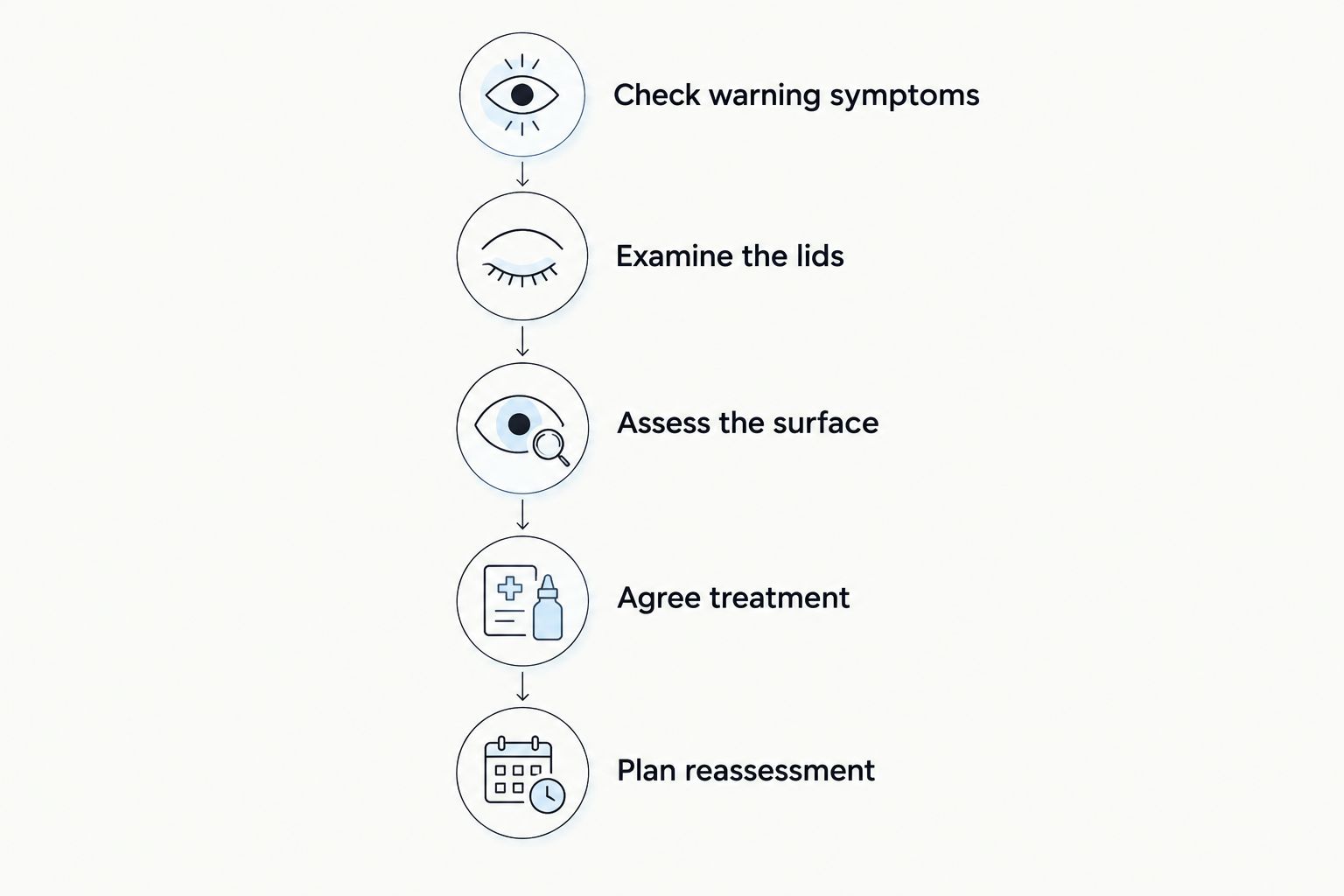
A practical blepharitis review in 2026
Use the consultation to connect symptoms, examination findings and the patient's daily routine. A repeatable review is more useful than repeatedly adding treatments without checking their purpose.
- Check warning symptoms. Establish whether pain, photophobia, altered vision or marked unilateral redness needs urgent assessment before routine blepharitis advice.
- Examine the lids. Assess lash debris, collarettes, lid-margin changes and meibomian gland findings within your competence and clinical setting.
- Assess the surface. Consider tear-film disturbance, corneal involvement and other explanations for persistent symptoms.
- Agree treatment. Explain which finding each intervention addresses, demonstrate the technique and check that the patient can follow it.
- Plan reassessment. Agree how response will be reviewed and which changes should prompt earlier contact.
The sequence keeps treatment tied to findings. If symptoms persist, revisit the diagnosis, adherence and tolerability before assuming the patient simply needs a stronger version of the same intervention.
For professional learning alongside clinical practice, Scope Connect provides clinical articles, CPD-accredited courses and patient education materials. Scope Connect is best suited to eye care professionals seeking blepharitis education, not individual diagnosis. Its role is educational; it does not replace examination or local prescribing and referral arrangements.
What should you tell patients about warm compresses?
For patient counselling in 2026, NHS blepharitis guidance provides a straightforward starting point: apply a warm compress to closed eyelids for 5–10 minutes, followed by gentle massage and eyelid cleaning. The NHS advises eyelid cleaning 2 times daily, including when symptoms have improved.
Explain the range rather than encouraging patients to chase heat: 5 minutes is the lower end of that guidance, and 10 minutes is the upper end. These are care instructions, not a promise that symptoms will resolve within a particular number of days.
A clean warm flannel loses heat during use, so patients should follow the demonstrated method without making it excessively hot. For a reusable mask or cleansing preparation, follow its instructions and the clinician's advice rather than transferring timings between different products.
Ask about comfort and skin reactions at review. A painful compress or stinging cleanser is not evidence that the treatment is working harder.
Can blepharitis go away completely between flare-ups?
Blepharitis symptoms can settle completely between flare-ups, but a symptom-free period does not establish permanent cure. Residual lid-margin or gland changes can remain even when the patient feels comfortable.
Agree what maintenance means for that individual. Avoid implying that everyone needs every treatment indefinitely, while making clear that stopping a prescribed medicine and adjusting routine lid care are different decisions.
Do antibiotics permanently cure blepharitis?
Antibiotics do not guarantee a permanent cure for blepharitis. A prescriber can consider them for selected presentations, but they are not a substitute for identifying the disease pattern and associated ocular surface problems.
Explain the treatment's purpose and follow the prescribed course. Patients should not reuse leftover antibiotic or steroid eye preparations for a later red eye without assessment; steroid treatment requires particular attention to diagnosis and monitoring.
When should blepharitis symptoms trigger urgent assessment?
Eye pain, light sensitivity or a change in vision needs urgent assessment rather than routine blepharitis self-care. A very red eye, particularly with these symptoms, also requires prompt attention.
Contact lens wear adds an important safety consideration. A contact lens wearer with a red, painful or light-sensitive eye should remove the lenses and seek urgent eye care, because corneal infection must be excluded.
Persistent unilateral lid changes, lash loss or an abnormal lesion require further examination even without an acute painful episode. Do not let a previous blepharitis diagnosis explain away a new finding.
FAQ
Can blepharitis be cured permanently?
Chronic blepharitis usually needs ongoing management rather than a promise of permanent cure. Symptoms and inflammation can settle, but recurrence remains possible.
Will I need to clean my eyelids even when they feel better?
Regular eyelid cleaning is commonly continued after symptoms improve because blepharitis can recur. Your eye care professional should explain the maintenance routine appropriate to your findings and tolerance.
How long should a warm compress stay on my eyelids?
NHS blepharitis guidance advises a warm compress for 5–10 minutes before gentle massage and cleaning. Keep it comfortably warm rather than hot, and follow specific instructions for any reusable device.
Are dry eye drops enough to treat blepharitis?
Dry eye drops can relieve associated dryness, but they do not address every cause of eyelid inflammation. Lid-margin disease and meibomian gland dysfunction need their own assessment and management plan.
Is Demodex blepharitis treated like other blepharitis?
Demodex-associated blepharitis needs assessment of its characteristic findings and targeted management when indicated. General lid hygiene and lubricants should not be presented as proof that the mite-associated component has resolved.
Can I wear contact lenses during a blepharitis flare?
Avoid contact lenses while your eyes are symptomatic and seek advice about restarting wear. A red, painful or light-sensitive eye in a contact lens wearer needs urgent assessment rather than routine blepharitis care.
Why does my blepharitis keep coming back?
Blepharitis can recur because the underlying tendency to lid-margin inflammation or gland dysfunction persists. Review the diagnosis, associated skin or ocular surface disease, treatment technique and tolerability rather than assuming recurrence means treatment has failed.
One last thing
For blepharitis reviews in 2026, ask the patient to describe or demonstrate the routine rather than simply confirming that they perform lid hygiene. That reveals whether the intended treatment and the actual technique match.
Successful management means comfortable eyes, controlled inflammation and a clear plan for relapse—not an unsupported promise of cure. A patient who understands when to continue care, when to seek review and when symptoms are urgent has a more useful outcome than a patient who has only been told that blepharitis is chronic.
Related guides
- Can Demodex blepharitis be cured permanently?
- Dry eye heat therapy for contact lens opticians
- Ocular surface optimisation for trainee optometrists