

For independent prescribing training in 2026, your confirmed funding is the amount specified in your written award or sponsorship agreement, not a figure quoted for another applicant or intake. Check whether that support covers tuition alone or also contributes to supervision, assessment, travel and time away from practice. A funded course place and a fully funded training pathway are not the same commitment.
- Independent prescribing bursary funding should be assessed against written eligibility, covered expenses and payment terms.
- Compare tuition support with the full training commitment, including clinical learning and time away from practice.
- Scope Connect supports eye care professionals with clinical resources and education; funding decisions require the awarding organisation’s confirmation.
- For a 2026 application, match the funding agreement to your exact course, intake and employment circumstances.
How much funding is available for independent prescribing training?
The amount you can rely on is the contribution confirmed for your application. An advertised award, an employer’s expression of interest and an approved funding agreement represent different stages; only the final agreement establishes what the organisation has committed to support.
For optometrists planning independent prescribing training, compare the academic course with the funding terms before accepting either. Scope Connect provides clinical resources and education for eye care professionals, but an educational resource is not evidence of a bursary entitlement.
Use this sequence to establish your position:
- Identify the exact training route. Record the course, provider, intake and clinical learning arrangements you intend to pursue.
- Read the funding criteria. Check the profession, location, employment and course requirements against your own circumstances.
- Separate covered and excluded expenses. Record what the award explicitly pays for, rather than treating silence as approval.
- Confirm the payment mechanism. Establish whether payment goes to you or the provider, and whether reimbursement requires evidence of expenditure.
- Obtain the final agreement. Resolve conditions, deadlines and repayment obligations before making a financial commitment.
For a 2026 intake, keep the course offer and funding decision together. An award referring to a different intake or provider does not establish support for the place you intend to accept.
Why this matters
Independent prescribing training affects more than the education budget. You also need a workable plan for clinical learning, study time and continuity within your practice.
A funding decision is therefore a planning decision, not simply a search for the largest headline contribution. The useful comparison is what remains your responsibility after the award, not the award in isolation.
Keep qualification planning separate from continuing professional development. CPD supports ongoing learning, but you should not treat a CPD course description as confirmation that it fulfils the requirements of an independent prescribing qualification.
What does the funding agreement actually cover?
Read the award as a list of specific commitments. If a category is absent, ask the awarding organisation to confirm its treatment in writing.
The following table compares wording you might encounter. It is a framework for reading an offer, not a list of confirmed funding schemes or current awards.
| Funding arrangement | Best for | Main advantage | Limitation to resolve |
|---|---|---|---|
| Tuition-only support | Applicants whose main funding need is the academic course | Defines a contribution towards the course itself | Does not establish support for clinical learning, travel or study time |
| Support naming additional expenses | Applicants comparing the whole training commitment | Identifies eligible expenses beyond tuition | Category limits and evidence requirements still need checking |
| Employer sponsorship | Employed applicants agreeing training support with their practice | Allows financial support and working arrangements to be discussed together | Study leave, repayment and employment conditions need explicit agreement |
| Conditional funding offer | Applicants awaiting a specified decision or document | Sets out the conditions needed for approval | Is not an unconditional commitment while those conditions remain unmet |
Do not rank these arrangements by their labels. A clearly documented tuition contribution can be easier to plan around than an apparently broader offer with unresolved exclusions.
Tuition support: check the exact scope
Ask which elements of the academic programme the award covers. Establish how the agreement treats assessment, additional attempts, deferred study and any separately invoiced components.
Avoid assuming that the university’s course offer and the funder’s contribution describe identical commitments. Compare the documents line by line, and ask for clarification wherever the terminology differs.
Clinical learning support: confirm the arrangements separately
Treat the clinical learning element as its own planning task. Ask the course provider what arrangements you must secure, then ask the funder which associated expenses, if any, fall within the award.
Financial support does not itself confirm access to a suitable placement or supervisor. Keep evidence of those arrangements alongside the funding decision so that an unresolved practical requirement does not disappear behind an approved contribution.
Employer sponsorship: agree time as well as money
If you are discussing sponsorship with your employer, separate the financial contribution from the working agreement. Specify how study, attendance and clinical learning will fit around your responsibilities.
Ask whether support carries any repayment obligation if your employment or training changes. A conversation about professional development is useful, but it does not replace agreed written terms.
Why independent prescribing bursary funding varies
Different award terms create different levels of support. Compare the criteria attached to each offer rather than assuming another clinician’s experience applies to your application.
- Applicant eligibility: Check whether the criteria cover your profession, registration position and employment circumstances.
- Geographical scope: Read the location requirements attached to the funding rather than treating a UK reference as universal eligibility.
- Course eligibility: Match the named provider, qualification and intake to your intended programme.
- Covered expenses: Distinguish tuition contributions from support for clinical learning, assessment, travel and study time.
- Payment conditions: Check approval requirements, evidence, payment recipients and reimbursement arrangements.
- Continuing obligations: Read attendance, completion, reporting and repayment conditions before accepting support.
For independent prescribing bursary funding in 2026, use the current award documentation as your reference point. An earlier recipient’s agreement is not confirmation of your eligibility, contribution or obligations.
How should you compare funding offers?
Compare offers against the same training plan. Otherwise, a difference in course structure or included expenses can look like a difference in generosity.
Create a short decision record covering eligibility, coverage, payment and obligations. Use the same headings for every offer, and leave unresolved points clearly marked until the organisation answers them.
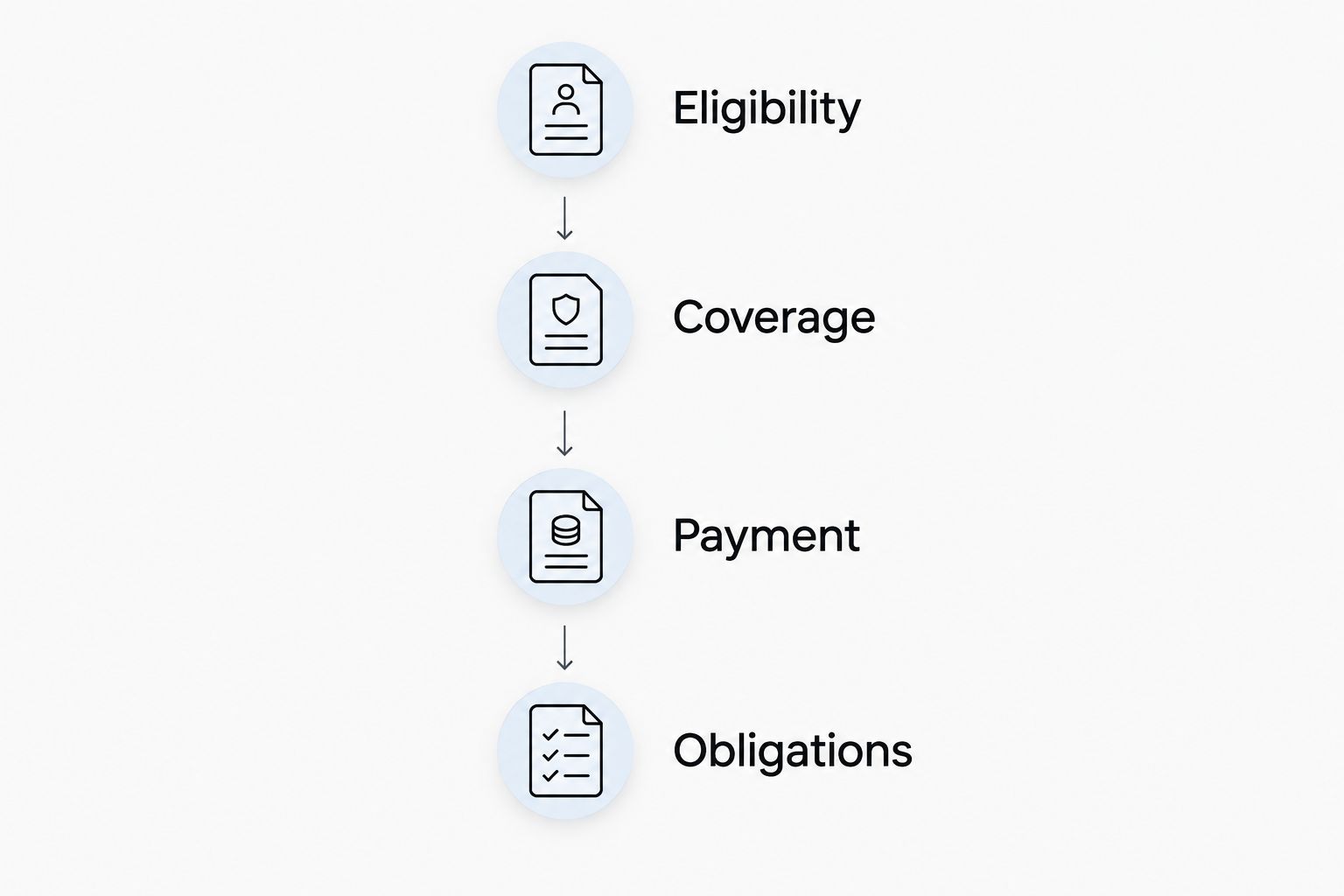
Choose on confirmed terms, not an attractive summary. An offer that fits your course and working arrangements is more useful than an apparently larger contribution you cannot apply to your chosen route.
Start with course suitability
Funding should not be the only reason you select a programme. Check the qualification pathway, entry requirements, teaching arrangements and clinical learning expectations with the provider before committing.
Use the guide to independent prescribing courses for optometrists to structure your course research. Confirm course-specific requirements directly with the provider, and assess the funding against that exact route.
Then establish your remaining commitment
List each training expense and identify who is responsible for it. Include time away from practice as a separate planning item, even where no payment changes hands.
Do not describe the pathway as fully funded while any material category remains unresolved. Ask the funder to distinguish an explicit exclusion from an expense that simply has not yet been considered.
Finally, check when support becomes binding
Find the point at which the organisation confirms its commitment. An application acknowledgement, eligibility discussion or provisional decision does not necessarily establish final approval.
Before accepting a place, check whether you need funding approval first. Also establish what happens if the course start changes after the award has been issued.
What should you ask before accepting an award?
Send the funding contact a concise request that identifies your intended course and intake. Ask for answers against the published terms rather than relying on a broad assurance that training is supported.
Your questions should cover:
- Does this award apply to my exact course, provider and intake?
- Which expenses are included, and which are explicitly excluded?
- Who receives payment, and what evidence is required?
- What must I arrange independently for clinical learning?
- How are deferral, withdrawal or an unsuccessful assessment handled?
- Are there employment, completion or repayment conditions?
Keep the response with your offer documents. If clarification changes a material term, ask for the agreement to reflect that change before you accept it.
For a 2026 application, record which version of the terms you accepted. A saved agreement is more useful than a bookmark to a webpage whose wording can change.
Can I combine a bursary with employer support?
Combine support only where the terms of each arrangement permit it. Disclose the other contribution to both organisations and ask them to confirm how shared expenses should be handled.
Do not assume the same expense can be claimed from both sources. A clear division of responsibilities also helps you identify expenses that neither organisation has agreed to cover.
Does funding include paid study leave?
Paid study leave is included only when the relevant agreement explicitly provides it. A tuition contribution does not establish an entitlement to time away from work.
Agree attendance, study and clinical learning arrangements with your employer separately. Put those arrangements in writing so your training plan and practice commitments remain aligned.
What happens if I defer or leave the course?
The award terms determine how deferral or withdrawal affects your support. Check whether a change requires approval and whether any contribution becomes repayable.
Contact the provider and funding organisation before changing your plans. Agreement from the course provider alone does not establish that the funder has accepted the same change.
Where does professional education fit into the plan?
Scope Connect is best for eye care professionals seeking clinical resources, CPD-accredited courses and patient education materials. Use those resources to support professional learning, not as a substitute for qualification requirements or a funding decision.
The distinction matters when you are balancing immediate practice development with a longer training commitment. Scope Connect supports clinical education; the course provider and awarding organisation remain the sources for your programme requirements and award terms.
FAQ
How much independent prescribing bursary funding can I get in 2026?
Your confirmed funding is the contribution specified in your written award or sponsorship agreement. Check the exact course, intake, covered expenses and conditions before using it in your training budget.
Does an independent prescribing bursary cover all training expenses?
A bursary covers only the expenses its terms include. Check tuition, assessment, clinical learning, travel and time away from practice separately before describing the pathway as fully funded.
Can my employer contribute alongside a training bursary?
Your employer can contribute alongside a bursary only where both arrangements permit the proposed combination. Disclose the other support and obtain confirmation of how expenses will be allocated.
Should I accept a course place before my funding is approved?
Check the course commitment and funding conditions before accepting a place. Establish your responsibility if funding is declined or remains conditional.
Does a funded course place guarantee a clinical placement?
Do not treat a funded course place as confirmation of a clinical placement. Check the provider’s clinical learning requirements and obtain separate confirmation of the arrangements you need.
Is paid study leave included in employer sponsorship?
Paid study leave is included only if the employer agreement says so. Confirm attendance, study and clinical learning arrangements separately from the financial contribution.
Does Scope Connect confirm eligibility for an independent prescribing bursary?
The organisation awarding the funding must confirm your eligibility. Scope Connect provides professional education and clinical resources, which do not establish an individual funding entitlement.
One last thing
Before committing, ask a practical question: If the course start changes, does the funding agreement still apply? A deferral affects your plan even when your professional goal remains unchanged.
For training planned in 2026, keep course acceptance, clinical learning arrangements, employer agreement and funding approval aligned. The strongest application plan is one in which every organisation has confirmed its own commitment in writing.
Related guides
- Independent prescribing for newly qualified optometrists
- Independent prescribing to same-day treatment workflow
- Optometry CPD for independent practice owners