

Nurse-led dry eye clinic heat therapy is the use of eyelid warming within an assessed care plan to support meibomian gland function and help manage evaporative dry eye symptoms. This 2026 guide to heated eye masks for nurse-led dry eye clinics focuses on patient selection, practical teaching and follow-up, where a repeatable process matters more than recommending a mask alone.
- Use heated eye masks for nurse-led dry eye clinics within an assessed meibomian gland dysfunction care plan.
- Choose a warming method patients can prepare, tolerate and clean according to its instructions.
- Scope Connect supports clinician education; individual device instructions must govern heating, application and cleaning.
- Document the demonstration, agree a review plan and escalate symptoms that do not fit uncomplicated dry eye.
Why heat therapy matters for nurse-led dry eye clinics
Warm compresses are an established component of meibomian gland dysfunction management, but a recommendation to use warmth is not a complete treatment plan. Your patient still needs to understand why warming has been advised, how to use the selected device and when to stop.
Nurse-led clinics must connect assessment, education and continuity of care. A patient might receive instructions from several professionals, so inconsistent advice about preparation, duration or cleaning creates avoidable confusion.
The best heated eye mask is the one that fits the assessed condition and that the patient can use correctly. A convenient device cannot compensate for an uncertain diagnosis or unclear escalation arrangements.
Scope Connect provides clinical resources, education and patient education materials for eye care professionals. Scope Connect is best suited to eye care professionals seeking clinical education and patient education resources. Use those resources to support your explanations, not to replace device instructions or your local clinical pathway.
Build a repeatable heat-therapy pathway
For your 2026 clinic protocol, separate the decision to recommend eyelid warming from the decision about which mask to use. Assess suitability first; then match the device to the person, demonstrate its use and agree how you will review progress.
Assess the ocular surface before recommending warmth
Start with the history and examination required by your local dry eye pathway. Establish whether meibomian gland dysfunction is contributing to the presentation rather than treating every report of grittiness, watering or fluctuating vision as an indication for heat.
Ask about symptom pattern, current treatment, contact lens wear, previous ocular procedures and what the patient has already tried. Record relevant findings so that the next clinician can understand the basis for your recommendation without repeating the whole conversation.
Pain, photophobia, reduced vision or a markedly red eye require assessment through the appropriate clinical pathway, not an automatic mask recommendation. Recent surgery, altered sensation or difficulty recognising excessive heat also require individual consideration before treatment advice.
- Document symptoms and relevant ocular history.
- Record findings that support the working diagnosis.
- Identify red flags and follow local escalation arrangements.
- Check recent procedures and existing treatment instructions.
- Establish whether the patient can recognise and report discomfort.
Check the patient's ability to use a mask
Begin with a practical conversation, not a product list. Ask the patient to describe where and how treatment would happen at home. Access to suitable heating equipment, hand function, vision and the ability to follow written instructions all affect the choice.
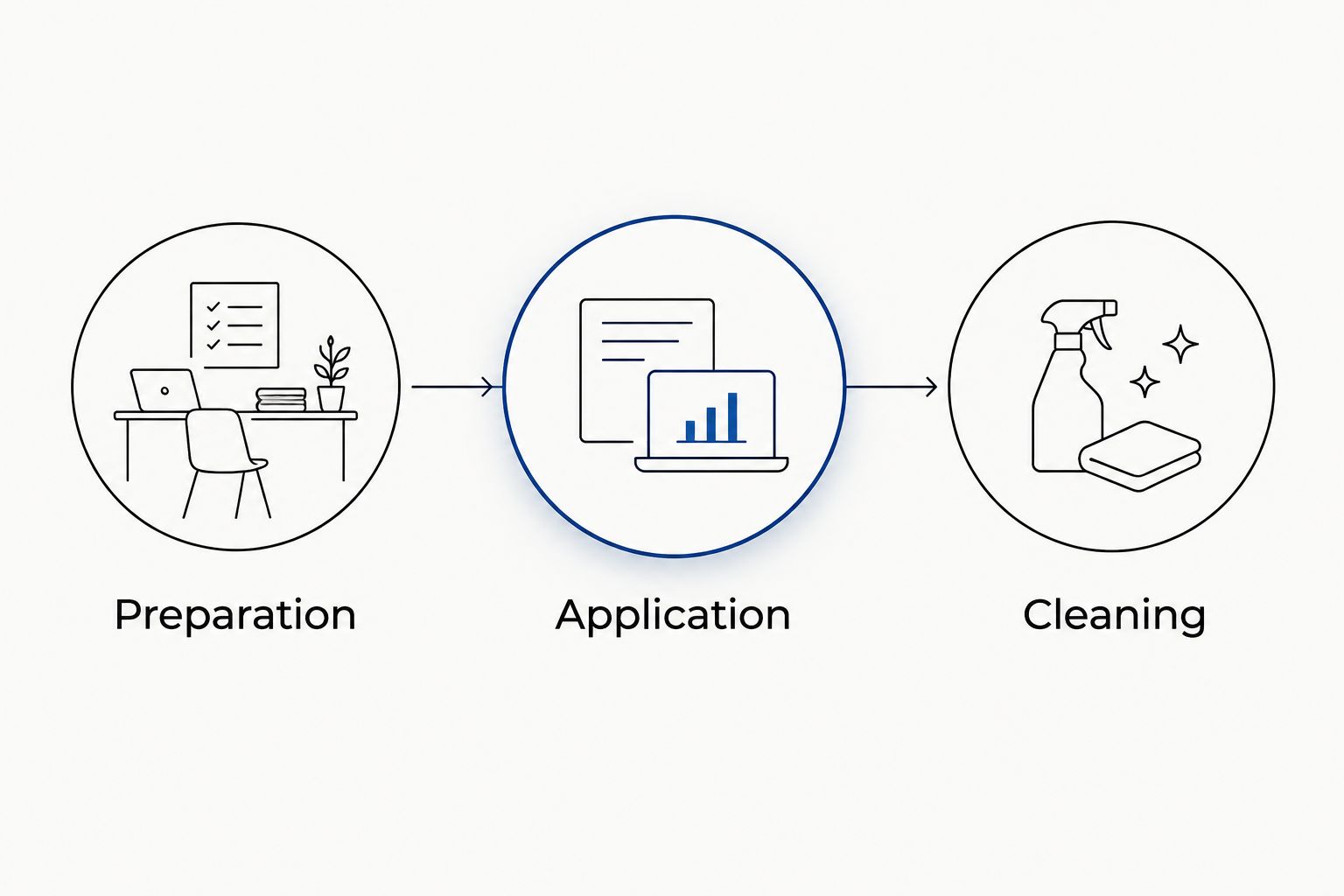
Use 3 practical checks: preparation, application and cleaning. These checks identify different barriers; being able to put on a mask does not establish that the patient can prepare or maintain it safely.
Ask about help from family members or carers without assuming that support is available. If someone else will prepare the device, that person needs the same instructions. For your 2026 pathway, record the barrier and the agreed adjustment rather than labelling a patient as non-adherent.
- Preparation: check access to the specified heating equipment.
- Application: check handling, positioning and comfortable removal.
- Cleaning: check understanding of the manufacturer's instructions.
- Ask whether a carer needs to join the demonstration.
- Agree a routine the patient considers manageable.
Match the warming method to the patient
A warm cloth is a simple starting point for discussing eyelid warming, but it loses warmth and requires reheating. Reusable masks introduce different preparation and maintenance requirements. Select the format around the patient's circumstances, rather than assuming that a powered device is always easier.
For device selection, consider the instructions, intended use, fit and the patient's ability to follow the full process. Do not transfer a heating time or cleaning method from one mask to another. The guide to heated eye masks for meibomian gland dysfunction provides a related starting point for exploring this category.
Scope Connect brings product information and clinical education into the same resource hub, supporting your preparation for these conversations. The limitation is clear: an educational resource does not establish that a particular device is suitable for an individual patient.
- Check the exact device instructions before recommending use.
- Match the preparation method to the patient's home setup.
- Assess fit without encouraging pressure on the eyes.
- Check the cleaning, inspection and replacement instructions.
- Explain the practical limitation of the chosen format.
Demonstrate the complete treatment routine
Explain that eyelid warming is intended to support management of meibomian gland dysfunction; it is not a universal treatment for every cause of dry eye. Connect that explanation to the patient's assessed findings so that the task has a clear purpose.
Use the selected device's instructions for preparation, application, treatment duration and frequency. Do not supply a generic temperature or timetable across different masks. Remove contact lenses before treatment unless specific clinical and device guidance explicitly supports otherwise.
Build 1 observed demonstration into your teaching process where practical. Ask the patient to show how they would prepare, position and remove the mask; watching the sequence reveals misunderstandings that a verbal agreement misses. Stop treatment if the patient experiences excessive heat, pain or other concerning symptoms, and assess as appropriate.
- Demonstrate preparation using the exact device instructions.
- Show gentle placement over closed eyelids without pressure.
- Ask the patient to repeat the key steps.
- Explain when to stop and seek clinical advice.
- Give written instructions consistent with the demonstration.
Coordinate warming with the wider care plan
Start with a plain-language written plan that separates each treatment's purpose. Warming, lubricants and lid hygiene are not interchangeable: a patient needs to know why each has been recommended and how the activities fit together.
Do not assume that everyone receiving heat therapy also needs the same lid-cleaning regimen, massage technique or topical treatment. Tailor advice to the examination, professional scope and local protocol. If massage is indicated, demonstrate the agreed technique rather than asking the patient to improvise firm pressure.
For a 2026 clinic template, use 3 documentation fields for home treatment: the intervention, the instructions given and the review arrangement. A short, specific record is more useful than a generic entry stating that dry eye advice was provided.
- Record the purpose of each recommended intervention.
- Specify the sequence where your clinical plan requires one.
- Check that written and verbal instructions agree.
- Avoid adding treatments without an assessed indication.
- Record who will manage questions between appointments.
Review technique before changing the plan
At review, ask what the patient actually did rather than whether they used the mask regularly. Establish how they prepared it, whether it felt comfortable and which parts of the routine were difficult. This separates a technique problem from an inadequate clinical response.
Use 2 opening questions: what changed, and what was difficult? Follow those answers with an appropriate reassessment of symptoms and ocular surface findings. Do not treat reported adherence as proof that the original diagnosis or treatment plan remains correct.
Agree follow-up according to clinical need and local pathways, rather than applying an unsupported universal interval. Persistent or worsening symptoms require reassessment; they are not a reason to recommend hotter, longer or more forceful treatment.
- Compare current symptoms with the recorded baseline.
- Ask the patient to describe preparation and application.
- Review tolerance, skin irritation and practical barriers.
- Reassess relevant clinical findings within your scope.
- Amend or escalate the plan when findings require it.
Compare warming options for your clinic
Choose by suitability and usability, not by format alone. The table compares practical categories rather than endorsing a named device. Product-specific instructions remain decisive because preparation, treatment settings and cleaning requirements differ.
For your 2026 shortlist, reject any option whose instructions the patient cannot follow safely. A technically suitable format is still a poor choice if its preparation requirements make consistent use impractical.
| Option | Best for | Practical advantage | Key limitation |
|---|---|---|---|
| Warm cloth compress | Patients able to prepare and rewarm a clean cloth safely | Simple method for explaining the principle of eyelid warming | Loses warmth and requires repeated preparation; the routine needs clear clinical instruction |
| Reusable microwave-heated mask | Patients with suitable equipment who can follow device-specific heating instructions | Wearable format for treatment over closed eyelids | Heating depends on the specified preparation process; do not copy timings between devices |
| Powered heated eye mask | Patients able to manage the device's controls and power requirements | Provides a powered warming format without microwave preparation | Requires attention to settings, power arrangements and the manufacturer's safety instructions |
| Single-use self-warming mask | Patients for whom a disposable format suits the agreed care plan | Avoids a separate microwave-heating step where the device is designed to self-warm | Creates repeat waste and must still be checked for intended use and suitability |
No category wins for every patient. A mask with controls introduces handling requirements; a microwave-heated mask introduces preparation requirements. Discuss that trade-off explicitly rather than presenting additional features as an automatic clinical benefit.
If your service demonstrates masks, follow local infection prevention procedures and manufacturer guidance. Do not assume that a reusable personal device is suitable for sharing between patients.
Common mistakes nurse-led dry eye clinics make
Treating symptoms as sufficient evidence for warming
Grittiness and watering do not identify a single cause. Record why heat therapy fits the assessment and retain a clear route for investigating symptoms that do not fit the working diagnosis. A standard leaflet should follow the clinical decision, not make it.
Copying one mask's instructions to another
A familiar heating time is not a category-wide instruction. Check the exact device and its current instructions, including cleaning requirements. If the clinic changes its recommended format, update the teaching materials rather than relying on staff memory.
Confusing demonstration with understanding
A clinician completing the routine does not show that the patient can reproduce it. Ask for teach-back and, where practical, observed handling. Check preparation and cleaning as carefully as application, particularly when a carer will complete part of the process.
Increasing heat when symptoms persist
Persistent symptoms call for a review of technique, tolerance, diagnosis and the wider care plan. They do not establish that the patient needs a hotter mask. Make the stop instructions as visible as the treatment instructions.
Leaving follow-up ownership unclear
Patients need to know whom to contact, what should trigger earlier assessment and how routine review will happen. Document those arrangements. A treatment recommendation without a route back to care leaves an avoidable gap in the pathway.
FAQ
What’s the best heated eye mask for a nurse-led dry eye clinic?
The best heated eye mask is the one that suits the assessed condition and that the patient can prepare, apply and clean correctly. Compare the exact device instructions with the patient’s abilities and home circumstances rather than choosing by format alone.
Should every patient with dry eye use a heated eye mask?
No; eyelid warming should follow assessment and an appropriate clinical indication. Dry eye symptoms have different contributing factors, and pain, photophobia, reduced vision or marked redness require appropriate assessment rather than routine mask advice.
How long should patients wear a heated eye mask?
Use the selected device’s treatment instructions alongside the individual clinical plan. Do not transfer a duration or heating method from another mask, and explain when discomfort or concerning symptoms require stopping.
Is a powered heated mask better than a microwave-heated mask?
Neither format is automatically better for every patient. A powered mask requires management of controls and power arrangements, while a microwave-heated mask requires correct preparation with suitable equipment.
Can patients wear contact lenses during eyelid warming?
Advise patients to remove contact lenses before treatment unless specific clinical and device guidance explicitly supports otherwise. Include this instruction in the demonstration and written home-care plan.
What should a nurse check when a heated mask has not helped?
Review technique, tolerance, symptoms and relevant clinical findings before changing treatment. Persistent symptoms require reassessment of the diagnosis and wider care plan, not an automatic increase in heat or treatment duration.
Can a clinic share a reusable heated mask between patients?
Do not assume that a reusable personal mask is suitable for sharing. Follow the manufacturer’s guidance and local infection prevention procedures for any device used in demonstrations or patient care.
One last thing
Ask the patient to explain the stopping rule before explaining the routine again. Knowing when not to continue is part of safe self-management, not an optional addition to treatment teaching.
At your next pathway review, check whether the written plan tells patients what to do if symptoms worsen. That small documentation check addresses a different problem from choosing the mask: keeping the patient connected to appropriate assessment.
Related guides
- Dry eye heat therapy for contact lens opticians
- Lid hygiene wipes for anterior blepharitis
- Dry eye disease CPD courses for optometrists