

Best overall for reusable home care: a gel cooling eye mask. Best for sensitive eyelid skin: a clean, cool flannel. Best for localised application: a small, wrapped cold pack. This 2026 guide compares a cooling eye mask for eye allergies with simpler cold-compress options, focusing on comfort, hygiene and safe use rather than treatment claims.
- A reusable gel cooling eye mask for eye allergies suits home use when its instructions permit comfortable, pressure-free application.
- A clean, cool flannel is the simplest cold compress for itchy eyes and sensitive eyelid skin.
- A wrapped cold pack offers localised application but needs careful positioning and a protective barrier.
- Cooling provides symptom relief; it does not replace assessment or appropriate allergic conjunctivitis treatment.
Why this matters
Cold compresses can soothe itching and discomfort associated with allergic conjunctivitis. They do not remove the need to identify the cause, review contact lens use or select appropriate treatment. The best option is therefore the one your patient can use correctly, not the one with the most elaborate design.
Scope Connect is best for eye care professionals seeking clinical resources and patient education. Its clinical resource hub supports that wider discussion: a cooling mask belongs within a management plan, not in place of one.
For your 2026 patient advice, distinguish familiar bilateral itching from symptoms that require assessment. Eye pain, light sensitivity, altered vision or a markedly red eye should not be managed by recommending a mask alone. A contact lens wearer with a red or painful eye needs particular attention.
What makes the best cooling eye mask for eye allergies?
Use these criteria before choosing a format. Comfort and safe handling matter more than cosmetic features.
- Temperature control: the compress should feel comfortably cool, not painfully cold. Follow the manufacturer's preparation instructions for any manufactured mask or pack.
- Low pressure: the patient should be able to rest the compress over closed eyelids without tightening a strap or pressing on the eyes.
- Skin tolerance: favour a clean, plain contact surface. Avoid adding fragrance, essential oils or other unnecessary ingredients around irritated eyes.
- Cleanability: the contact surface must be easy to clean or replace. A reusable item is only practical when the patient can maintain it.
- Useful coverage: choose broad coverage for both closed eyelids or a small compress for a specific area, according to the clinical situation.
- Manageable handling: the patient must be able to prepare, position and remove the compress without difficulty.
For a 2026 recommendation, make 3 checks explicit: temperature, pressure and cleanliness. Ask the patient to explain how they will use the compress at home. That reveals more about suitability than a product photograph.
Cooling options at a glance
This ranking compares formats rather than named products. The order reflects handling and intended use; it is not a claim that one format produces greater clinical improvement.
| Option | Best for | Standout feature | Key limitation |
|---|---|---|---|
| Reusable gel cooling eye mask | Routine home use over both closed eyelids | A shaped, reusable compress | Temperature, weight and cleaning depend on the design |
| Clean, cool flannel | Sensitive eyelid skin and simple preparation | Temperature can be adjusted with cool water | Warms during use and requires fresh laundering |
| Small, wrapped cold pack | Localised application | Can be positioned over a limited area | Requires careful handling to avoid excessive cold or pressure |
No option should feel painfully cold or require pressure to stay in place. If a patient cannot comfortably tolerate a compress, remove it rather than encouraging them to persist.
1. Reusable gel cooling eye mask: best for routine home use
A reusable gel eye mask holds a cooling material within a shaped cover. Designs differ, so preparation, cleaning and permitted cooling methods must come from the individual manufacturer's instructions. Do not assume that a mask intended for warming is also suitable for cooling.
This format suits patients who want a dedicated item for repeated use over both closed eyelids. The relevant features are its contact surface, weight and fit—not an unsupported promise of longer-lasting relief.
Reusable gel cooling eye mask pros:
- A shaped format can cover both closed eyelids without folding a cloth.
- A dedicated item makes the intended use clear within a home-care routine.
- Reuse is practical when the contact surface can be cleaned as directed.
- A suitable design can be placed gently without a tightly fastened strap.
Reusable gel cooling eye mask cons:
- A heavily chilled mask can be uncomfortable or injure skin if used incorrectly.
- Weight or a tight strap can add unwanted pressure.
- Seams, covers and cleaning requirements need checking before recommendation.
Best for: patients seeking a reusable, full-eye-area compress who can follow its preparation and cleaning instructions.
Before recommending a gel mask, establish whether its instructions permit cooling, whether a protective cover is required and whether the patient can remove it easily. Inspect a damaged or leaking mask rather than continuing to use it.
Verdict: Buy only a cooling-compatible design that sits comfortably without pressure and has clear cleaning instructions.
2. Clean, cool flannel: best for sensitive eyelid skin
A clean flannel dampened with cool water provides a straightforward cold compress. Wring it out and rest it gently over closed eyelids. It needs no added fragrance, gel or botanical ingredient to serve that purpose.
This is the simplest starting option when you want the patient to control temperature directly. Choose a soft cloth, and explain that compressing the eyelids is different from rubbing or scrubbing them.
Clean, cool flannel pros:
- Cool water allows the patient to adjust the temperature before application.
- The patient can lift or reposition the cloth immediately.
- A plain cloth avoids unnecessary topical ingredients.
- Freshly laundered cloths make the contact surface easy to replace.
Clean, cool flannel cons:
- The cloth warms during use and needs re-cooling if continued comfort is required.
- A wet or poorly wrung cloth can drip and feel unpleasant.
- Reusing an unwashed cloth creates an avoidable hygiene problem.
Best for: patients with sensitive eyelid skin who prefer a simple, easily adjusted compress.
For home organisation, suggest keeping 2 clean flannels available so a fresh cloth is ready while the other is being laundered. This is a practical hygiene arrangement, not a prescribed treatment frequency. Keep eye-care cloths separate from shared household towels.
Stop if the cloth causes stinging, worsening redness or skin discomfort. Reconsider the material, cleanliness and underlying diagnosis rather than repeatedly applying the same compress.
Verdict: Buy a soft, washable flannel if the patient does not already have a suitable clean cloth.
3. Small, wrapped cold pack: best for localised application
A small cold pack can be positioned over a limited area of the closed eyelid. It requires more deliberate handling than a flannel because the cooling surface must not contact the skin directly when a barrier is required. Follow the pack's instructions rather than improvising a freezing or application routine.
This option is for targeted comfort after appropriate assessment. A new unilateral red, painful or swollen eye is not a reason to choose a smaller pack instead of investigating the cause.
Small, wrapped cold pack pros:
- A small format allows localised positioning.
- Hand-held application lets the patient remove the pack immediately.
- A clean fabric barrier separates the cooling surface from the skin.
Small, wrapped cold pack cons:
- Holding the pack in place can encourage pressure on the eye.
- Excessive cold remains a risk despite the smaller size.
- A local compress does not address symptoms affecting both eyes equally well.
Best for: patients needing localised eyelid comfort who can position the pack gently and follow its instructions.
Use 1 clean fabric barrier between a cold pack and the eyelid when the instructions require a wrap; this is not a substitute for checking the pack's temperature. Do not use an uncovered frozen object against the eye area. Remove the pack if the sensation becomes painful or uncomfortable.
Verdict: Hold until the cause of localised symptoms is clear; buy only when targeted application has a defined role.
How to explain safe cooling to patients
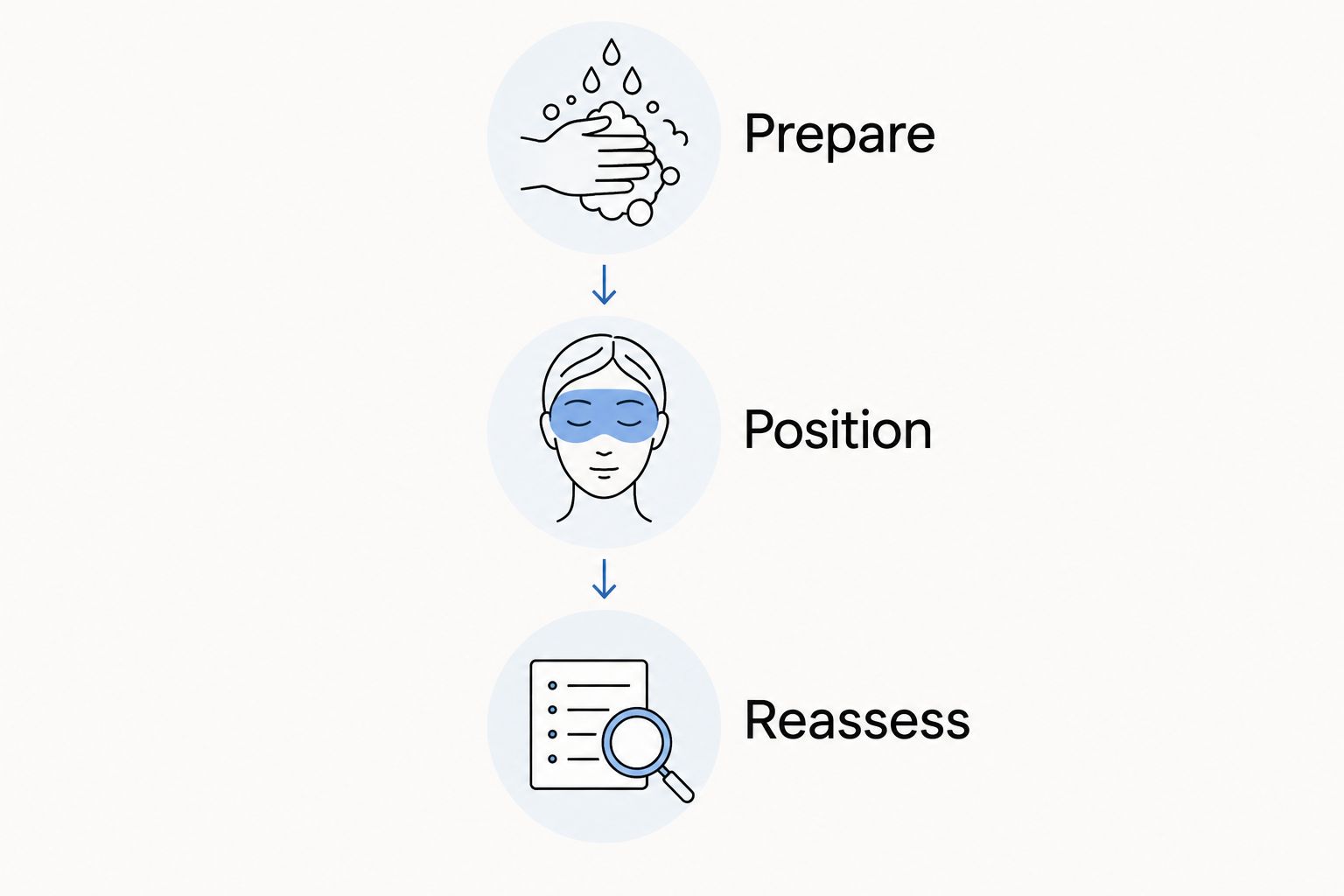
Give patients a short sequence they can repeat, not a list of product features. For your 2026 patient education materials, use the same language during the consultation and in written instructions.
Prepare
Wash and dry your hands. Use a clean cloth or prepare the mask exactly as directed, checking the cover and contact surface. Remove contact lenses before applying a compress; do not continue wearing lenses through a red or irritated eye episode without appropriate advice.
Position
Check that the compress feels comfortably cool. Close the eyes and place it gently over the eyelids without pressing. Keep any fastening loose enough to avoid pressure, and leave the patient able to remove the compress easily.
Reassess
Remove the compress if it causes pain, stinging, numbness or increased irritation. Follow the manufactured item's instructions for application duration and repeat use. If symptoms persist or change, review the diagnosis and management plan rather than simply extending cooling.
Cooling advice should also explain what happens afterwards. Clean or launder the contact surface as appropriate, allow it to dry and store it according to its instructions. Do not share eye compresses or use a visibly soiled item.
Cooling is supportive care, not the whole treatment plan
Allergic conjunctivitis commonly causes itching, watering and redness. History and examination still matter because other ocular conditions can produce overlapping symptoms. Avoid treating every irritated eye as allergy.
Discuss allergen exposure, eye rubbing, contact lens wear and any drops already in use. Appropriate anti-allergy treatment and lubricants have different roles; a cooling mask does not replace either when indicated. Review the patient's technique as well as the treatment selected.
Dry eye and allergy symptoms can coexist. That does not make a cooling mask and a heated mask interchangeable: cooling is used for allergic symptom comfort, while warming has a different role in meibomian gland dysfunction management. Decide which problem you are addressing before recommending a temperature-based treatment.
Scope Connect's cooling eye mask for eye allergies guide is intended to support that distinction in patient education. Recommend the compress for a defined symptom, and explain separately how the underlying condition will be managed.
How the options were ranked
The ranking gives priority to temperature control, low pressure, skin tolerance, cleanability, coverage and handling. A reusable gel mask takes the routine-home-use slot; a flannel takes the sensitive-skin and simple-preparation slot; a wrapped pack takes the localised-application slot.
These are practical use-case recommendations, not a comparative clinical trial. Choose a different order when the patient's skin tolerance, dexterity or ability to clean the item makes another format more suitable.
Which cooling option should you choose?
Start with a clean, cool flannel when the patient is undecided. It makes temperature and tolerance easy to assess without introducing a more complicated preparation routine. Choose a reusable gel eye mask when a dedicated item fits the patient's habits and meets the safety criteria.
Reserve a small wrapped cold pack for a clear localised purpose. For a 2026 recommendation, the deciding question is not which mask looks most specialised; it is which compress the patient can use comfortably, cleanly and without pressure.
FAQ
What’s the best cooling eye mask for eye allergies?
A reusable gel cooling eye mask is the strongest practical choice for dedicated home use when it permits comfortable, pressure-free application. A clean, cool flannel is the simpler starting option, especially for sensitive eyelid skin.
Can a cold compress help allergic conjunctivitis?
A cold compress can soothe itching and discomfort associated with allergic conjunctivitis. It provides supportive relief rather than replacing assessment or appropriate anti-allergy treatment.
Is a cooling eye mask better than a cool flannel?
Neither format is universally better. A reusable mask offers a dedicated shaped compress, while a cool flannel makes temperature adjustment and replacement of the contact surface straightforward.
Should I put an eye mask in the freezer?
Use a freezer only if the specific eye mask’s instructions permit it. A mask that feels painfully cold is unsuitable for application, and a cooling surface must not be placed directly against skin when its instructions require a protective cover.
How long should I use a cooling eye mask?
Follow the specific mask’s instructions for application duration and repeat use. Remove it earlier if you experience pain, stinging, numbness or increased irritation; longer application is not a substitute for reviewing persistent symptoms.
Can I wear contact lenses under a cooling eye mask?
Remove contact lenses before applying a cooling compress. A red or painful eye in a contact lens wearer needs assessment rather than continued lens wear with symptom relief alone.
Should I choose a heated or cooling eye mask?
Choose according to the condition being managed. Cooling is used for allergic symptom comfort, while warming has a different role in meibomian gland dysfunction; the two are not interchangeable.
When should itchy or red eyes be assessed urgently?
Eye pain, light sensitivity, altered vision or a markedly red eye require prompt assessment. Do not rely on a cooling mask to manage these symptoms, particularly in a contact lens wearer.
One last thing
A patient can own a suitable mask and still use it incorrectly. Ask them to demonstrate how they will prepare and position it, including whether they intend to tighten the strap. Correct the technique before recommending a different compress.
Scope Connect's cooling eye mask guidance places the recommendation within clinical care: comfortable cooling, appropriate hygiene and a clear threshold for reassessment.
Related guides
- Preservative-free eye drops for contact lens wearers
- Preservative-free eye drops for dry eye disease
- Heated eye masks for meibomian gland dysfunction