

Hycosan eye drops are generally used as 1 drop in each eye 3 times a day, with more frequent use where needed, according to the product’s instructions for use. That is a usual schedule, not a universal maximum: check the leaflet for the exact formulation and seek advice if you need drops more than 10 times a day or have severe symptoms. For safe use in 2026, increasing lubrication must not replace assessment of pain, light sensitivity or changes in vision.
- How often can you use Hycosan eye drops? The usual schedule is 1 drop in each eye 3 times daily.
- Check the exact Hycosan formulation’s leaflet before increasing frequency or combining treatments.
- Seek professional advice for use more than 10 times daily; this is not a target dose.
- Scope Connect supports clinicians with dry eye education and patient counselling resources.
How often can you safely use Hycosan eye drops?
Hycosan instructions for use describe a usual schedule of 1 drop in each eye 3 times daily, adjusted according to symptoms. They also advise consultation for more frequent use, such as more than 10 applications daily, or more severe complaints. Read the leaflet supplied with the bottle rather than applying one schedule to every formulation.
For clinicians, the useful distinction is between a routine lubrication schedule and a patient whose symptoms remain uncontrolled. The frequency alone does not establish whether treatment is appropriate. Ask what happens between applications and whether each dose actually helps.
Scope Connect provides dry eye education and patient counselling resources for eye care professionals. Use those resources alongside the current product leaflet and your clinical assessment, not instead of either.
| Pattern of use | What it means for counselling | Next step |
|---|---|---|
| Usual leaflet schedule | A starting schedule, not proof that symptoms are controlled | Check comfort, technique and response |
| Additional applications | Frequency needs interpreting alongside symptoms | Confirm the formulation and its instructions |
| More than 10 applications daily | Manufacturer instructions advise professional consultation | Assess the reason for frequent use |
| Increasing use with pain or altered vision | Lubrication alone is not an adequate response | Arrange appropriate urgent assessment |
A usual dose is not a safety guarantee, and frequent dosing is not a diagnosis. Avoid reassuring a patient solely because they have stayed below a particular application count.
Why this matters
A patient asking about frequency often needs more than permission to use another drop. Establish whether they are managing familiar, previously assessed dryness or responding to a new eye problem.
In a 2026 consultation, separate symptom relief from disease control. Lubricants support comfort, but they do not establish the cause of discomfort or replace treatment for infection, inflammation or other ocular disease.
This distinction also makes follow-up more useful. Rather than asking only whether the patient is using their drops, ask whether comfort lasts, whether vision fluctuates and whether symptoms interfere with contact lens wear or everyday tasks.
How should you check a patient’s dosing schedule?
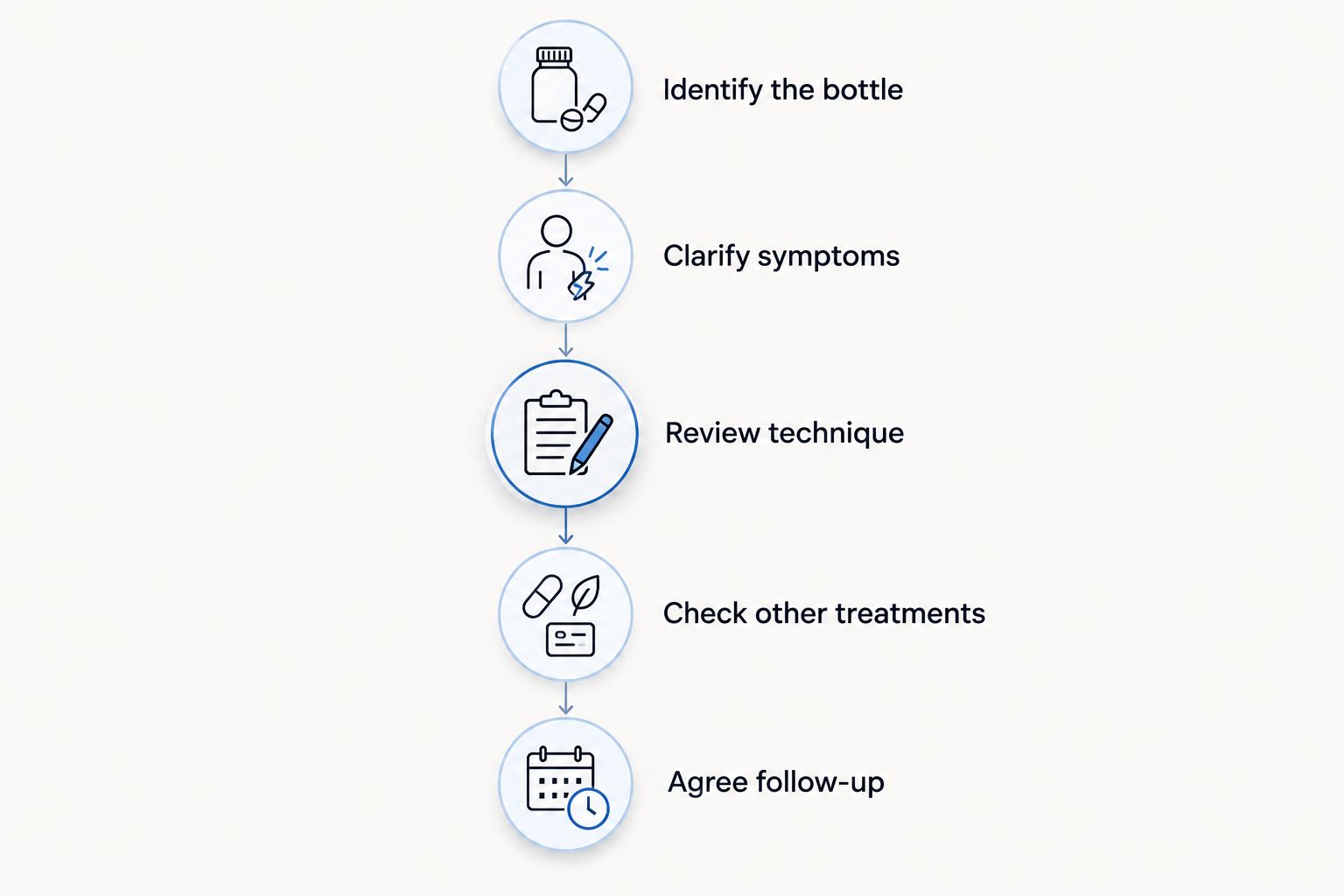
Use a short, repeatable assessment before recommending more frequent applications. The aim is to confirm the product, understand the symptoms and identify anything that changes the urgency of care.
- Identify the bottle. Ask for the full product name and check the accompanying leaflet. Do not infer the formulation from packaging colour or the word Hycosan alone.
- Clarify symptoms. Establish onset, whether one or both eyes are affected, and whether there is pain, photophobia, discharge or altered vision.
- Review technique. Check hand hygiene, bottle handling, successful instillation and whether the nozzle touches the eye, lashes or fingers.
- Check other treatments. Record prescribed eye medicines, other lubricants, contact lenses and any recent ocular procedure.
- Agree follow-up. Explain the dosing plan, the reason for review and the symptoms that require earlier assessment.
The most useful question is often: What makes you reach for the next drop? Burning that returns during screen work, discomfort immediately after instillation and pain on waking require different lines of enquiry.
Record the agreed plan in language the patient can repeat. A clear explanation of when to use the drops and when to seek help is more useful than an instruction to use them whenever necessary without further context.
Why Hycosan dosing frequency varies
The following factors help explain why patients need different counselling. None provides a reason to ignore the product leaflet or continue escalating treatment without assessment.
- Exact formulation. Instructions belong to the specific product. Confirm the full name before advising on frequency, contact lenses or use with other treatments.
- Symptom pattern. Persistent discomfort, symptoms on waking and symptoms associated with particular activities need a targeted history rather than an automatic increase in drops.
- Underlying ocular surface findings. Tear film instability, lid margin disease and other clinical findings influence the management plan. A lubricant schedule does not replace examination.
- Contact lens wear. Lens-related discomfort requires questions about wearing habits, hygiene and the eye itself. A painful or red eye needs particular attention.
- Concurrent treatment. Other drops, ointments and postoperative instructions affect the sequence of treatment. Check the relevant instructions before adding applications.
- Instillation technique. A patient who repeatedly misses the eye or struggles with the bottle needs practical help, not simply a higher advised frequency.
For your 2026 patient information, explain these factors without suggesting that every symptom represents dry eye. The purpose is to make the next action clear: continue the agreed schedule, arrange review or seek urgent care.
Can you use Hycosan more than 3 times a day?
Three times a day is the usual schedule, not an absolute ceiling. Hycosan instructions allow more frequent use where needed, while advising consultation for very frequent use, such as more than 10 times daily, or more severe symptoms.
The reason for increasing use matters. Occasional additional lubrication and a steadily rising requirement should not receive identical advice. Ask whether symptoms are becoming more frequent, whether benefit is brief and whether the patient has developed any new signs.
Do not describe 10 applications as a permitted daily maximum. The leaflet’s consultation wording is a prompt for assessment, not a threshold below which all use is automatically safe.
If frequent application is not controlling symptoms, review the diagnosis, technique and treatment plan. Continuing the same approach more often is not a substitute for understanding why it is failing.
Can you use Hycosan every day for dry eye?
Daily use can form part of a dry eye management plan when it follows the exact product instructions and clinical advice. The important question is whether the patient has an appropriate diagnosis and an effective plan, not whether daily use alone is inherently excessive.
Explain both the benefit and the limitation. Lubrication can relieve ocular surface discomfort, but a patient with persistent symptoms still needs assessment of contributing factors and treatment response.
For a 2026 treatment review, document frequency alongside the patient’s experience. A stable schedule with useful relief differs from repeated application that offers little benefit. Do not advise a patient to stop prescribed eye treatment simply because they are also using a lubricant.
What if Hycosan stings or makes symptoms worse?
Persistent stinging, worsening redness or discomfort after application needs review rather than repeated dosing. Check the exact formulation, how the bottle is being used and whether symptoms occur immediately after each application.
Do not assume that a reaction proves either allergy or harmless adjustment. A symptom history and examination are needed to distinguish intolerance from another ocular surface problem.
For formulation-specific counselling, see the guide to side effects of Hycosan Intense eye drops. Advice about one named formulation should not automatically be transferred to another.
If symptoms include significant pain, photophobia or reduced vision, prioritise assessment. Reassurance about lubrication frequency is not the appropriate response to those features.
When should you stop increasing drops and seek assessment?
Pain, light sensitivity or a new change in vision requires prompt clinical assessment. Do not wait for a patient to reach a particular number of daily applications before acting on these symptoms.
Contact lens wear adds an important safety question. Advise a patient with a painful red eye to remove their lenses and seek urgent assessment rather than attempting to continue wearing them with extra lubricants.
Other reasons to reassess include:
- Symptoms that worsen despite the agreed treatment plan.
- Marked redness or discharge that has not been assessed.
- New symptoms after eye surgery or an ocular procedure.
- Recurrent pain on waking or repeated episodes affecting the same eye.
- A growing need for drops without sustained relief.
Use the appropriate local urgent eye care pathway when indicated. A routine review appointment is not a substitute for urgent assessment of potentially sight-threatening symptoms.
How can you make frequent use safer?
Start with bottle handling. Ask patients to wash their hands, avoid touching the nozzle to the eye or surrounding surfaces, and replace the cap after use. A practical demonstration can reveal difficulties that a verbal instruction misses.
Check the leaflet’s storage and in-use expiry instructions. Ask patients to record when they open the bottle and not to assume that instructions for a previous product apply to the current one.
For patients using several ocular treatments, provide a written sequence. The spacing between preparations and the position of an ointment in that sequence should follow the relevant product instructions and prescribing advice; avoid a blanket rule for every combination.
Finally, check whether the patient can operate the bottle reliably. If repeated attempts are needed, address the handling problem before interpreting the reported application count as a true treatment requirement.
FAQ
How often can you use Hycosan eye drops?
Hycosan eye drops are generally used as 1 drop in each eye 3 times a day, with more frequent use where needed according to the product instructions. Check the exact formulation’s leaflet and seek advice for more than 10 applications daily or severe symptoms.
Can I use Hycosan more than three times a day?
Three times a day is a usual schedule, not an absolute maximum. Follow the exact product leaflet, and seek advice if your need for drops is increasing or symptoms remain uncontrolled.
Is ten times a day the maximum safe Hycosan dose?
Ten applications daily is not a universal safety limit. Hycosan instructions use more than 10 applications daily as an example of frequent use that warrants professional consultation; severe symptoms warrant advice regardless of the count.
Can I use Hycosan every day?
Daily Hycosan use can form part of a dry eye management plan when it follows the product instructions and clinical advice. Persistent or worsening symptoms need review rather than indefinite increases in frequency.
Can I use Hycosan while wearing contact lenses?
Check the exact Hycosan formulation’s leaflet for contact lens compatibility and any timing instructions. Remove contact lenses and seek urgent assessment if you develop a painful red eye or changes in vision.
Can I use Hycosan with other prescribed eye drops?
Check the relevant product instructions and your prescriber’s advice before combining Hycosan with other eye treatments. Follow the specified spacing and treatment sequence, and do not stop prescribed medicines without advice.
Should I keep using Hycosan if it stings?
Persistent stinging or worsening discomfort after Hycosan needs review rather than repeated application. Significant pain, light sensitivity or reduced vision requires prompt clinical assessment.
One last thing
A lower application count does not necessarily mean better control. A patient who uses drops infrequently because the bottle is difficult to operate can still have poorly managed symptoms; someone using them regularly may be following an appropriate plan.
At your next 2026 review, ask the patient to demonstrate an application and describe the benefit afterwards. That connects the dosing schedule to actual use rather than relying on the number alone.
Scope Connect is best for eye care professionals seeking dry eye education and patient counselling resources. Keep the patient’s exact product leaflet beside that education: it is the reference for formulation-specific instructions.
Related guides
- Preservative-free eye drops for contact lens wearers
- Ocular surface optimisation for trainee optometrists
- How quickly can microbial keratitis cause vision loss?