

Yes—preservative-free eye makeup remover can irritate eyes because other ingredients, accidental eye contact and rubbing can still cause symptoms. Preservative-free does not mean irritation-free, allergy-free or suitable for use inside the eye. This 2026 clinical guide explains how to assess the reaction, separate eyelid irritation from ocular symptoms and give patients clear safety advice.
- Preservative-free eye makeup remover irritation can result from other ingredients, rubbing or accidental exposure of the ocular surface.
- Scope Connect supports clinicians with eye care education; an individual reaction still requires assessment.
- Eyelid itching and scaling suggest a different assessment pathway from eye pain, photophobia or reduced vision.
- Stop the suspected cosmetic, avoid rubbing and seek urgent assessment for pain, light sensitivity or visual change.
Why this matters
Patients often interpret a preservative-free label as reassurance that a cosmetic cannot cause a reaction. That assumption can delay stopping an unsuitable product or lead them to dismiss a painful red eye as ordinary sensitivity.
For your 2026 consultations, separate the label claim from the clinical question: what contacted the skin or eye, and what happened afterwards? Scope Connect provides clinical resources and patient education materials for eye care professionals; the practical task is to translate that knowledge into an exposure history, examination and safety-netting advice.
The distinction matters particularly when a patient already has dry eye symptoms, eyelid dermatitis or contact lens-related discomfort. A new remover can be part of the history without necessarily explaining every finding.
Can preservative-free eye makeup remover irritate eyes?
Yes. Removing preservatives from a formulation does not remove every potential irritant or allergen. Cleansing ingredients, fragrance where present, botanical ingredients and other components can still provoke symptoms in susceptible people; rubbing and unintended ocular exposure create separate problems.
The following table compares clinical presentations, not diagnoses. Symptoms overlap, so use the history alongside your examination rather than assigning a cause from a single feature.
| Presentation | Features to explore | Assessment focus | Important limitation |
|---|---|---|---|
| Direct ocular irritation | Stinging or watering during or after removal | Exposure, contact lenses, visual acuity and ocular surface findings | Timing alone does not establish which ingredient caused symptoms |
| Eyelid contact dermatitis | Itching, redness, scaling or swelling of the lid skin | Full cosmetic history and distribution of skin changes | Irritant and allergic dermatitis can look similar |
| Mechanical irritation | Symptoms after repeated wiping or scrubbing | Removal technique, skin tenderness and surface injury | Technique and formulation can contribute together |
| Coexisting ocular surface disease | Dryness or discomfort outside makeup removal | Tear film, lid margins and corneal findings | A cosmetic history does not exclude another condition |
The benefit of choosing a preservative-free remover is specific: it avoids exposure to preservatives in that product. The limitation is equally specific: it does not establish tolerability of the complete formulation.
Avoid treating labels such as sensitive, gentle or ophthalmologically tested as a substitute for patient history. They do not identify the cause of a particular reaction or remove the need to assess warning symptoms.
Why preservative-free eye makeup remover irritation varies
Symptoms depend on more than whether preservatives appear on the ingredient list. Explore these factors when a patient reports discomfort:
- Complete formulation: cleansing agents, fragrance where included and other ingredients remain relevant to irritation or allergy.
- Exposure site: a product tolerated on intact skin can cause discomfort if it enters the eye.
- Removal technique: repeated wiping, pressure and rubbing can irritate eyelid skin and the ocular surface.
- Existing inflammation: eyelid dermatitis, blepharitis and dry eye symptoms can complicate tolerance and interpretation.
- Contact lens wear: lenses add a separate exposure and red-eye assessment consideration.
- Other products: mascara, eyeliner, lash adhesive, facial cleansers and skincare can confound the apparent relationship with the remover.
Ask what changed, but also ask what stayed the same. A familiar product is not automatically excluded from an allergy assessment, and a newly purchased remover is not automatically the sole cause.
Document the actual product name and ingredient list rather than recording only preservative-free remover. Packaging photographs can help preserve that information without relying on the patient's recollection.
How should you assess a reaction in practice?
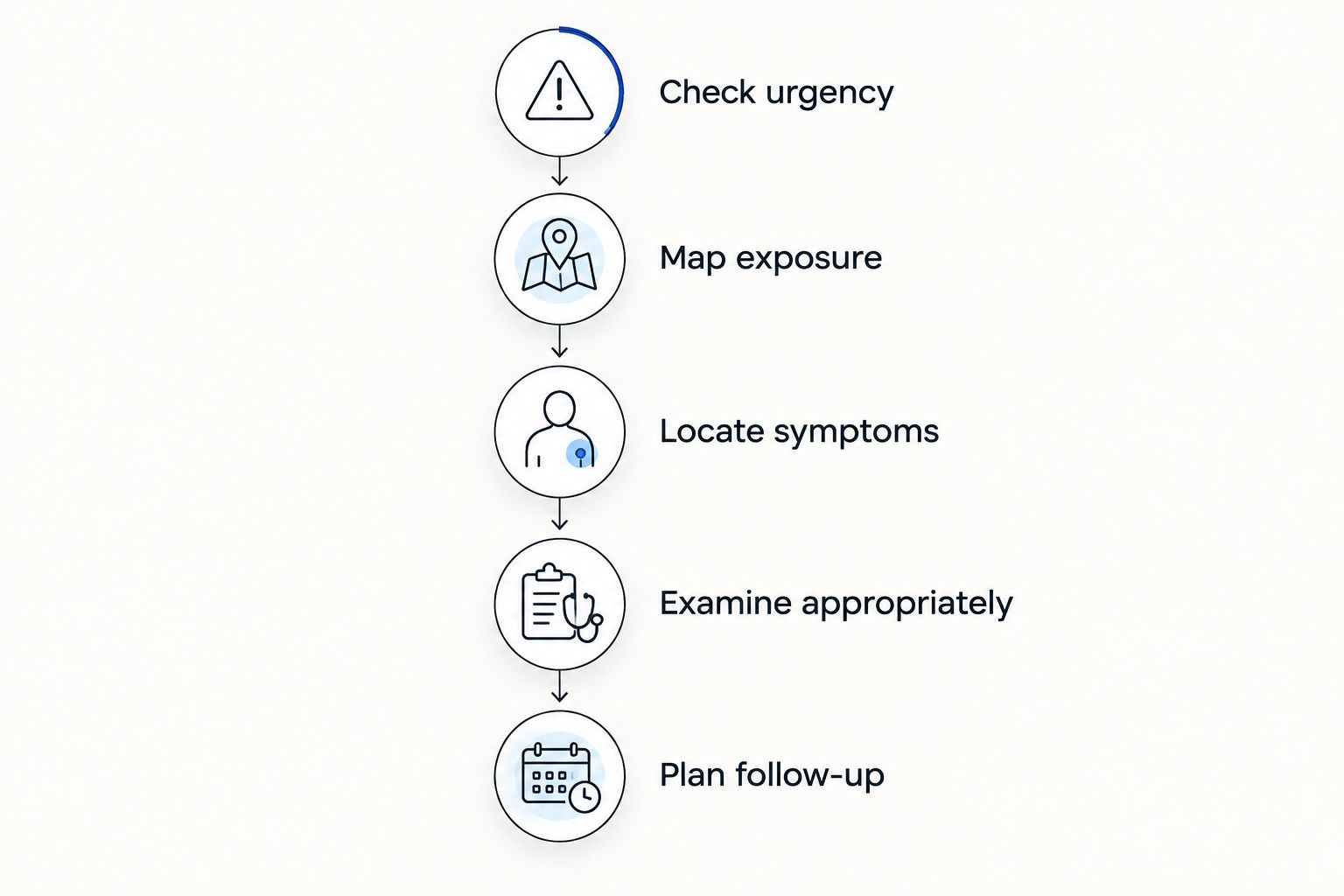
A consistent 2026 assessment workflow starts with urgency, then works towards the likely source. Do not begin by selecting a replacement cosmetic.
- Check urgency. Ask about pain, photophobia, reduced vision, trauma and chemical exposure. A painful red eye in a contact lens wearer needs urgent assessment rather than routine cosmetic advice.
- Map exposure. Establish which products were used, where they were applied and whether remover entered the eye. Include lash treatments and products applied with fingers or applicators.
- Locate symptoms. Distinguish lid skin itching or scaling from ocular burning, foreign-body sensation and visual disturbance. Ask whether symptoms persist when makeup is not worn.
- Examine appropriately. Within your clinical role, assess visual acuity, lids, conjunctiva and cornea. Use your local referral pathway when findings or symptoms require further evaluation.
- Plan follow-up. Record what should stop, what the patient should avoid and which symptoms require urgent help. Give a review plan based on the findings, not on the cosmetic label.
Keep your examination and your causal explanation separate in the record. For example, lid erythema is an observed finding; a suspected reaction to a remover is a working explanation. That distinction prevents an uncertain association becoming a permanent allergy label without further assessment.
Where underlying dryness is relevant, the ocular surface optimisation guide addresses the wider assessment context. Do not attribute persistent symptoms to makeup removal alone when examination suggests another ocular surface problem.
What should patients do when the remover stings?
Stop using the suspected product and avoid rubbing the eye. If it enters the eye, rinse promptly with clean, lukewarm water and follow the product's exposure instructions. Remove contact lenses if they come out easily; do not delay irrigation while struggling with a lens.
Persistent discomfort, marked redness, pain, light sensitivity or altered vision warrants clinical assessment. A substantial chemical splash, or exposure to a product not intended for the eye area, needs urgent advice rather than a trial of another cosmetic.
Do not advise patients to keep using a remover to see whether the eyes become accustomed to stinging. Equally, do not assume that brief burning proves allergy: the symptom needs context.
For patients with eyelid skin symptoms, advise avoiding the suspected cosmetic while arranging appropriate assessment if symptoms persist or recur. Do not recommend putting skin creams or leftover prescription medicines into or around the eye without checking that they are appropriate for that patient and location.
In your 2026 patient instructions, make the escalation route explicit. Patients should know whether to contact their optometrist, an urgent eye service or emergency care according to the severity and local pathway—not simply be told to seek help if needed.
Does preservative-free mean hypoallergenic?
No. Preservative-free describes one formulation characteristic; it does not mean a product cannot cause allergy. A reaction can involve another ingredient, and irritation can occur without an allergic mechanism.
The same caution applies to natural or botanical descriptions. Ingredient origin does not establish individual tolerance, so avoid using those labels as your main selection criterion.
Explain this without dismissing the patient's preference. Avoiding a known problematic ingredient is reasonable; assuming that one absent ingredient guarantees comfort is not. A useful consultation ends with a clear rationale rather than a longer list of reassuring packaging claims.
Is eyelash adhesive remover the same as eye makeup remover?
No. Eyelash adhesive remover and eye makeup remover have different intended tasks, and you should not assume that their directions or permitted application sites are interchangeable. Establish whether the patient was removing ordinary makeup, adhesive residue or lash extensions before discussing the exposure.
A sensitivity claim concerns the intended application site, not permission for ocular contact. That distinction also applies to lash adhesive removers for sensitive skin: skin tolerance and safety inside the eye are separate questions.
Ask who applied the product, whether the patient kept the eyes closed and whether discomfort began during application or removal. Record the actual product involved rather than grouping every exposure under makeup remover.
For suspected exposure to an adhesive-removal product, use the product instructions and an appropriate urgent advice pathway. Do not recommend household solvents or forceful pulling to remove material near the eye.
How should you discuss the next product choice?
The next step is not automatically another preservative-free remover. First decide whether the patient needs assessment, a pause in cosmetic use or a review of technique and existing lid disease.
For your 2026 counselling, use these selection criteria:
- Intended use: confirm that the product is specifically intended for the eye makeup and application area involved.
- Known sensitivities: review the complete ingredient list against established allergies or previous reactions.
- Technique: follow the manufacturer's instructions and avoid repeated scrubbing or pressure.
- Current symptoms: do not use inflamed eyelids or a symptomatic eye as a testing site for several new products.
- Review plan: explain what to do if symptoms return, rather than promising that a replacement will be tolerated.
Best for patients with a previous reaction: an individual ingredient review and a clear symptom plan, not selection by the preservative-free claim alone. The advantage is a decision tied to the patient's history; the limitation is that the history cannot always identify the responsible ingredient.
If allergic contact dermatitis remains a concern, appropriate specialist assessment can include patch testing. A home skin test does not establish ocular safety, and patients should not deliberately place a suspected product into the eye to test tolerance.
Scope Connect is best suited to eye care professionals seeking clinical education, not an individual diagnosis. Its clinical articles and patient education materials support that professional role; they do not replace examination of a symptomatic patient.
Can patients wear contact lenses after a reaction?
Patients should not reinsert contact lenses into an eye that remains red, painful or uncomfortable. Assess the symptoms and follow the relevant clinical pathway before advising a return to wear.
Do not frame every reaction as a lens problem, either. Establish whether symptoms began before lens removal, during makeup removal or afterwards, and assess the eye rather than relying on the sequence alone.
A patient reporting pain, photophobia or reduced vision needs urgent assessment, especially with contact lens wear. Replacement cosmetics and comfort drops are not substitutes for investigating those symptoms.
FAQ
Can preservative-free eye makeup remover still make my eyes sting?
Yes. Other ingredients, accidental contact with the ocular surface and rubbing can cause stinging even when a remover contains no preservatives. Stop using the suspected product and seek assessment if symptoms persist or include pain, light sensitivity or visual change.
Does stinging mean I am allergic to my makeup remover?
No. Stinging alone does not establish allergy; irritation and other ocular surface problems can cause similar symptoms. Eyelid itching, scaling or recurrent swelling warrants a fuller cosmetic and skin history.
Should I rinse my eye if makeup remover gets into it?
Yes. Rinse promptly with clean, lukewarm water and follow the product’s exposure instructions. Seek urgent advice for significant exposure, persistent symptoms, pain or altered vision.
Can I keep using a remover if the irritation goes away quickly?
Stop the suspected product rather than repeatedly exposing the eye to something that causes discomfort. A clinician can help assess recurring symptoms and whether formulation, technique or another condition is involved.
Is a natural eye makeup remover safer for sensitive eyes?
A natural description does not guarantee tolerance. Review the complete formulation, intended use and individual allergy history rather than selecting by ingredient origin alone.
Can I use lash adhesive remover as eye makeup remover?
Do not assume the products are interchangeable. Follow the specific product’s intended use and instructions, and never treat a sensitive-skin claim as permission for contact with the eye.
When does a reaction to eye makeup remover need urgent help?
Pain, light sensitivity, reduced vision or a significant chemical exposure requires urgent assessment. A painful red eye in a contact lens wearer also needs urgent attention rather than routine cosmetic advice.
One last thing
The most useful recommendation is often to simplify the exposure history before choosing a replacement. Several new cosmetics introduced together make it harder to establish which product or technique is associated with symptoms.
For your 2026 consultations, leave the patient with a written distinction: what to stop, what symptoms require urgent help and when to be reviewed. That is more actionable than reassuring them that preservative-free should be gentle.
Related guides
- Preservative-free eye makeup removers for sensitive eyes
- Preservative-free eye drops for contact lens wearers
- How quickly can microbial keratitis cause vision loss?